Installation guide
 Owner’s manual


How do you fix F3 E1 error on a Whirlpool dryer?
On the Whirlpool WGD8500DC3 dryer, an F3 E1 code is a service code that means the control detected a problem that requires repair. We start by power-cycling the dryer, then checking airflow and (on steam models) the water connection; if the code returns, service is needed per the WGD8500DC3 owner's manual.
- Press Power to clear the display; then restart the cycle.
- Unplug the dryer (or disconnect power) for 5 minutes, then restore power.
- Run a Timed Dry heated cycle to confirm the code returns.
- Clean the lint screen and confirm the exhaust vent is not crushed, kinked, or clogged.
- If you use Steam cycles, confirm the water supply is turned on and the inlet hose is connected to the faucet and the dryer.
On this Whirlpool platform, codes in the F# E# format are “variable service codes.” That means the dryer can often still run, but the control is flagging a fault that typically needs diagnosis of wiring, sensors, or the electronic control.
| Symptom you notice | What to check first | What it can affect |
|---|---|---|
| Dryer runs but dries poorly | Venting and lint screen | Overheating, long dry times, error codes |
| Steam cycle issues or odor not improving | Water inlet hose and water supply | Steam function performance |
| Code returns immediately after reset | Internal component or control issue | Requires troubleshooting/service |
If your troubleshooting points to a heating or temperature-sensing problem, these model-matched parts are commonly checked during diagnosis:
- Dryer thermistor WP8577274 (temperature sensing)
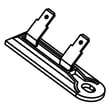
- Thermal fuse W10909685 (opens if overheating occurs)
- Dryer radiant sensor WP338906 (burner flame sensing on gas dryers)
Ignoring an F3 E1 service code can lead to repeated shutdowns, poor drying performance, or overheating conditions. Verifying airflow and (if applicable) steam water supply prevents repeat faults and protects key components like the thermistor and thermal fuse.
Last updated: February 2026
How many cubic feet is my Whirlpool Cabrio washer?
Your Whirlpool WGD8500DC3 is a Cabrio dryer, not a Cabrio washer, so washer capacity (cubic feet) does not apply to this model. For the correct capacity-style specs for your appliance, use the WGD8500DC3 owner's manual.
Washer capacity is listed on the washer’s model-specific spec sheet or in the owner’s manual. Use these steps to get the right number:
- Find the washer model number on the lid underside or cabinet rim (top-load) or door opening (front-load)
- Look up that exact washer model’s owner's manual
- Check the Specifications or Features section for “capacity” in cu. ft.
- If you only have a series name (like “Cabrio”), use the full model number to avoid mixing models
- If you are comparing washers, use capacity plus basket size and cycle options, not capacity alone
| Appliance type | What “cubic feet” usually means | Where it’s used most |
|---|---|---|
| Washer | Wash basket volume (load size) | Choosing load size, matching dryer size |
| Dryer | Drum volume (drying space) | Drying bulky items, airflow and cycle performance |
Using the correct model number prevents ordering the wrong Whirlpool parts and avoids confusing washer capacity with dryer drum size. On the WGD8500DC3, the manual focuses on dryer operation (cycles, options like EcoBoost, and venting), which impacts drying performance more than a washer-style capacity figure.
Last updated: February 2026
How to look up Whirlpool model number?
For your Whirlpool dryer, we look up the model number on the appliance’s rating label (not the control panel). On model WGD8500DC3, the label is typically on the door opening area (door jamb) or just inside the front panel; write down both the model and serial number exactly as shown and use them when ordering parts or service. See the WGD8500DC3 owner's manual for label location and service details.
Check these common spots first (use a flashlight and wipe lint off the label):
- Door opening (door jamb) around the front frame
- Inside the front panel area near the door opening
- Behind the lower access panel (if your version has one)
- On the cabinet frame near the lint screen housing (varies by design)
Model and serial numbers are easy to misread. We recommend:
- Copy the full model number exactly (example: WGD8500DC3)
- Copy the serial number exactly; it helps confirm production details
- Take a clear photo of the label for reference
- Use the full model number when searching for parts like a belt, thermal fuse, or igniter
| Item | What it tells us | When you need it |
|---|---|---|
| Model number | The exact design and parts list | Always, especially for part fit |
| Serial number | Production run details | Service calls, warranty, some revisions |
Whirlpool dryers often share similar styling across multiple models, but internal parts can differ. Using the exact WGD8500DC3 model number helps ensure the correct match for common replacements such as the dryer drum support roller WPW10314173 or the thermal fuse W10909685.
Last updated: February 2026
What are the common problems with Whirlpool dryers?
Common Whirlpool dryer problems (including model WGD8500DC3) are no-start, no-heat, long dry times, unusual noises, and airflow-related shutdowns. Most issues trace back to power supply, door/start operation, restricted venting, or worn moving parts like the belt, rollers, and idler pulley.
- Dryer will not run: door not fully closed, START/PAUSE not pressed correctly, blown fuse or tripped breaker
- Dryer will not heat (gas models): gas supply valve closed, low line voltage (L2), ignition or gas valve component issue
- Drying takes too long: restricted venting, blocked outlet grille near lint screen, load too large to tumble freely
- Rattling, thumping, clicking, vibration: loose items, leveling/installation issue, worn rollers or pulley
- Error or diagnostic codes: airflow restriction (AF), power failure (PF), service codes (F# E#)
- Confirm the door closes completely and you press START/PAUSE with the pad of your finger.
- Check the home breaker/fuse and verify correct power supply.
- For gas heat issues, confirm the supply line valve is open.
- Clean the lint screen and check the air outlet grille inside the door behind the lint screen for blockage (including used fabric softener sheets).
- Verify venting uses 4-inch (102 mm) diameter material and is not crushed or kinked.
- Make sure the dryer has proper clearance and airflow; typical guidance is at least 1 inch in front and about 5 inches behind for many installations.
If the drum is squealing, rumbling, or not turning, these wear items are frequent culprits:
| Symptom | Common wear part | Example part for WGD8500DC3 |
|---|---|---|
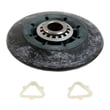
| Squeal/rumble, drum hard to turn | Drum support rollers | Dryer drum support roller WPW10314173 |
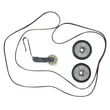
| Drum not turning, burning rubber smell | Drum belt | Belt-4 rib, W10849499 |
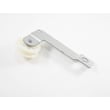
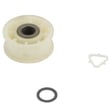
| Squeal, belt slips, drum stops | Idler pulley | Dryer idler pulley W10837240 |
Restricted airflow and incorrect venting can cause long dry times, overheating protection trips, and repeated part failures. Keeping venting clear and the dryer level protects the heater system, motor, and drum support components.
For model-specific troubleshooting steps and diagnostic code meanings, follow the WGD8500DC3 owner’s manual.
Last updated: February 2026
What's the average lifespan of a Whirlpool dryer?
A Whirlpool dryer typically lasts 10 to 13 years. For your Whirlpool WGD8500DC3, consistent airflow maintenance (lint screen and venting) and correct cycle use help you reach that average by reducing overheating and wear on the drum, belt, and burner system.
- Airflow and venting length: long or restricted venting increases dry times and heat stress.
- Lint buildup: blocked lint screen area and outlet grille can cause overheating and longer cycles.
- Load size: overloading strains the drum support rollers, belt, and idler pulley.
- Cycle selection: Automatic cycles shut off when dryness is reached, reducing over-drying.
- Operating environment: the dryer needs adequate clearance and ventilation around it.
- Clean the lint screen every load; check the outlet grille area behind the lint screen for blockage.
- Inspect and clean the vent system regularly; use 4-inch (102 mm) vent material.
- Keep the dryer level and maintain recommended clearances (commonly 1 inch front, 5 inches rear for many installs).
- Avoid overloading; loads should tumble freely.
- Use Automatic cycles when possible for energy savings and reduced wear (see cycle guidance in the WGD8500DC3 user manual).
| Symptom | Likely wear area | Example part for WGD8500DC3 |
|---|---|---|
| Thumping or rumbling | Drum support rollers | Dryer drum support roller WPW10314173 |
| Squealing or belt slip | Idler pulley or belt | Dryer idler pulley W10837240 |
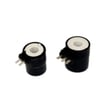
| No heat or intermittent heat (gas) | Ignition or gas valve coils | Dryer valve coil kit 279834 |
A dryer that runs longer than normal wears out faster because the motor, drum support system, and heating components operate under higher heat and longer run times. Good airflow and correct cycle settings are the simplest ways to protect the WGD8500DC3.
Last updated: February 2026