 Installation guide
 Owner’s manual
 Error Codes



How long do Bosch dishwashers last?
Bosch dishwashers typically last 10 to 15 years with normal household use. For your Bosch SHP7PT55UC, lifespan depends most on water quality, how often it runs, and routine care like cleaning filters and keeping seals and spray paths clear (see the SHP7PT55UC user manual).
What affects lifespan the most
- Hard water and scale buildup (can stress the heat system and pumps)
- Clogged filters or sump debris (reduces wash performance and increases load on the motor)
- Frequent heavy cycles (more heat and run time equals more wear)
- Leaks or moisture at the base (can damage wiring and components)
- Poor loading habits (blocked spray arms leads to re-washing and longer run time)
Maintenance that helps your dishwasher reach 10 to 15 years
- Clean the filter area regularly and remove glass, labels, and food scraps.
- Run a dishwasher cleaner or a hot wash periodically to reduce grease and mineral buildup.
- Check that spray arms spin freely and holes are not plugged.
- Use the right detergent amount; too much can leave residue, too little can reduce cleaning.
- Inspect the door seal for tears, flattening, or debris that can cause leaks.
Common “wear” parts vs. major repairs
| Item type | Examples | What it usually means |
|---|---|---|
| Routine wear items | racks, baskets, small clips | Normal aging; replace to keep usability high |
| Water and drain components | inlet valve, drain hose, drain pump | Often fixable; symptoms show up as fill/drain issues |
| Major drive and heat components | circulation/heat system, control board | Higher-cost repairs; evaluate age vs. repair cost |
If you are troubleshooting filling problems that can shorten lifespan, the dishwasher not filling video is a good starting point.
Why it matters
A dishwasher that is cleaned and maintained runs with less strain on the pump, heater, and electronics. That reduces cycle-to-cycle wear and helps your Bosch SHP7PT55UC reach the upper end of the typical 10 to 15 year lifespan.
Last updated: January 2026
Can I still use my appliance with an E22 error?
We do not recommend running your Bosch dishwasher model SHP7PT55UC when an E22 error is showing because it commonly points to a drainage restriction. Using it anyway can leave standing water, reduce cleaning performance, and increase the chance of a drain pump blockage until the drain path is cleared.
What to do first (safe, quick checks)
- Turn the dishwasher off, then disconnect power at the breaker before reaching into the sump area.
- Remove and clean the filter system; rinse off grease and food soil.
- Check for standing water in the tub; sponge it out so you can inspect below.
- Inspect the drain hose for kinks, crushing, or a clogged air gap (if your setup has one).
- Look for debris around the pump cover area; remove foreign objects carefully (some debris can be sharp).
For the model-specific filter and pump-cleanout steps, follow the SHP7PT55UC owner’s manual.
When the error points to a part problem
If filters and hoses are clear but E22 returns, the issue is often in the drain system components.
| Symptom you notice | Most likely area | Example part for this model |
|---|---|---|
| Water remains in bottom after cycle | Drain pump or blockage at pump cover | Dishwasher drain pump 00620774 |
| Slow drain, gurgling, intermittent draining | Drain hose routing or partial clog | Dishwasher drain hose (routing/condition) |
| Poor wash plus odd water routing noises | Sump area restriction | Dishwasher sump (inspection/cleanout) |
Why it matters
A dishwasher depends on a clear filter and drain path to circulate and evacuate water. When drainage is restricted, soil can redeposit on dishes and debris can collect where it can jam the pump.
Helpful reference
If your display shows an error code and you want to confirm what it indicates and what to check next, use our Bosch dishwasher error codes guide.
Last updated: January 2026
How can I force my Bosch dishwasher to drain?
On the Bosch SHP7PT55UC dishwasher, we force a drain by canceling the active cycle: press and hold Start for about 3 seconds until the display shows 0:01, then wait about 1 minute while the unit drains. Confirm the exact button sequence in the SHP7PT55UC owner's manual.
Fast steps to force a drain (cancel and drain)
- Open the door and make sure the controls are responsive (use clean, dry hands).
- Press and hold Start for about 3 seconds.
- Keep holding until the display reads 0:01.
- Close the door and wait about 1 minute while the dishwasher drains.
- When draining stops, open the door and press On/Off to turn the unit off.
If it still will not drain
A forced drain will not clear a physical blockage. Check these common causes first:
- Filter area and sump for food debris or broken glass.
- Drain hose routing for kinks, crushing, or a high loop issue.
- Sink drain or garbage disposer inlet for a clog (especially after a new disposer install).
- Air gap (if used) for blockage.
- Drain pump operation; a jammed or failed pump can stop draining.
If you suspect a drain pump problem, the model-specific replacement is the dishwasher drain pump 00620774.
What to expect (normal vs. not normal)
| What you see/hear | Usually means | What to do |
|---|---|---|
| Pump runs for about a minute and water leaves | Cancel and drain worked | Restart a cycle after checking the filter |
| Pump runs but water stays | Blockage or hose issue | Inspect filter, hose, disposer/air gap |
| No pump sound at all | Control, wiring, or pump issue | Check power, then test/replace drain pump |
Why it matters
Standing water can trigger drain-related errors, cause odors, and reduce cleaning performance. Forcing a drain is a quick reset step, but clearing the filter, drain path, and pump area is what prevents repeat drain failures.
Last updated: January 2026
What are common problems with Bosch dishwashers?
Common problems we see with Bosch dishwashers like model SHP7PT55UC include not starting (often a door latch or power issue), long run times, and water-related issues such as not filling or not draining. Many of these are resolved with basic checks and a reset described in the SHP7PT55UC owner's manual.
Most common symptoms and what usually causes them
- Dishwasher won’t start: door not fully latched, unit not turned on, delay start enabled, or power interruption.
- No display or lights: tripped breaker or blown fuse, door not closed (some top-control models only light when the door is open).
- Runs a long time: cycle selection and options can extend time; some cycles are designed to run longer for better cleaning.
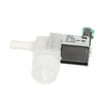
- Not filling: water supply valve turned off, kinked supply line, or a failed inlet valve such as the dishwasher water inlet valve 10023852.
- Not draining: clogged filter area, blocked drain path, or a restriction in the dishwasher drain hose 00744881.
- Buttons act “touchy” or don’t respond: moisture or residue on the control surface; wiping can trigger unintended presses.
Quick checks we recommend before replacing parts
- Confirm the door closes and latches firmly; then start the cycle again.
- Verify household power: reset the breaker and confirm the dishwasher has power.
- Make sure the water supply valve under the sink is fully open.
- If the unit is stuck mid-cycle, cancel/reset by holding Start for about 3 seconds.
- Dry the control panel and use a clean, dry fingertip to press the center of each button.
Helpful reference table
| Problem | First thing to check | Common next step |
|---|---|---|
| Won’t start | Door fully latched | Cancel/reset, then reselect cycle |
| No lights | Breaker/fuse | Open door (hidden controls) and retry |
| Not filling | Water supply valve open | Inspect inlet valve and supply line |
| Not draining | Filter/drain path clear | Inspect drain hose routing |
Why it matters
Catching simple issues early (door latch, power, water supply, reset) prevents unnecessary part replacement and helps protect components like the control board, drain pump, and heat pump from repeated failed starts.
For code-based issues, we use the Bosch dishwasher error codes guide to match symptoms to the right troubleshooting path.
Last updated: January 2026





