 Installation guide
 Owner’s manual






What is the difference between a regular GE and GE profile?
GE Profile is GE’s step-up line; compared with standard GE, it typically adds more premium design, more cycles and options, and more advanced features (often including connected or smart functions) while keeping the same core job of washing and drying dishes. For your GE PDT825SSJ4SS dishwasher, feature details and cycle options are listed in the PDT825SSJ4SS owner's manual.
What you usually get with GE Profile vs standard GE
- More wash and dry options (extra cycles, targeted wash zones, enhanced drying features)
- More premium finishes and styling
- More advanced controls and feedback (status indicators, more settings)
- More “convenience” features (rack adjustability, specialized jets, quieter operation on many models)
- Higher typical price point
How to tell what you have on the PDT825SSJ4SS
Use these quick checks to confirm whether your unit is GE or GE Profile:
- Look at the badge or logo on the door and control panel
- Check the model tag on the tub wall just inside the door
- Compare the listed features and cycles in the manual to what’s on your control panel
| Line | What it’s aimed at | Typical tradeoff |
|---|---|---|
| GE (standard) | Reliable essentials | Fewer premium options |
| GE Profile | Upgraded features and design | Higher cost, more electronics |
Why it matters
Knowing whether you have GE or GE Profile helps when you are comparing cycle behavior, troubleshooting, and ordering the right replacement parts (for example, user interface and control components can vary by series).
Last updated: January 2026
What is the average lifespan of a GE dishwasher?
Most GE dishwashers, including model PDT825SSJ4SS, typically last 10 to 12 years with normal household use and basic care. Heavy daily use, hard water scale, and skipped cleaning can shorten lifespan; consistent maintenance often helps units reach the upper end of the range.
What affects dishwasher lifespan the most
- Water quality: hard water speeds up mineral buildup on the heating system and internal passages.
- Cleaning routine: keeping the filter area and spray paths clear reduces strain on the circulation system.
- Loading habits: overloading can block spray arms and reduce cleaning performance.
- Heat and drying use: frequent heated dry cycles add wear to heating components.
- Door use: slamming or pulling on the door can stress latches, hinges, and springs.
Typical lifespan ranges (what we see most often)
| Usage pattern | Typical lifespan | Notes |
|---|---|---|
| Light (a few loads/week) | 12 to 15 years | Best case with regular cleaning |
| Average (1 load/day) | 10 to 12 years | Most common household scenario |
| Heavy (2+ loads/day) | 8 to 10 years | Faster wear on pumps, heater, and seals |
Maintenance steps that help you get the full lifespan
- Clean the filter area and remove debris from the sump regularly.
- Run a monthly cleaning cycle (dishwasher cleaner or approved descaling method).
- Verify the spray arms spin freely and holes are not clogged.
- Use the right detergent amount for your water hardness.
- Fix small leaks quickly so moisture does not damage wiring and controls.
For model-specific care and cleaning guidance, follow the schedule and steps in the PDT825SSJ4SS owner's manual.
Why it matters
A dishwasher that is maintained tends to clean better, drain more reliably, and avoid premature failures in high-wear parts like the heating system, circulation pump, and door latch. That usually means fewer service calls and a longer usable life.
Last updated: January 2026
Can a clogged drain cause an FTD error?
Yes. On the GE PDT825SSJ4SS dishwasher, an FTD (fail to drain) condition commonly happens when water cannot leave the tub due to a clog or restriction in the drain path, such as a blocked air gap, disposer connection, filter area, or a kinked drain hose. See the PDT825SSJ4SS owner’s manual for drain-check steps.
What to check first (fast, common fixes)
- Cancel the cycle so the dishwasher starts draining, then listen for the drain pump running.
- Open the door and confirm whether water is still standing in the bottom after the drain attempt.
- Check the sink and disposer; if the sink drains slowly, the dishwasher can back up too.
- If you have an air gap, remove the cover and clean out debris.
- Inspect the drain hose routing behind/under the unit; straighten any kinks or pinches.
- If the dishwasher drains into a disposer, make sure the disposer inlet plug was removed.
Drain path checklist (where clogs usually are)
| Drain location | What you might notice | What to do |
|---|---|---|
| Air gap (if installed) | Water standing in tub, slow drain | Clean the air gap cap and passage |
| Disposer connection | No drain or weak drain | Run disposer clear; confirm inlet plug removed |
| Drain hose | Intermittent drain, gurgling | Remove kinks; verify proper high loop |
| Filter area in tub | Poor cleaning plus slow drain | Clean filters per manual instructions |
When a part is likely involved
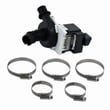
If the drain path is clear but the unit still will not pump out, the drain pump can be the issue (jammed impeller, worn pump, or electrical failure). For this model, the replacement is the drain pump asm WD19X24829.
Why it matters
A restricted drain can leave dirty water in the tub, trigger drain-related errors, and reduce cleaning performance. Clearing the drain path also prevents water from backing up through the air gap or disposer connection.
Last updated: January 2026
What is the most common problem with GE dishwashers?
The most common issues we see on GE dishwashers like model PDT825SSJ4SS are “won’t run/won’t start” symptoms and drain-related problems caused by power interruptions, an unlatched door, or clogs in the filter or drain path. Start with the quick checks in the PDT825SSJ4SS owner’s manual.
Most common symptoms and what usually causes them
- Dishwasher won’t run: tripped breaker, wall switch off, control lock enabled, door not fully closed
- Not draining: clogged filter, kinked drain hose, blocked disposer connection, drain pump issue
- Poor cleaning: spray arms blocked, overloaded racks, wrong detergent, low water temperature
- Suds/overflow: using the wrong detergent (hand dish soap)
- Odors and film: food debris buildup, hard water mineral deposits
Quick checks we recommend first (5 to 10 minutes)
- Confirm the dishwasher door closes firmly and latches.
- Check the breaker and any nearby wall switch that powers the dishwasher.
- Make sure the water shutoff valve under the sink is fully open.
- Remove and clean the filters; then re-seat them correctly.
- If you see heavy suds, stop the cycle and follow the manual’s steps to clear suds.
Parts that commonly relate to these problems
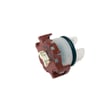
If the door won’t latch or the unit won’t start unless you push on the door, these parts are frequent fixes:
If drying is weak or cycles end with cool water, the heating circuit is often involved:
Symptom-to-likely-cause guide
| Symptom | Most likely area to check | Common next step |
|---|---|---|
| Won’t start | Door latch, power, control lock | Verify latch engagement; reset power |
| Won’t drain | Filter, drain hose, drain pump | Clean filter; inspect hose routing |
| Not cleaning | Loading, spray arms, detergent | Re-load; use proper detergent |
| Suds in tub | Wrong detergent | Use automatic dishwasher detergent only |
Why it matters
Start and drain problems can look like a “bad control,” but they are often caused by simple issues (door not latched, filter clog, or power switch off). Checking those first prevents unnecessary parts replacement and gets PDT825SSJ4SS running faster.
For code-based troubleshooting, we use the GE electronic dishwasher error codes reference to match the display message to the right checks.
Last updated: January 2026





