Owner’s manual
 Error Codes



How do I tell how many cubic feet my refrigerator is?
To find the cubic feet (capacity) of your Amana ASI2175GRS04 side-by-side refrigerator, measure the usable interior width, height, and depth in inches, multiply them, then divide by 1,728 to convert cubic inches to cubic feet. For model-specific details, check the ASI2175GRS04 owner's manual.
Quick capacity calculation (most accurate DIY method)
- Empty enough space to measure the main compartments.
- Measure interior dimensions in inches:
- Fresh food section: width, height, depth
- Freezer section: width, height, depth
- Calculate each section’s cubic feet, then add them together.
Formula:
- Cubic feet = (width × height × depth) ÷ 1,728
Measuring tips that improve accuracy
- Measure to the inside walls, not the door bins.
- Use the usable space; shelves and drawers reduce real storage.
- Measure depth to the back wall, not to the front edge of shelves.
Example (use your own measurements)
| Section | Width (in) | Height (in) | Depth (in) | Cubic feet |
|---|---|---|---|---|
| Refrigerator | 28 | 45 | 18 | 13.1 |
| Freezer | 14 | 45 | 18 | 6.6 |
| Total | 19.7 |
Other ways to confirm capacity
- Check the model and rating information listed inside the refrigerator compartment (often on a side wall).
- Compare your measured total to typical side-by-side sizes.
Typical side-by-side capacity ranges
- Small: 18 to 20 cu. ft.
- Medium: 21 to 23 cu. ft.
- Large: 24 to 28 cu. ft.
Why it matters
Knowing cubic feet helps us choose the right replacement shelves and bins, plan food storage, and compare energy use and performance across similar Amana refrigerators.
Last updated: February 2026
What is the average lifespan of an Amana refrigerator?
Most Amana refrigerators, including the Amana ASI2175GRS04 side-by-side, typically last 10 to 15 years. You can often reach the high end of that range by keeping airflow and seals in good shape, using correct temperature settings, and staying on top of basic cleaning listed in the ASI2175GRS04 owner's manual.
Typical lifespan and what affects it
A refrigerator’s life is mostly driven by how hard the sealed system and fans have to work.
- Heat and ventilation: Hot rooms and tight clearances make the compressor run longer.
- Door seal condition: Leaky gaskets cause warm air intrusion and longer run times.
- Condenser cleanliness: Dust buildup raises operating temperatures.
- Water and ice usage: Ice maker and dispenser components add wear points.
- Power quality: Frequent outages or surges can stress electronic controls.
Quick maintenance checklist (best ROI)
Use these habits to extend service life and reduce cooling complaints:
- Keep the unit in a 55°F to 110°F location range; 60°F to 90°F is preferred for efficiency.
- Leave space for door swing and airflow; many installations need about 2 inches minimum on each side.
- Clean interior spills and odors regularly; follow the cleaning guidance in the manual.
- Check doors close fully and shelves or bins are not blocking closure.
- Replace water filtration on schedule if your model uses it; see how to replace the water filter in an Amana refrigerator.
Common “life-limiting” parts to watch
These parts often show symptoms before a refrigerator fully fails:
| Symptom | Common area to check | Example part for ASI2175GRS04 |
|---|---|---|
| Warm fridge or freezer, weak airflow | Evaporator fan system | Refrigerator evaporator fan motor WP2315549 |
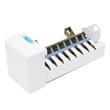
| No ice or slow ice production | Ice maker system | Refrigerator ice maker assembly WPW10300022 |
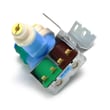
| No water dispense, no ice fill | Water supply valve | Refrigerator water inlet valve WPW10179146 |
Why it matters
If the compressor and fans run longer than necessary (warm room, dirty coils, poor door sealing), the refrigerator can still cool, but it accumulates extra runtime. That extra runtime is what typically shortens overall lifespan.
Last updated: February 2026
What is the most common problem in the refrigerator?
The most common refrigerator problem is a cooling complaint (food too warm or freezer not freezing). On the Amana ASI2175GRS04, this is often tied to airflow restrictions (blocked vents), doors not sealing, or normal longer run times after heavy use; our ASI2175GRS04 owner's manual outlines these common causes and checks.
Most common symptoms we see
- Refrigerator section is warm but freezer seems OK
- Freezer is warm and ice production slows or stops
- Unit runs a lot (especially in warm rooms or with frequent door openings)
- Unusual noises that are actually normal operating sounds
- Moisture buildup inside from humidity or doors not closing fully
Quick checks that fix many “not cooling” calls
- Give it time after changes: After installation or control adjustments, allow 24 hours to stabilize.
- Check door sealing: Make sure both doors close fully and gaskets are making contact all the way around.
- Clear the vents: Remove packages blocking air vents so cold air can circulate.
- Avoid overloading with warm food: Large warm loads can raise temps for several hours.
- Do not set to coldest expecting faster cooling: The manual notes the coldest setting does not cool faster.
What “runs too much” and “noisy” usually mean on this model
Your ASI2175GRS04 uses an energy-efficient compressor and fans that can run longer at lower speeds. Many sounds are normal, including buzzing/clicking from the water valve and popping as walls expand and contract.
| What you notice | Most likely cause | What to do first |
|---|---|---|
| Runs a lot | Warm room, frequent door openings, big food load | Reduce openings; recheck temps in 24 hours |
| Warm temps | Doors not closed, vents blocked, controls not set for conditions | Seal doors; clear vents; adjust and wait |
| Buzzing/clicking | Water valve cycling for dispenser or ice maker | Normal; if no water line, turn off ice maker |
When a part is commonly involved
If you have no ice, hollow cubes, or slow fill, the water supply and valve are common culprits. We often inspect the refrigerator water inlet valve WPW10179146 when the water line is open and unkinked but flow is still weak.
Why it matters
Cooling and ice-making problems are usually caused by airflow, door sealing, or water supply issues, not “low refrigerant.” Doing the quick checks first prevents unnecessary part replacement and helps protect food temperatures.
Last updated: February 2026