Installation guide
 Owner’s manual
 Error Codes





Is 4.5 cu ft a large washer?
Yes. A 4.5 cu. ft. washer is considered large capacity for most households; it typically handles bigger mixed loads and many bulky items with fewer cycles. For your Whirlpool WTW6200SW0, use the loading guidance in the WTW6200SW0 owner's manual to avoid overfilling and poor spin results.
What “large capacity” means in real use
A 4.5 cu. ft. tub usually fits more clothing per load than older standard top-load washers, but capacity still depends on fabric type and how freely items can move during wash.
- Large loads should be evenly distributed around the basket
- Keep items below the top row of basket holes to help the washer spin out water effectively
- Bulky items (blankets, comforters) should be washed one at a time or balanced with similar items
- If clothes finish too wet, reduce load size and select a higher spin option
How to tell if you loaded it “too full”
Overloading is less about weight and more about movement. If the load cannot circulate, cleaning and rinsing suffer.
| Sign | What it points to | What we recommend |
|---|---|---|
| Clothes come out very wet | Unbalanced or oversized load reduced spin speed | Redistribute load; run Drain/Spin; wash smaller loads |
| Lint or detergent residue | Load too tight to rinse clean | Reduce load size; use correct detergent amount |
| Washer “walks” or gets noisy | Floor not level or load out of balance | Level the washer; rebalance the load |
Why it matters
A “large” washer only performs like a large washer when the load stays balanced and can move freely. That protects key components (basket drive, suspension, drain system) and helps prevent wet loads at the end of the cycle.
Last updated: January 2026
What is the life expectancy of a whirlpool washing machine?
Most Whirlpool washing machines, including the Whirlpool WTW6200SW0 washer, typically last 10 to 15 years with normal household use and basic maintenance. Keeping the washer level, avoiding overloads, and fixing small issues early helps you reach the high end of that range.
What affects washer lifespan the most
- Load size and balance: frequent overloading or consistently unbalanced loads increases wear on the suspension and drive system.
- Drain performance: slow draining makes the washer work harder and can lead to spin problems.
- Water quality: hard water can leave mineral buildup that affects cleaning and components.
- Routine cleaning: detergent residue and grime shorten component life and can cause odors.
- Timely part replacement: replacing worn parts early prevents secondary damage.
Maintenance checklist (simple, high impact)
Use the care and maintenance steps in the WTW6200SW0 owner's manual as your baseline, then add these habits:
- Keep the washer level and stable to reduce vibration.
- Use HE detergent in the correct amount to limit residue.
- Leave the lid open between loads to help the tub dry.
- Inspect fill hoses periodically and replace if cracked or bulging.
- If the washer starts to bang or walk, address it quickly (leveling, load size, suspension).
Common “end-of-life” symptoms and likely areas
| Symptom | What it often points to | Example part for this model |
|---|---|---|
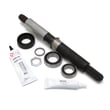
| Loud roaring or grinding in spin | Tub bearing/drive shaft wear | Whirlpool washer tub bearing and drive shaft kit W10435302 |
| Won’t drain or drains slowly | Drain pump or restriction | Pump-water W10536347 |
| Excessive shaking or out-of-balance | Suspension wear or leveling issue | Suspension W10820048 |
| Won’t lock or stops mid-cycle | Lid lock problem | Washer lid lock WPW10619844 |
Why it matters
A washer that is maintained and repaired early usually costs less to keep running and cleans better. Catching vibration, draining, or lid-lock issues early helps protect high-cost assemblies like the outer tub and basket.
Last updated: January 2026
What is the most common problem with whirlpool washers?
For Whirlpool washers like model WTW6200SW0, the most common service issues we see are draining/spinning problems and water leaks. Many of these start with simple causes such as an unbalanced load, a kinked hose, or oversudsing; the troubleshooting steps in the WTW6200SW0 owner's manual help you narrow it down quickly.
Most common symptoms and what usually causes them
- Won’t drain or won’t spin: drain hose issue, oversudsing, or a failing drain pump
- Leaking water: loose fill hoses, mis-seated hose washers, or a slow/clogged standpipe
- Loud noise or vibration: washer not level, floor flexing, or an unbalanced load
- Won’t start: lid not closed or lid lock problem
- Poor cleaning results: water temperature, sorting, or detergent amount
Quick checks we recommend first (WTW6200SW0)
- Balance the load: distribute items evenly; keep the load height at or below the top row of basket holes.
- Confirm the washer is level: tighten leveling feet and locknuts; reduce floor flex with a 3/4-inch plywood sheet if needed.
- Check hoses and drains:
- Tighten fill hoses and confirm hose washers are seated.
- Make sure the drain hose is pulled from the cabinet and secured to the standpipe or laundry tub.
- Verify the household drain can handle fast flow (backup can look like a washer leak).
- Address oversudsing: cancel the cycle, run Drain & Spin, then restart without adding more detergent.
Common problem-to-part match (when a part is actually needed)
| Symptom | Most likely area | Example part for WTW6200SW0 |
|---|---|---|
| Won’t drain / humming during drain | Drain pump or drain path | Pump-water W10536347 |
| Won’t start / lid error behavior | Lid lock system | Washer lid lock WPW10619844 |
| Excessive shaking / banging | Suspension system | Suspension W10820048 |
Why it matters
Catching the root cause early prevents repeat failures. For example, a slow standpipe can mimic a leak, and chronic unbalanced loads can increase vibration and wear on suspension and drive components.
Last updated: January 2026