Installation guide
 Owner’s manual
 Error Codes


What is the most common problem with a KitchenAid dishwasher?
On the KitchenAid KDFE104DWH0 dishwasher, the most common problems we see are poor cleaning (often tied to filter or spray-arm issues), drain problems (water left in the tub), and start or run interruptions caused by the door not fully latching or the Start/Resume condition. For model-specific operating checks, use the KDFE104DWH0 owner's manual.
- Dishes still dirty: restricted wash water flow from a dirty filter area, blocked spray-arm holes, or loading that stops spray-arm rotation.
- Water remains in the tub: food blockage in the drain path, disposer connection issues, or a failing drain pump.
- Won’t start or stops: door not fully closed and latched, Start/Resume light blinking, or loading interference preventing the door from closing.
- Detergent not dispensing: dispenser door blocked by a large item, or detergent issues (old detergent, wrong type, excess moisture).
- White residue or odors: hard water buildup and infrequent cleaning.
- Confirm the door closes freely; remove anything that hits the wash system at the back of the tub.
- If Start/Resume is blinking, close the door and press START/RESUME.
- Spin the spray arms by hand; make sure tall items or the utensil basket do not stop rotation.
- Clean the filters regularly (monthly is a solid baseline for most homes).
- For hard water, use rinse aid and run a dishwasher cleaner monthly.
| Symptom | Most likely part area | Example part for KDFE104DWH0 |
|---|---|---|
| Water won’t drain, standing water | Drain system | Dishwasher drain pump WPW10348269 |
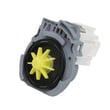
| Poor wash action, weak circulation | Pump and motor system | Dishwasher pump and motor assembly WPW10605057 |
| Door won’t latch, won’t run | Door latch | Dishwasher door latch WPW10653840 |
Cleaning and draining problems usually start as a simple restriction (filters, spray arms, drain path). Fixing those early helps prevent repeat cycle interruptions, detergent residue, odors, and unnecessary part replacements.
Last updated: February 2026
What is the average lifespan of a KitchenAid dishwasher?
Most KitchenAid dishwashers, including model KDFE104DWH0, typically last 10 to 14 years with normal household use. Lifespan depends most on water quality, how often you run cycles, and routine care like keeping the filter area clean and fixing draining or heating problems early (see the KDFE104DWH0 owner’s manual).
- Hard water and mineral buildup (can reduce cleaning and drying performance over time)
- Heavy use (multiple loads per day shortens overall service life)
- Drain and fill health (standing water, slow draining, or poor filling strains pumps and valves)
- Heating performance (weak drying can point to heater or control issues)
- Basic maintenance (cleaning and correct detergent use prevent chronic problems)
We recommend these simple habits for KDFE104DWH0:
- Run hot water at the sink before starting a cycle.
- Use rinse aid consistently; KitchenAid notes it is necessary for good drying results.
- Keep spray arms able to spin freely; avoid blocking them with tall items.
- Clean the filter area regularly and remove food debris.
- Address “won’t drain,” “won’t fill,” or “not drying” symptoms promptly.
| What you’re planning | Typical expectation | What it usually means |
|---|---|---|
| Normal service life | 10 to 14 years | Routine upkeep, occasional minor repairs |
| Earlier replacement | Under 10 years | Hard water, heavy use, neglected maintenance |
| Longer life | 14+ years | Good water conditions, consistent care, timely repairs |
A dishwasher that is maintained tends to keep wash times, energy use, and drying performance closer to “like new.” KitchenAid also notes modern energy-efficient models often run 2 to 3 hours per load, so longer cycles are normal and not a sign of reduced lifespan.
Last updated: February 2026
Can I replace dishwasher parts myself?
Yes. For KitchenAid dishwasher model KDFE104DWH0, many common repairs are DIY-friendly if you shut off power and water first and follow the step-by-step instructions in the KDFE104DWH0 installation guide. For electrical diagnostics or major leak repairs, we recommend using the guide’s procedures and working carefully.
Usually DIY for most homeowners:
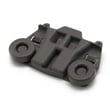
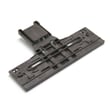
- Replacing rack hardware such as the dishwasher dishrack roller assembly, lower WPW10195417
- Replacing a drain hose (watch for kinks and routing)
- Replacing a door latch if the door will not close securely
- Cleaning and maintaining filters and spray areas
Often better for an experienced DIYer or technician:
- Replacing a water inlet valve (requires careful water-line handling)
- Replacing pumps, motors, or internal hoses (more disassembly, leak risk)
- Troubleshooting control or wiring issues
- Turn off the breaker to the dishwasher (do not rely on the control panel being off).
- Shut off the dishwasher water supply valve.
- Protect the floor; slide the unit slowly to avoid pinching the water line, drain hose, or power cord.
- Keep screws out of the sump and pump area (cover the pump area with a towel when working with the door open).
- Re-center and level the dishwasher after reinstalling so the door and tub align correctly.
The KDFE104DWH0 installation steps call out a few DIY-critical points:
| Task | What to watch for | Why it matters |
|---|---|---|
| Securing the dishwasher | Use the correct brackets and screws; do not drop screws into the bottom | Prevents shifting when the door opens |
| Door spring tension | Adjust both sides to the same hole position | Prevents the door from falling open or slamming shut |
| Sliding into the opening | Do not kink or pinch hoses/wiring | Avoids leaks and no-power/no-fill problems |
A dishwasher can appear “fixed” but still leak, drain poorly, or rub the door if it is not secured, centered, and leveled after the repair. Following the model-specific installation steps helps prevent repeat failures and protects parts like the drain pump, inlet valve, and door latch.
Last updated: February 2026
How do I run a diagnostic on my KitchenAid dishwasher?
On the KitchenAid KDFE104DWH0 dishwasher, you typically start diagnostics by using a keypad sequence to enter Service/Diagnostic mode, then pressing START/RESUME to let the dishwasher step through checks and display stored fault codes. Use the exact button sequence for your console in the KDFE104DWH0 owner’s manual.
- Make sure the dishwasher is in Standby (not running a cycle).
- Using any 3 keys (avoid START/RESUME), press them in this pattern:
- 1-2-3, 1-2-3, 1-2-3 (same three keys, same order)
- Watch for the console to respond (often multiple indicator lights illuminate or flash).
- Close the door (if required on your installation) and press START/RESUME to begin the test sequence.
- Heated Dry
- Normal
- 1 Hour Wash (or similar)
- A guided test of key functions (fill, wash, drain, heater checks depending on design)
- Stored error or fault codes you can use to pinpoint the failure
- A faster way to confirm whether the issue is control-related, a door latch problem, or a drain/fill problem
If you see a code, match it using the KitchenAid microclean he dishwasher error codes reference.
These checks fix most “won’t enter test mode” situations:
- Confirm the door is fully closed and latched; a blinking Start/Resume light often means the door is not latched.
- Press CANCEL, then try the 1-2-3 sequence again.
- Disable Sleep Mode by pressing START/RESUME or CANCEL, or opening and closing the door before trying.
- Try a different set of three keys (some consoles ignore certain option keys).
- Restore power (turn breaker off for 1 minute, then on) and retry.
| Symptom | Most common cause | What to check next |
|---|---|---|
| No lights respond to the sequence | No power or control not awake | Breaker, door closed, then retry |
| Start/Resume blinks | Door not latched | Latch alignment, then retry |
| Test starts but won’t drain | Drain restriction or pump issue | Drain hose routing, filter area |
Running diagnostics on the KDFE104DWH0 helps you avoid guesswork. The fault code and test behavior point you toward the right repair path, whether that is a loading issue, a drain problem, or a component like the dishwasher door latch WPW10653840.
Last updated: February 2026