Owner’s manual




Is it cheaper to repair or replace a garage door opener?
Repairing a Craftsman garage door opener like model 13953970SRT is cheaper when the problem is limited to setup, controls, or safety sensors; replacing is the better value when the opener is older, has repeated failures, or needs major internal repairs (motor/gear). Use the 13953970SRT owner's manual to confirm adjustment and testing steps before spending money.
Quick decision guide (repair vs replace)
We use these rules of thumb for most residential openers:
- Repair when the door is mechanically fine and the opener needs adjustments, reprogramming, or sensor alignment.
- Repair when the issue is intermittent and tied to wiring connections, wall control, or remote programming.
- Replace when the opener has frequent breakdowns, loud grinding, or inconsistent travel even after proper adjustments.
- Replace when the repair involves major drive components (gear kit), motor, or multiple parts at once.
- Replace when you want modern upgrades (battery backup, smartphone control, quieter operation) and your current unit lacks them.
Typical cost comparison
Actual pricing varies by region and door size, but this table helps set expectations.
| Option | What you usually pay for | Typical total range | Best when |
|---|---|---|---|
| Repair | Service call + small parts/adjustments | $100 to $300 | Sensors, travel/force settings, remote/keypad issues |
| Major repair | Labor + internal parts | $250 to $500+ | Gear/motor-related issues but opener is otherwise in great shape |
| Replace opener | New opener + installation | $300 to $1,000+ | Older unit, repeated failures, or you want new features |
Checks to do before deciding
These steps often turn a “replace it” situation into a simple repair:
- Test door balance: a poorly balanced door overloads the opener and causes repeat problems.
- Inspect and align safety reversing sensors; sensor issues commonly prevent closing.
- Adjust travel limits and force correctly; if you change one, the other may also need adjustment.
- Test the safety reversal system after any adjustment (the manual calls for monthly testing using a 1-inch object or a 2x4 laid flat).
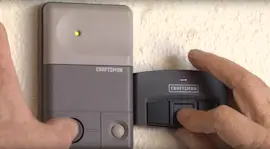
- Reprogram remotes/keyless entry if controls are inconsistent.
For step-by-step troubleshooting patterns (including light blink diagnostics), use Craftsman error codes.
Why it matters
A garage door opener is a safety device, not just a convenience. If travel/force settings or the safety reversal system are wrong, the door may not reverse when it should. That is why we prioritize proper adjustment and testing before investing in major repairs or replacement.
Last updated: February 2026
What is the life expectancy of a Craftsman garage door opener?
A Craftsman garage door opener typically lasts 10 to 15 years. For your Craftsman 13953970SRT, lifespan depends most on how many cycles it runs per day and whether the door is kept properly balanced and the safety system is tested and adjusted as needed (see the 13953970SRT owner's manual).
Typical lifespan and what changes it
Most openers wear out from repeated starts and stops, vibration, and load from a heavy or binding door.
- More daily cycles (multiple drivers, main entry door) shortens life
- Poor door balance increases strain on the motor, gears, and rail
- Skipped safety-reversal testing leads to misadjustments and extra wear
- Harsh conditions (heat, dust, humidity) accelerate component aging
- Timely small repairs (sensors, wall control, remote issues) extend service life
Maintenance that extends life on the 13953970SRT
Your manual calls out key safety and adjustment practices that also protect the opener from overload.
- Test the safety reversal monthly (door should reverse on a 1-inch object or a flat 2x4)
- Keep the garage door properly balanced so the opener is not doing the heavy lifting
- Disconnect power before servicing the opener or removing covers
- Do not use the emergency release handle to pull the door open or closed
- Have a trained door systems technician handle springs and cables (they are under extreme tension)
Quick “repair or replace” guide
| What you’re seeing | What it usually means | Best next step |
|---|---|---|
| Opener runs but door barely moves | Door is binding or drive components are worn | Check door balance and travel; then inspect drive system |
| Door reverses unexpectedly | Force/travel settings or safety system needs attention | Re-test safety reversal; adjust per manual |
| Intermittent operation, blinking lights | Sensor alignment, wiring, or control issue | Follow troubleshooting and error-code steps |
| Very loud grinding or popping | Gear wear or rail/drive wear | Plan for repair soon; replacement may be more cost-effective if older |
Why it matters
A garage door opener is designed to guide and lift a properly working door, not compensate for a door that is out of balance. Keeping the door balanced and the safety reversal system verified monthly reduces strain and helps you reach the full 10 to 15 year life.
For troubleshooting patterns and diagnostic flashes, use our Craftsman error codes resource. For parts and model lookups, search by model number on Sears PartsDirect.
Last updated: February 2026
Where can I buy Craftsman garage door opener parts?
You can buy replacement parts for your Craftsman garage door opener model 13953970SRT through our model-based parts lookup and diagrams, then order the exact components you need. For part identification and compatibility details, use the 13953970SRT owner's manual and shop through Sears PartsDirect.
Best way to find the right part for 13953970SRT
We recommend matching parts by function and location in the opener system (rail, trolley, sensors, controls) so you order the correct replacement the first time.
- Confirm the full model number: 13953970SRT
- Identify the system involved: remote control, wall control, safety reversing sensors, rail/trolley, or motor unit
- Use the parts diagram to match the part shape and mounting location
- Compare any numbers printed on the old part (if present)
- Check whether your opener uses SRT remotes and keyless entry (common on this series)
Common parts customers replace
These are frequent wear or failure items on Craftsman openers like the 13953970SRT.
| Part type | What it affects | Common symptom |
|---|---|---|
| Safety reversing sensors | Closing safety system | Door will not close, lights blink, reverses |
| Wall control / door control button | Command input | Wall button does nothing or is intermittent |
| Remote control / keyless entry | Wireless access | Remote range issues, won’t program, no response |
| Rail/trolley hardware | Door travel | Door moves unevenly, trolley binds, noisy travel |
| Sprocket/drive components | Power transfer | Motor runs but door doesn’t move, grinding noise |
Why it matters
Garage door opener parts are highly model- and series-specific. Using the correct 13953970SRT-COMPATIBLE part helps keep the safety reversing system working properly and prevents repeat failures from mismatched controls, sensors, or drive components.
Helpful DIY resources
If you are troubleshooting before ordering parts, use these guides to narrow down the failure.
- Craftsman error codes for diagnostic flashes and common fault patterns
- Garage door opener remotes wont work video for remote and programming checks
- How to maintain a garage door opener to reduce wear on the rail, trolley, and drive system
Last updated: February 2026
What are the common problems with Craftsman garage door openers?
Common problems with the Craftsman 13953970SRT garage door opener include no power or control response, safety reversing sensor issues that stop the door from closing, travel or force settings that need adjustment, and mechanical strain from a door that is out of balance. Use the troubleshooting steps in the owner's manual first, then search parts by model on Sears PartsDirect.
Most common symptoms and likely causes
- No response from wall control or remote: outlet has no power, breaker tripped, or motor overload protector needs a reset period.
- Remote works but wall control does not: wall control wiring issue or a failed wall control.
- Door will not close or reverses: safety sensor beam blocked, dirty lenses, or sensors misaligned.
- Short remote range: antenna not hanging down, interference, or metal doors and foil-backed insulation.
- Door runs, then stops or strains: door binding, track issues, or springs out of balance.
Quick checks we recommend
- Confirm power at the ceiling outlet (a lamp test works well).
- Disable any manual door lock; clear ice, snow, or obstructions.
- Clean and align the safety reversing sensors; keep the beam path clear.
- Pull the emergency release and move the door by hand; a balanced door stays near mid-travel.
- If behavior is erratic, erase and reprogram remotes and keyless entry codes.
Symptom-to-next-step map
| What you notice | Most likely cause | Best next step |
|---|---|---|
| No operation from any control | No power or overload tripped | Restore power; wait, then retry |
| Will not close from remote | Sensor beam issue | Align sensors; clear obstruction |
| Reverses while closing | Obstruction or beam interrupted | Remove obstruction; recheck sensors |
| Strains or needs high force | Door out of balance | Do a balance test; service door system |
Why it matters
Many “opener problems” start with the door system (balance, springs, binding). Fixing the door first prevents nuisance reversals, overload trips, and premature wear on the motor unit.
Last updated: February 2026