 Installation guide
 Owner’s manual


How to identify a Kenmore washer model?
Your Kenmore washer model number is printed on the model and serial number label; on Kenmore model 11026422502, that label is located under the washer lid. Once you have the full model number, we can match the correct parts, diagrams, and repair instructions.
Where to look on Kenmore washers
Check these common label locations (the exact spot varies by washer style):
- Top-load washers: under the lid, around the tub opening or on the underside of the lid
- Front-load washers: inside the door opening, often on the door frame
- All styles: back panel, near the power cord, or behind the control panel area
For model-specific placement and how the label looks, use the 11026422502 owner's manual.
What the model number looks like (and what to write down)
Record the model number exactly as shown on the label.
| Item | What to capture | Why it matters |
|---|---|---|
| Model number | Full number (for example, starts with 110 on many Kenmore units) | Ensures parts fit your exact washer |
| Serial number | Full serial | Helps confirm production series and compatible revisions |
| Purchase date | Month and year | Useful for maintenance tracking and service records |
Quick tips to avoid ordering the wrong part
- Copy the model number character-for-character (no spaces added)
- Use the full model number, not just the first 3 digits
- If the label is worn, take a clear photo and zoom in
- Match parts by model number first, then confirm by part name (for example, lid switch assembly, drain pump, inlet valve)
Why it matters
Kenmore washers often share similar cabinets and controls across multiple series; the model number is what separates look-alike machines and prevents mismatched parts and return delays.
Last updated: February 2026
What is the average lifespan of a Kenmore washer?
A Kenmore washer typically lasts 10 to 15 years with normal household use. For Kenmore model 11026422502, keeping loads balanced, avoiding overloading, and following the care and use guidance in the 11026422502 owner's manual helps you reach the upper end of that range.
Typical lifespan and what affects it
Most washers wear out from a few predictable stress points: heavy loads, repeated unbalanced spinning, and water-related issues (valves, hoses, pumps).
Common factors that extend washer life:
- Wash loads that stay balanced and can move freely
- Not overfilling the tub (overloading strains the drive system)
- Using the correct amount of detergent and bleach
- Keeping the washer level so it does not bang during spin
- Fixing small issues early (leaks, slow drain, no-agitate)
Common factors that shorten washer life:
- Frequent overloading or washing bulky items without balancing
- Chronic out-of-balance spinning and vibration
- Running with a failing drain pump or lid switch
- Hard water buildup and sediment in the inlet valve
Quick maintenance habits we recommend
These steps match the kind of use guidance found in the manual and reduce wear on the basket, drive, and suspension.
- Sort and load so the tub stays balanced (mix large and small items)
- Do not overload; the load should move freely during washing
- Use bleach correctly; do not pour undiluted bleach directly on fabrics
- Level the washer and re-check if it starts vibrating more than normal
- Inspect fill and drain hoses periodically for bulges, cracks, or seepage
Parts that commonly drive “end of life” decisions
When a washer is near the end of its service life, repairs often involve the drive or drain system. These are common wear items for this style of Kenmore top-load washer:
| Symptom | Common wear area | Example part for this model |
|---|---|---|
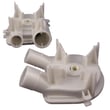
| Won’t drain or drains slowly | Drain pump or drain path | Washer drain pump WP3363394 |
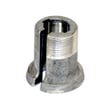
| Won’t spin or agitates poorly | Motor coupling, clutch, drive block | Washer motor coupling 285753A |
| Stops when lid is opened or won’t run/spin | Lid switch circuit | Washer lid switch assembly WP8318084 |
Why it matters
A realistic lifespan helps you decide whether to repair or replace. If your 11026422502 is within the 10 to 15 year window, a targeted repair (like a drain pump or motor coupling) often restores reliable operation and prevents secondary damage.
Last updated: February 2026
What replacement parts are most commonly needed for the 11026422502?
For Kenmore washer model 11026422502, the most commonly replaced parts are the ones tied to everyday wear: agitation, draining, spinning, and lid safety. If your washer won’t agitate, won’t drain, won’t spin, or won’t start, these parts are the first places we check. See the owner's manual for model-specific operation and care details.
Most common replacement parts (and what they fix)
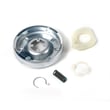
- Agitation problems (weak or no agitation): agitator dog 80040, agitator cam 285748
- Won’t spin or intermittent spin: washer lid switch assembly WP8318084, clutch 285785
- Won’t drain, drains slowly, or hums: washer drain pump WP3363394, washer inner drain hose WPW10358149
- Leaks from the tub area: washer tub seal WP8577376, washer tub gasket W10814296
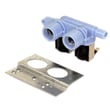
- No fill or fill issues (slow fill, no hot/cold): washer inlet valve 285805
Quick symptom-to-part guide
| Symptom | Most likely parts to check | What you’ll notice |
|---|---|---|
| Agitator moves but clothes barely circulate | Agitator dog, agitator cam | Clicking, slipping, poor rollover |
| Washer won’t start or stops when lid opens | Lid switch assembly | No spin, no drain in some cycles |
| Water left in tub | Drain pump, inner drain hose | Humming pump, slow or no drain |
| Loud noise or poor spin | Clutch, suspension spring | Thumping, slow spin-up |
| Water leaking under washer | Tub seal, tub gasket | Puddle under center of washer |
How we recommend choosing the right part
- Match the symptom first, then confirm the part in the diagrams for model 11026422502.
- If multiple symptoms happen together (for example, no spin and no drain), start with the lid switch and drain pump.
- Replace wear items in pairs when it makes sense (for example, drain pump and a damaged drain hose).
- After installing, run a small test load to confirm fill, agitate, drain, and spin.
Why it matters
Replacing the correct wear part restores normal wash action and protects major components like the drive system and gearcase from extra strain.
Last updated: March 2026





