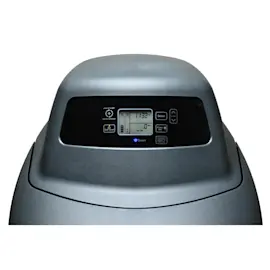
Owner’s manual
 Error Codes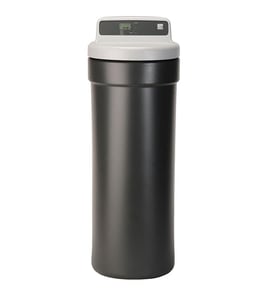




What is the average lifespan of a water softener?
Most water softeners last 10 to 15 years. For the Kenmore Elite 625394260, regular care (keeping the right salt level, preventing freezing, and cleaning the brine tank periodically) helps you reach the typical lifespan and avoid early valve and seal wear; see the 625394260 owner's manual.
Water softener life depends most on water hardness, iron content, and how well the unit is maintained.
- Average: 10 to 15 years
- Well-maintained units in moderate conditions: often 15 to 20 years
- Heavy-demand conditions (very hard water, iron, poor maintenance): can be closer to 7 to 10 years
The manual guidance for this model supports these upkeep habits.
- Keep the salt tank about 1/4 to 1/2 full in humid areas to reduce salt bridging.
- Use nugget or pellet water softener salt (avoid rock salt that can introduce sediment).
- Clean out the salt storage tank every 2 to 3 years.
- Protect the softener and piping from freezing (freeze damage can ruin tanks/valves).
- Periodically inspect for leaks and unusual cycling during regeneration.
If your 625394260 is not softening well, runs constantly, or leaks at the valve, these are common wear items.
| Symptom | Common wear area | Example part for this model |
|---|---|---|
| Water stays hard, unit seems to regenerate but results are poor | Valve sealing surfaces | Kenmore water softener seal kit 7185487 |
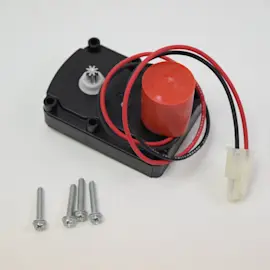
| Clicking, stalled regeneration, or no movement through cycles | Drive motor or gear train | Kenmore water softener valve motor 7286039 |
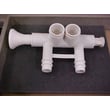
| Leaks or poor brine draw during regeneration | Venturi/valve sealing | Water softener venturi gasket 7204362 |
A water softener that is near end-of-life can waste salt and water, allow scale buildup on plumbing and water heaters, and cause inconsistent water quality. Staying on top of salt type, salt level, and periodic cleaning is the simplest way to protect the valve body, rotor, and seals.
Last updated: January 2026
What water softeners do plumbers recommend?
Plumbers typically recommend water softeners that use a proven control valve design, have readily available replacement parts, and can be sized correctly for your home’s hardness (grains per gallon) and flow rate. If you already own a Kenmore Elite water softener model 625394260, keeping it properly set up and maintained is usually the most practical “recommended” choice.
When plumbers recommend a softener, they usually prioritize reliability and serviceability over brand hype.
- Correct sizing for your hardness level (gpg) and household demand (gpm)
- A dependable valve and motor that can complete regeneration consistently
- Easy access to wear parts like seals, gaskets, and screens
- Straightforward bypass and plumbing connections for service
- Clear instructions for setup, sanitation, and regeneration timing
For your Kenmore Elite 625394260, we recommend using the 625394260 owner's manual to confirm your hardness setting, salt type setting, and regeneration schedule.
| What plumbers recommend | Why it’s recommended | Best fit when… |
|---|---|---|
| Meter-demand (on-demand) softeners | Regenerates based on water use, saves salt and water | Water use varies week to week |
| Time-clock softeners | Simple scheduling, predictable regeneration | Water use is very consistent |
| Serviceable valve designs | Parts are easy to source and replace | You want long-term repairability |
A plumber may recommend repair first when the unit is otherwise a good match for the home.
Check these common issues:
- Salt bridging or salt mushing in the brine tank
- Incorrect hardness or salt setting in the control
- Clogged screens or restricted flow
- Valve wear causing leakage or poor regeneration
- Motor or gear issues preventing the valve from indexing
Parts that commonly restore performance include the Kenmore water softener seal kit 7185487 and the Kenmore water softener valve motor 7286039.
A “recommended” water softener is one that matches your water chemistry and household demand, then regenerates reliably. When settings are wrong or valve parts wear, you can waste salt, lose soft water, and put extra scale load on fixtures and the water heater.
Last updated: January 2026
How often does a water softener need to be serviced?
For the Kenmore Elite water softener model 625394260, we service it on a simple schedule: check salt monthly, clean the salt storage tank every 2 to 3 years, and troubleshoot immediately if soft water performance drops. Use the 625394260 owner's manual for the exact maintenance steps and safety precautions.
- Monthly: Check salt level and look for salt hardening or bridging (more common in humid areas).
- Every refill: Use nugget or pellet water softener salt; avoid rock salt because sediment can stop the softener from working.
- Every 2 to 3 years: Clean out the salt storage tank to maintain optimum performance.
- Anytime symptoms show up: Service right away if you notice hard water signs (spots, soap not lathering, scale) or the unit is not regenerating correctly.
When the softener is producing soft water, it is in Service mode. Over time, the resin beads fill with hardness minerals and the unit must regenerate (recharge) using brine. On this model, regeneration is started by the electronic timer (commonly set for 2:00 a.m.) and runs through multiple cycles (fill, brining, rinses, backwash).
- Confirm the unit has salt and the brinewell cover is in place.
- Check for salt bridging or hardened salt; break it up and recheck operation.
- Verify the drain hose is flowing strongly during backwash and fast rinse.
- If the unit is not drawing brine, inspect for restrictions that can stop brine draw.
- If you suspect internal valve leakage, worn seals are a common cause; consider the Kenmore water softener seal kit 7185487.
| Task | Typical frequency | Why you do it |
|---|---|---|
| Check salt level | Monthly | Prevents loss of regeneration brine |
| Break up salt bridging | As needed | Restores proper brine making |
| Clean salt storage tank | Every 2 to 3 years | Helps maintain optimum performance |
| Inspect valve sealing surfaces | As needed | Helps prevent internal bypass and hard water |
A water softener can only remove hardness while the resin bed is working and the unit can regenerate correctly. Staying on schedule prevents hard water symptoms, reduces wasted salt, and helps protect plumbing and water-using appliances.
Last updated: January 2026
Is it worth repairing a water softener?
Repairing a Kenmore Elite water softener model 625394260 is worth it when the problem is limited to common service parts (seals, motor, cam and gear, venturi components) and the cabinet and tanks are in good shape. Replacing the whole unit makes more sense when the resin tank leaks or repair costs approach half the price of a comparable new softener.
- Repair it if the softener still regenerates but performance is inconsistent (intermittent hard water).
- Repair it if you have a specific, isolated failure such as a worn seal, stuck valve drive, or brine draw issue.
- Repair it if the unit is not leaking and the bypass valve and plumbing connections are sound.
- Replace it if the resin tank leaks or the cabinet is damaged.
- Replace it if multiple major components are failing at the same time (drive, valve body, and resin issues).
Many “bad softener” complaints come from a few fixable items that directly affect regeneration and brine draw.
| Symptom | What it often points to | Example part for this model |
|---|---|---|
| Hard water after recharge | Plugged nozzle and venturi, dirty screen, brine draw restriction | Clean per 625394260 owner’s manual |
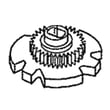
| Clicking, not advancing cycles | Worn cam and gear or weak drive motor | Water softener cam and gear 7283489 |
| Valve leaks or internal bypassing | Worn seals in valve | Kenmore water softener seal kit 7185487 |
This Kenmore Elite softener is designed to remove hardness minerals through ion exchange and then restore capacity during regeneration (fill, brining, brine rinse, backwash, fast rinse). When the nozzle and venturi are dirty or seals are worn, regeneration can complete but still leave you with hard water, wasted salt, and inconsistent results.
- Put the unit in bypass and back to service to confirm the bypass valve is fully open to service.
- Clean the nozzle and venturi and screens as outlined in the 625394260 owner’s manual.
- Avoid heavy hot-water use during the programmed regeneration window; the manual notes the unit typically regenerates overnight and hard water can be present during certain cycles.
- If the valve drive is noisy or stalls, inspect the cam and gear and motor.
Last updated: January 2026