
Is it cheaper to repair or replace a garage door opener?
For a Craftsman garage door opener model 13953500, it’s usually cheaper to repair when the problem is isolated (safety sensors, wall control wiring, remote programming). Replace the opener when the unit is older (typically 10 to 12+ years) or when a major drive or logic issue makes the repair cost approach the price of a new opener.
Quick decision guide (repair vs replace)
Use these rules to decide fast:
- Repair when the door is mechanically fine and the opener issue is intermittent or clearly electrical (sensor alignment, loose connections, bad remote battery).
- Repair when troubleshooting points to a single, serviceable failure (wall control, safety sensor circuit, force or travel settings).
- Replace when the opener has repeated breakdowns, excessive noise, or inconsistent travel even after adjustments.
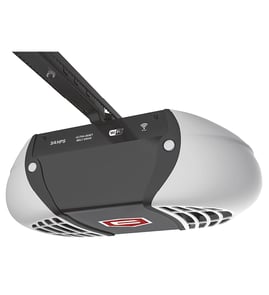
- Replace when you need modern features (Wi-Fi control, battery backup, quieter operation) and your current unit lacks them.
- Replace when parts availability is limited or multiple components are failing at once.
Typical cost comparison
Actual pricing varies by region and door size, but these ranges are common for garage door openers:
| Option | Typical cost range | Best for |
|---|---|---|
| Minor repair/tune-up | $100 to $250 | Sensors, adjustments, wiring checks |
| Moderate repair | $200 to $500 | Control issues, drive wear, electrical faults |
| Replace opener (unit + install) | $300 to $1,000+ | Older openers, major failures, feature upgrades |
What we recommend checking first (before spending money)
These checks often solve “replace vs repair” situations without major parts:
- Confirm the safety sensors are aligned and the lenses are clean.
- Inspect sensor and wall control wiring for staples through wire, pinches, or loose terminals.
- Reprogram remotes and keypad; replace remote batteries.
- Verify the door moves smoothly by hand (a binding door can mimic opener failure).
- Review force and travel settings; incorrect settings can cause reversals or incomplete closing.
For step-by-step troubleshooting, use our Craftsman error codes resource.
Why it matters
A garage door opener can look “bad” when the real problem is door balance, sensor alignment, or incorrect force settings. Repairing the right root cause protects the motor, reduces nuisance reversals, and helps the door close safely and consistently.
Last updated: February 2026
Can you get a universal remote for an old garage door opener?
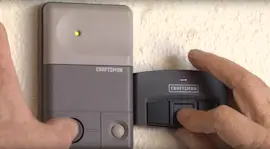
Yes. For a Craftsman garage door opener model 13953500, you can usually use a universal garage door opener remote if it supports your opener’s radio frequency and “Learn” button style. If the opener is too old for modern universal remotes, adding an external receiver kit is the reliable workaround.
What to check before you buy a universal remote
- Remote compatibility list: confirm the remote lists Craftsman or LiftMaster compatibility for older openers.
- Learn button vs. DIP switches: many older units use DIP switches in the remote and receiver; newer units use a Learn button.
- Frequency: older openers commonly use frequencies like 390 MHz or 315 MHz (some very old units used other frequencies).
- Number of doors: choose a 1-button or multi-button remote based on how many openers you need to control.
- Rolling code vs. fixed code: match the remote type to your opener’s technology.
If a universal remote will not pair
An external receiver (wired to the opener) lets you use new remotes even when the original receiver technology is outdated.
- Mount the receiver near the opener power head.
- Wire it to the opener’s wall control terminals (typical connection point).
- Program the new remote(s) to the receiver.
Quick comparison: universal remote vs. external receiver
| Option | Best for | What you gain | Typical downside |
|---|---|---|---|
| Universal remote only | Openers with supported frequency and coding | Lowest cost, simplest setup | May not work on very old fixed-code systems |
| External receiver kit | Very old openers or unknown compatibility | Modern remotes with dependable pairing | More wiring and setup time |
Why it matters
Using the right remote setup prevents “random” non-response, short range, and pairing failures that often happen when the opener’s frequency or coding type does not match the remote.
For troubleshooting pairing issues and diagnostic light patterns, use our Craftsman error codes guide.
Last updated: February 2026
How do I know what model my garage door opener is?
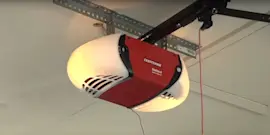
On a Craftsman garage door opener, the model number is printed on a label on the opener’s powerhead (the motor unit mounted to the ceiling). For model 13953500, check around the light lens areas and the side of the unit near the antenna.
Where to look on the powerhead
Check these common label locations (with you standing in the garage looking toward the door):
- Under the front light lens cover
- Under the left light lens cover
- On the side opposite the antenna
- On the side panel near the hanging bracket
- On the back panel near the wiring terminals
What the model label usually looks like
Most Craftsman openers use a white or silver sticker that includes a few identifiers. Use the model number first when searching parts.
| Label item | What it’s used for | Example you might see |
|---|---|---|
| Model number | Correct parts lookup and diagrams | 13953500 |
| Serial number | Production tracking | Varies |
| Logic board info | Helps match controls and remotes | Varies |
| Electrical rating | Confirms power requirements | 120V AC (typical) |
If you can’t find the label
Use these practical workarounds to identify the opener accurately:
- Look for a second label on the rail near the motor head
- Check the wall control style (button layout and any “learn” indicator)
- Check the safety sensor style and LED behavior
- Note whether the drive is chain, belt, or screw (helps narrow parts)
- Use troubleshooting indicators and blink patterns to match the opener family
A fast way to narrow it down is to compare any diagnostic light patterns or error indicators with our Craftsman error codes reference.
Why it matters
The model number determines which parts diagrams, compatible remotes, safety sensors, and internal components (like the logic board and drive gear kit) fit your Craftsman garage door opener. Using the wrong model often leads to ordering parts that do not mount or wire correctly.
Last updated: February 2026
What are the common problems with Craftsman garage door openers?
Common problems with the Craftsman 13953500 garage door opener include safety sensor issues (misalignment or blocked beam), drive system wear (chain/belt slack, worn sprocket, stripped gears), and control problems (wall button, remote, keypad, or logic board). These often show up as blinking lights, grinding noises, or a door that reverses.
Most common symptoms and what they usually mean
- Door will not close and lights blink: safety sensors are blocked, misaligned, or have wiring damage.
- Door reverses while closing: force setting too high/low, binding door hardware, or sensor interruption.
- Motor runs but door does not move: stripped drive gear, broken trolley, loose chain/belt, or disengaged emergency release.
- Grinding or loud rattling: worn gear/sprocket assembly, dry chain, or loose mounting hardware.
- Remote/keypad works sometimes: weak battery, interference, failing receiver, or programming issue.
- Wall control does nothing: wiring fault, bad wall control, or logic board issue.
Quick checks we recommend first (safe, fast)
- Check the door itself: pull the emergency release and lift the door by hand. It should move smoothly and stay about halfway open.
- Inspect photo eyes: clean lenses, confirm both sensors point directly at each other, and verify solid indicator lights.
- Look for obvious drive issues: chain/belt tension, hanging trolley, or a loose rail connection.
- Power reset: unplug the opener for 60 seconds, then plug back in.
- Remote basics: replace the battery and reprogram if needed.
Blink patterns and diagnostics
Many Craftsman openers use diagnostic LED blink codes to point to the problem area (sensors, travel limits, force settings, RPM sensor, logic board).
| What you see | Most likely area to check | Typical fix |
|---|---|---|
| Lights blink and door will not close | Safety sensors | Align, clean, repair wiring |
| Door starts down then reverses | Force/travel or door binding | Adjust force/travel, service door |
| Motor hums/runs but no movement | Drive gear/trolley | Inspect gear and trolley engagement |
For code-specific guidance, use Craftsman error codes.
Why it matters
Most “opener problems” are actually safety sensor alignment or a door that is binding. Fixing those first prevents repeated reversals, stripped gears, and premature motor or logic board wear.
Last updated: February 2026
Where can I buy Craftsman garage door opener parts?
You can buy replacement parts for your Craftsman garage door opener model 13953500 from the parts list for this model on Sears PartsDirect. If you are matching a part by symptom (won’t close, won’t open, lights blinking), start with troubleshooting so you order the right component.
How we recommend finding the right part
- Confirm the opener model number is 13953500 (usually on the motor unit housing).
- Identify the symptom first (no power, door reverses, remote won’t work, sensor issue).
- Use error or blink codes when available to narrow the failure.
- Match by part category (logic board, safety sensors, wall control, drive gear, sprocket, chain/belt parts).
- Compare your original part visually (connector style, mounting holes, wire length).
Use error codes to avoid ordering the wrong part
Many Craftsman openers use diagnostic lights or error codes to point to common failures such as safety sensor alignment, travel limits, force settings, or control board problems. Use our Craftsman error codes reference to interpret the code before you buy parts.
Common parts customers replace (and what they fix)
| Symptom | Common area to check | Typical fix outcome |
|---|---|---|
| Door won’t close and reverses | Safety sensors and wiring | Restores closing if sensors are aligned and working |
| Motor runs but door doesn’t move | Drive gear/sprocket assembly | Restores travel if gears are stripped |
| Remote or keypad won’t operate | Remote battery, wall control, receiver/logic board | Restores command signal and operation |
| Door stops short or hits floor hard | Travel/force settings, sensor issues | Restores smooth open/close limits |
Why it matters
Garage door opener parts are highly model-specific. Using the exact model number 13953500 helps ensure the replacement part fits your Craftsman opener and prevents repeat failures caused by misdiagnosis.
Last updated: February 2026