Owner’s manual
 Error Codes


Why is my Kenmore refrigerator leaking underneath?
Water leaking underneath a Kenmore 79575012402 bottom-mount refrigerator is usually caused by defrost water not reaching the drain pan, most often from a clogged or frozen defrost drain, or a water supply line connection that is seeping. We focus first on clearing the drain path and then checking the water line and drain pan.
Quick checks that solve most leaks
- Look for a sheet of ice on the freezer floor or water under the crisper area; that points to a defrost drain issue.
- Confirm the refrigerator is level; a forward tilt can let water spill out of the drain pan.
- Check the drain pan for cracks or a pan that is out of position.
- If the unit has an icemaker or dispenser, inspect the water line and fittings for slow drips.
- Make sure doors close fully; warm air can increase frost and overwhelm the drain.
Clear a clogged or frozen defrost drain
- Unplug the refrigerator.
- Remove freezer contents and the rear interior panel as needed.
- Melt any ice around the drain trough using warm water (not boiling).
- Flush the drain with warm water until it flows freely to the drain pan.
- Clean the drain tube end near the drain pan so debris cannot re-block it.
For model-specific access steps and panel removal guidance, use the 79575012402 owner's manual.
If the leak is from the water system
Leaks that appear only when the icemaker fills or when dispensing water usually come from tubing, fittings, or a valve connection.
- Inspect the external supply line behind the refrigerator for wetness.
- Check the internal tubing for kinks, rub-through, or loose connections.
- If you find a damaged line or a loose run, replace or secure it.
Common related part for this model: Refrigerator water tubing 5210JA3005W.
Symptom-to-cause guide
| What you notice | Most likely cause | What to do first |
|---|---|---|
| Water under freezer, ice on freezer floor | Frozen/clogged defrost drain | Thaw and flush the drain |
| Water under front center, no ice buildup | Drain pan shifted/cracked | Re-seat or replace pan |
| Drips only during ice/water use | Water line or fitting leak | Inspect tubing and connections |
| Intermittent puddles after defrost | Drain tube partially blocked | Clean tube end at drain pan |
Why it matters
Leaks can damage flooring and also lead to ice buildup that restricts airflow, which can cause warm temperatures in the refrigerator or freezer. Fixing the drain path early prevents repeat puddles and cooling complaints.
Last updated: January 2026
Why is my refrigerator not getting cold at the bottom?
If your Kenmore 79575012402 is warm at the bottom of the fresh-food section, the most common causes are blocked airflow (items covering vents), temperature controls that need adjustment, or poor heat removal from dirty condenser coils. Use the airflow and control settings in the 79575012402 owner's manual to correct the basics first.
Quick checks that fix most “warm bottom” complaints
- Make sure packages are not blocking the refrigerator air inlet at the top vent or the return at the bottom.
- Set the refrigerator control to 37°F (3°C) and the freezer control to 0°F (-18°C); let temperatures stabilize for 24 hours before changing again.
- Confirm the room temperature is within 55°F to 110°F; extreme ambient temps reduce cooling performance.
- Clean dust and pet hair from the condenser area; restricted airflow there can make the cabinet run warm.
- Verify doors close and seal fully; warm air leaks can overwhelm cooling.
Clean the condenser area safely
On bottom-mount designs, condenser airflow is often pulled through the lower front area.
- Unplug the refrigerator.
- Remove the base grille (pull it toward you with both hands).
- Vacuum and brush dust from the grille area and accessible coils.
- Reinstall the base grille and restore power.
Safety note
We do not put hands or metal tools into air vents, the base grille opening, or the bottom area while the refrigerator is powered.
When it is not just airflow or settings
If airflow is clear and settings are correct but the bottom stays warm, a cooling or defrost issue can prevent cold air from circulating properly.
| Symptom you notice | Likely direction | What to do next |
|---|---|---|
| Freezer is cold, fridge bottom is warm | Airflow/venting issue | Recheck vent blockage and allow 24 hours after adjustments |
| Frost buildup, weak airflow | Defrost system issue | Inspect for ice blockage; consider a defrost sensor problem |
| Warm temps and long run times | Heat not being rejected | Clean condenser area; check condenser fan operation |
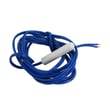
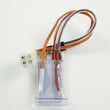
If you suspect a defrost sensing problem, the refrigerator defrost sensor assembly 6615JB2005C is a common service part for temperature and defrost control issues.
Why it matters
Cold air typically enters the refrigerator section from the top and exits at the bottom to return to the freezer. When vents are blocked or heat cannot leave the condenser area, the bottom warms first and food safety can be affected.
Last updated: January 2026
What are the common problems with Kenmore Elite refrigerators?
Common problems we see on the Kenmore 79575012402 bottom-mount refrigerator include warm temperatures from airflow or dirty condenser coils, doors not sealing or closing, slow ice production, and sensor or control-related cooling issues. Use the troubleshooting steps in the 79575012402 owner's manual to match symptoms to checks.
Most common symptoms and likely causes
- Refrigerator or freezer too warm: vents blocked by food, doors opened often, controls set incorrectly, condenser coils dirty.
- Ice maker slow or no ice: freezer not cold enough, door left open, heavy ice use, water supply restriction.
- Doors will not close: refrigerator not level, packages blocking, bins or shelves out of position, sticky gaskets.
- Hard-to-open doors: dirty or sticky gaskets, normal vacuum effect right after closing.
Quick checks we recommend first
- Keep items from blocking interior air vents; allow space for proper air circulation.
- Clean condenser coils to restore heat transfer and reduce compressor run time.
- Adjust controls correctly: change the refrigerator setting first, then wait 24 hours before judging results.
- Push doors firmly shut; reseat drawers, shelves, and door bins.
- Clean gaskets and the surfaces they touch; a thin coat of wax helps reduce sticking.
When a part is a likely suspect
| Symptom | Part that often relates | Example for this model |
|---|---|---|
| Light or door alarm acts up | Door switch | Lg refrigerator door switch 6600JB1010A |
| Frost buildup, defrost trouble | Defrost sensor | Refrigerator defrost sensor assembly 6615JB2005C |
| Erratic temperature readings | Thermistor | Refrigerator thermistor 6500JB2002T |
Why it matters
Airflow restrictions, dirty coils, and door sealing problems cause most cooling complaints and make the compressor work harder. Fixing those basics first often restores normal temperatures and helps prevent repeat issues.
Last updated: January 2026