Installation guide
 Owner’s manual
 Error Codes



How to tell cubic feet of Kenmore refrigerator by model number?
For Kenmore model 10655639500, the model number by itself does not reliably state the exact cubic-foot capacity. The fastest way to get the correct capacity is to check the specifications section in the owner's manual; if you need an estimate, calculate it from interior measurements.
Best ways to find the cubic feet (in order)
- Check the specs in the owner's manual for your exact model.
- Look for a rating/spec label inside the fresh food compartment (often on an inside wall). Some units list capacity there.
- If you still need a number, measure and calculate the interior volume (see below).
How to estimate cubic feet by measuring
- Empty the compartment you are measuring (refrigerator side and freezer side).
- Measure the usable interior:
- Width (inches)
- Depth (inches)
- Height (inches)
- Multiply:
W x D x H = cubic inches. - Convert to cubic feet:
cubic inches ÷ 1728 = cubic feet.
Quick conversion table
| What you have | What to do | Result |
|---|---|---|
| Interior inches | Multiply W x D x H | Cubic inches |
| Cubic inches | Divide by 1728 | Cubic feet |
Why the model number is not enough
Kenmore 106-prefix refrigerators (Whirlpool-built) often share similar model numbering across multiple sizes and feature packages. Capacity can vary even when the model numbers look similar, so the spec listing in the manual is the dependable match.
Related tip for owners
If you are tracking your model details for service or parts, the manual notes you can find the model and serial label inside the refrigerator compartment. Keeping that information handy helps ensure you order the right shelves, ice maker parts, or water system parts from the model’s parts list or Sears PartsDirect.
Last updated: February 2026
Where is the model number on a Kenmore side by side refrigerator?
On Kenmore side-by-side refrigerator model 10655639500, the model number is printed on the model and serial number label located on the inside wall of the refrigerator (fresh food) compartment. Use the full model number from that label when ordering parts or checking specifications in the owner's manual.
Where to look (fast checklist)
- Open the fresh food (refrigerator) door, not the freezer door
- Look along the inside side walls near the front edge
- Check around the crisper or meat pan area (eye level when the door is open)
- Look for a label that lists both model and serial information
- Write down the model number exactly as shown (for this unit: 10655639500)
What the label typically includes
| Item on label | What it’s used for | Example for this refrigerator |
|---|---|---|
| Model number | Correct parts lookup and diagrams | 10655639500 |
| Serial number | Identifying production run and service history | Varies by unit |
| Purchase date (you record it) | Warranty and records | Your date |
Why it matters
We use the model number to match the exact Kenmore configuration (doors, ice maker, water system, and controls). That prevents ordering the wrong part and helps you find the right instructions and diagrams for repairs.
Tip for parts ordering
Once you have the model number, you can order replacement parts from the parts list for 10655639500 on this page, or search by model on Sears PartsDirect.
Last updated: February 2026
How wide is a Kenmore side by side refrigerator?
Most Kenmore side-by-side refrigerators are about 32 to 36 inches wide; for your specific Kenmore 10655639500, the exact cabinet width is listed in the 10655639500 owner's manual and the 10655639500 installation guide.
Typical widths you will see (and what affects them)
Side-by-side refrigerator width varies mainly by capacity and door design. These are the most common real-world ranges:
- Counter-depth models: typically 32 to 36 inches wide
- Standard-depth models: typically 33 to 36 inches wide
- Door style and handles can add extra overall width beyond the cabinet
- Door swing clearance matters if the unit sits next to a wall or cabinet end panel
- Leveling and alignment can change how the doors sit and swing
Measuring the width the right way
Use a tape measure and record two numbers: cabinet width and overall width.
- Measure cabinet width across the main box (not the doors)
- Measure overall width at the widest point (often the handles)
- Measure with doors closed, then confirm clearance with doors open
- If installed next to a fixed wall, plan for door swing space (the manual calls out clearance needs)
Quick measurement checklist
| Measurement | What to include | Why it matters |
|---|---|---|
| Cabinet width | Main refrigerator box only | Fit between cabinets |
| Overall width | Doors, hinges, handles | Real “tight spot” width |
| Door swing clearance | Space beside unit | Prevents doors from hitting walls |
Why it matters
Getting the width right prevents installation problems like doors that cannot open fully, drawers that hit the wall, or poor ventilation. It also helps when ordering door parts like a gasket panel or hinge-related items.
Related parts that can affect door fit
If your doors rub, do not close smoothly, or feel misaligned, these parts are commonly involved on side-by-side designs:
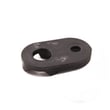
- Refrigerator door cam (black) WP2182179 (helps the door close and align at the hinge)
- Door gaskets (seal and spacing; choose the correct color and door location)
- Leveling rollers/feet (affect door alignment after installation)
Last updated: February 2026
What causes a side-by-side refrigerator to stop cooling?
A Kenmore 10655639500 side-by-side refrigerator stops cooling when airflow is restricted (blocked vents or heavy frost), the controls are set incorrectly (including OFF), or a key cooling component such as the evaporator fan, defrost system, or compressor is not operating. Use the owner's manual to confirm control settings and vent locations.
Quick checks we recommend first (no tools)
- Make sure the refrigerator control is not set to OFF.
- Clear packages away from air vents in both compartments.
- Close both doors firmly; avoid frequent openings.
- After adding warm groceries, allow several hours for temperatures to recover.
- If you have digital controls, turn the unit OFF then ON to reset.
Common causes and what they look like
| Symptom | Most likely cause | Next step |
|---|---|---|
| Freezer cold, fridge warm | Blocked vents or frost restricting airflow | Clear vents; check for frost on rear freezer panel |
| Both sections warm | Controls OFF, fan/compressor not running | Verify settings; listen for fans and compressor |
| Frost buildup, weak airflow | Defrost system problem | Inspect defrost components |
Parts that often fix “not cooling” symptoms
If frost buildup points to a defrost failure, these model-compatible parts are commonly involved:
Why it matters
Side-by-side cooling depends on steady airflow from the freezer into the fresh-food section. When vents are blocked or frost builds up, temperatures rise quickly and food safety is affected.
You can order replacement parts from the parts list for model 10655639500, or search by model number on Sears PartsDirect.
Last updated: February 2026
What are the most common problems with Kenmore refrigerators?
The most common problems we see on Kenmore refrigerators like model 10655639500 are poor cooling, water leaks, ice maker or dispenser failures, moisture buildup, and unusual noises. These issues usually come from restricted airflow, dirty condenser coils, door gasket sealing problems, or a failing defrost or water-supply component.
Common symptoms and likely causes
- Not cooling or warming up: blocked vents, frequent door openings, incorrect control settings, or defrost/airflow trouble
- Moisture buildup inside: vents blocked, doors opened often, humid room air, or unwrapped food
- Doors hard to open or not sealing: dirty or sticky gaskets, unit not level, or door alignment problems
- Ice maker not making ice: water supply restriction, inlet valve issue, or ice maker failure
- Water leaking or puddles: drain issue, loose water line, or inlet valve seepage
For model-specific care and troubleshooting steps (air circulation, cleaning, control use), use the 10655639500 owner's manual.
Quick checks we recommend first
- Keep food packages away from interior air vents
- Minimize door-open time; load and unload quickly
- Verify temperature settings; reset digital controls by turning OFF then ON
- Clean and dry door gaskets so they seal without sticking
- Confirm the refrigerator is level so doors close fully
Common parts that fix frequent failures
| Problem area | What fails | Model-compatible part |
|---|---|---|
| No ice or weak water flow | Water inlet valve | Refrigerator inlet valve W10408179 |
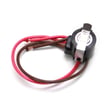
| Frost buildup, warm fridge | Defrost heater or bi-metal | Refrigerator heater WP2323198 or refrigerator defrost bi-metal WPW10225581 |
| Ice maker stopped | Ice maker assembly | Ice maker assembly 4317943 |
Why it matters
Airflow and sealing problems make the compressor run longer and can lead to temperature swings, spoiled food, and ice clumps. Fixing vent blockages and gasket leaks early prevents bigger cooling complaints.
If you need additional parts for model 10655639500, you can search by model number on Sears PartsDirect.
Last updated: February 2026