Owner’s manual



What is the average lifespan of a KitchenAid dishwasher?
Most KitchenAid dishwashers last 10 to 14 years with normal household use. For your KitchenAid KDTM704KPS0, consistent maintenance (especially filter cleaning and managing hard water) helps you reach the high end of that range; see the KDTM704KPS0 owner's manual for care guidance.
What affects lifespan the most
- Hard water: mineral buildup can damage components and reduce cleaning performance
- Filter and sump cleanliness: clogs force the pump and motor to work harder
- Detergent and rinse aid use: rinse aid improves drying and helps control deposits
- Loading habits: overloading blocks spray arms and increases rewash cycles
- Incoming water temperature: this model is designed for best results with hot water (about 120°F)
Maintenance schedule we recommend
| Task | How often | Why it matters |
|---|---|---|
| Clean the dishwasher filter | Weekly to monthly | Prevents poor cleaning and pump strain |
| Refill rinse aid | Every 1 to 3 months | Improves drying and reduces hard-water deposits |
| Run a cleaning cycle (dishwasher cleaner) | Monthly | Helps reduce odor and buildup |
| Check door seals for debris | Monthly | Helps prevent leaks and moisture damage |
Parts that commonly shorten dishwasher life when neglected
If you are seeing symptoms like not filling, not draining, or poor cleaning, addressing them early helps the dishwasher last longer.
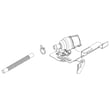
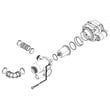
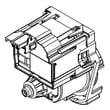
- Water fill problems: consider the fill valve assembly W11434044
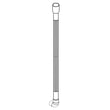
- Drain and standing water issues: check the dishwasher drain hose W11551233
- Poor cleaning from restricted flow: clean or replace the dishwasher filter W11568785
Why it matters
A dishwasher that runs longer than normal, struggles to drain, or leaves grit behind is usually working harder than it should. Reducing mineral buildup, keeping the filter clear, and maintaining proper water flow protects high-wear items like the circulation pump and motor.
Last updated: February 2026
How to get KitchenAid replacement parts?
For KitchenAid dishwasher model KDTM704KPS0, the fastest way to get the right replacement part is to look up the model’s parts list, match the part name and ID, then order the exact OEM replacement. We recommend using the parts diagrams in the KDTM704KPS0 owner's manual to confirm fit before you buy.
The quickest way to order the correct part
- Find your model number on the dishwasher (use KDTM704KPS0 exactly).
- Identify the failed part by symptom (leak, no fill, won’t start, not cleaning).
- Cross-check the part in the diagrams and parts list.
- Order by part ID (best) or part number (also works).
- Install using the safety and access steps in the manual.
Common parts customers replace on KDTM704KPS0
If you are troubleshooting a specific symptom, these are frequent replacements for this model:
- Not filling or filling slowly: fill valve assembly W11434044
- Leaking at the door: gasket-tub,d W11483553 or dishwasher door seal, lower W11664713
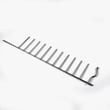
- Poor cleaning: dishwasher filter W11568785 or dishwasher manifold and spray arm assembly W11545334
- Not draining: dishwasher drain hose W11551233
- Won’t latch or won’t start: latch assembly (includes switch) W11412299
Part lookup tips (so you don’t order the wrong item)
| What you have | Best way to search | Why it helps |
|---|---|---|
| Model number | Search KDTM704KPS0 | Filters to exact-fit parts |
| Part ID | Search the ID (example: W11434044) | Most precise match |
| Part number | Search the part number (example: W11025970) | Useful if you already have it |
Why it matters
Dishwashers use model-specific electrical connectors, seals, and mounting points. Using manufacturer-recommended parts helps prevent leaks, fit issues, and repeat failures; the manual also warns against using non-recommended replacement parts.
Last updated: February 2026
What is the most common problem with a KitchenAid dishwasher?
The most common issue we see with KitchenAid dishwashers like model KDTM704KPS0 is poor wash results (dishes still dirty) caused by restricted water flow or circulation, often tied to a dirty filter, blocked spray paths, or detergent and rinse aid setup. Use the KDTM704KPS0 owner's manual to match symptoms to the right checks.
Most common symptoms and what they usually point to
- Food soil left on dishes: filter needs cleaning, spray arm ports blocked, or loading blocks spray
- Cloudy glassware or white film: hard water buildup, not enough rinse aid, or detergent mismatch
- Standing water after cycle: drain path restriction (hose, disposer inlet, air gap) or drain pump issue
- Leaks at the door: door seal wear, debris on sealing surfaces, or door not latching fully
- Won’t start or stops: door not latched, control lock on, breaker tripped, or cycle not set correctly
Quick checks we recommend first (fast, no parts)
- Confirm the door closes tightly and latches; a loose latch can prevent a cycle from running.
- Use fresh automatic dishwasher detergent and add it right before starting the cycle.
- Fill and use rinse aid; this model is designed to use rinse aid for better drying and to reduce hard-water deposits.
- Clean the filter and check for debris in the sump area.
- Verify the water supply is on and the dishwasher is connected to hot water.
Parts that commonly solve the underlying cause
If cleaning and setup do not fix it, these model-matched parts are common next steps:
| Symptom | Common part to inspect/replace | What it affects |
|---|---|---|
| Not filling or weak wash | Fill valve assembly W11434044 | Water entering the dishwasher |
| Poor cleaning, debris recirculating | Dishwasher filter W11568785 | Soil capture and water flow |
| Door leaks at bottom edge | Dishwasher door seal, lower W11664713 | Sealing at the lower door |
Why it matters
Dishwashers that run longer are often doing so to save water and energy, so even small restrictions (filter buildup, low fill, blocked spray) can have a big impact on cleaning performance and can also lead to mineral deposits over time.
Last updated: February 2026
What are the commonly replaced parts in a dishwasher?
For the KitchenAid KDTM704KPS0 dishwasher, the most commonly replaced parts are the ones that control water flow, sealing, and washing action: inlet and fill components, door latching and seals, filters, drain parts, and spray components. These parts wear from heat, detergent, vibration, and normal use.
Commonly replaced parts (and what they do)
- Water fill parts: bring water into the tub; failures cause no-fill, slow fill, or overfilling (example: fill valve assembly W11434044).
- Door latch and switches: confirm the door is closed so the cycle can run (example: latch assembly (includes switch) W11412299).
- Door seals and gaskets: keep water inside the tub; wear leads to leaks (example: dishwasher door seal, lower W11664713).
- Filters: trap food soil; clogs cause poor cleaning and drainage issues (example: dishwasher filter W11568785).
- Drain hose: carries wastewater to the drain; kinks or splits cause leaks or no-drain symptoms (example: dishwasher drain hose W11551233).
- Spray and wash distribution parts: move water through spray arms; clogs or cracks reduce cleaning (example: dishwasher manifold and spray arm assembly W11545334).
Quick symptom-to-part guide
| Symptom | Most likely part areas | What we check first |
|---|---|---|
| Won’t fill or fills slowly | Fill valve, water inlet, supply fitting | House shutoff valve fully open; inlet screen not clogged |
| Leaks at the front | Lower door seal, tub gasket | Seal seated evenly; debris on sealing surfaces |
| Won’t start | Latch/switch, control, power | Door closes firmly; latch engages; cycle selection correct |
| Poor cleaning | Filter, spray/manifold | Filter cleaned; spray holes clear |
| Won’t drain | Drain hose, pump/sump area | Hose routing (high loop); filter area clear |
Why it matters
Replacing the right part early prevents secondary damage, like water leaks that can affect wiring, or restricted flow that strains the pump and reduces wash performance.
Use the model-specific diagrams and procedures
For KDTM704KPS0, we follow the safety steps, grounding guidance, and service access notes in the KDTM704KPS0 owner’s manual before testing or replacing parts.
Last updated: February 2026