Owner’s manual
 Error Codes


Where is the model number on a Kenmore side by side refrigerator?
On Kenmore side-by-side refrigerator model 10659509990, the model number is printed on the model and serial number label located on the inside wall of the refrigerator (fresh food) compartment. Check the label before ordering parts or scheduling service; it’s the most reliable identifier. See the 10659509990 owner's manual for the exact label description.
The label typically includes both the model number and serial number. Use the model number to match parts like a water filter, ice maker, or door gasket.
- Look on the inside wall of the refrigerator compartment (not the freezer)
- Find a sticker or plate labeled Model and Serial
- Record the full model number exactly as shown (for this unit: 10659509990)
- Record the serial number too; it helps identify production details
- Take a clear photo of the label for reference when ordering parts
For model 10659509990, start with the fresh food compartment interior wall. If you do not see it immediately, check nearby surfaces.
| Area to check | What you’ll see | Why it’s there |
|---|---|---|
| Fresh food compartment inside wall | Model/serial label | Primary identification label |
| Near the crisper area side wall | Same label or a duplicate | Easy-to-access interior surface |
| Upper interior side wall | Same label | Visible when doors are open |
We use the model number to ensure you get the correct Kenmore 106 parts for fit and function. Even small model differences can change which items work, especially for water system parts and ice maker components.
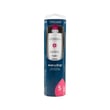
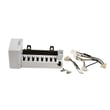
If you’re ordering common replacements, match them to your model number first, then choose the correct part (for example, the refrigerator water filter EDR5RXD1 or ice maker assembly - refrigerator ice maker by whirlpool 4317943).
Last updated: February 2026
How do I reset a Kenmore refrigerator?
For Kenmore model 10659509990, the most reliable “reset” is a power reset: disconnect power long enough to clear the control, then restore power and confirm the refrigerator control is not set to OFF. If you’re resetting a specific feature (like the water filter light), use the model’s built-in reset steps in the owner's manual.
- Power reset: unplug the refrigerator (or switch the breaker off) for 5 to 10 minutes, then restore power.
- Control check: make sure the refrigerator or freezer control is not set to OFF after power is restored.
- Give it time: after a reset, cooling and normal cycling can take up to 30 minutes to stabilize.
- If the unit was in defrost: recheck operation after 30 minutes (automatic defrost can temporarily pause cooling).
This model’s manual describes resetting the filter indicator after you replace the cartridge.
- Replace the filter cartridge.
- Press the status light switch 5 times within 10 seconds.
- Confirm the indicator changes from red to green.
If you’re replacing the filter itself, the compatible cartridge on this model page is the refrigerator water filter EDR5RXD1.
A reset clears minor control glitches, but it will not correct a failed part.
| Symptom after reset | Most likely area to check | Common next step |
|---|---|---|
| No lights, no cooling | Power supply, control set to OFF | Verify outlet/breaker; confirm controls |
| Lights on, warm temps | Airflow/defrost issue | Check vents; listen for fan |
| No ice or no water | Water supply, valve, filter | Replace filter; check valve |
Resetting is a fast way to clear a temporary electronic hiccup, but it also helps you confirm whether you’re dealing with a simple control state (OFF/defrost) versus a true failure such as a clogged filter or a water inlet valve problem.
Last updated: February 2026
What's the average lifespan of a Kenmore refrigerator?
Kenmore refrigerators typically last 12 to 15 years. For a Kenmore 10659509990 side-by-side refrigerator, regular care (cleaning condenser coils, keeping door gaskets sealing, and maintaining airflow) helps you reach that range and avoid early cooling or ice maker problems.
Most refrigerators fall into a predictable service-life window, and the biggest differences come from maintenance and operating conditions.
- Maintenance habits: coil cleaning, gasket care, filter changes
- Environment: hot garages, tight built-ins, dusty homes
- Usage: frequent door openings, overpacking, warm food loads
- Water system upkeep: clogged filters can strain the inlet valve and ice maker
- Repair history: repeated sealed-system or control issues shorten practical life
Use this as a practical decision tool when you are troubleshooting cooling, leaking, or ice maker issues.
| Refrigerator age | What we typically recommend | Why |
|---|---|---|
| 0 to 5 years | Repair is usually the best value | Parts and performance are still strong |
| 6 to 12 years | Repair common wear items first | Many issues are inexpensive fixes |
| 13 to 15 years | Compare repair cost to replacement value | Efficiency and major failures become more likely |
| 16+ years | Replace unless the fix is minor | Major repairs often do not pencil out |
These steps reduce compressor run time, prevent frost buildup, and help the refrigerator hold temperature.
- Clean condenser coils regularly (use the cleaning guidance in the owner's manual)
- Keep door seals clean and fully contacting the cabinet; replace worn gaskets if the door will not seal
- Replace the water filter on schedule to protect the water system (use the refrigerator water filter EDR5RXD1 if it matches your setup)
- Do not block air vents in the fresh food or freezer sections
- Keep the freezer and refrigerator at stable setpoints; avoid frequent extreme adjustments
A refrigerator that is struggling to shed heat or seal properly runs longer and hotter. That increases wear on the compressor and can lead to temperature swings, weak ice production, and premature failure.
Last updated: February 2026
What are the most common problems with Kenmore refrigerators?
The most common issues we see on Kenmore refrigerators like model 10659509990 are cooling problems, ice maker or water dispenser trouble, water leaks, excess frost, and unusual noises. Many of these trace back to airflow restrictions, dirty condenser coils, door gasket leaks, or water-supply and filter issues (all covered in the owner's manual).
- Not cooling or warm temperatures: blocked air vents, dirty condenser coils, evaporator fan or airflow control problems
- Ice maker not making ice: water supply shut-off issues, kinked water line, clogged or misinstalled filter
- Water leaking: dispenser spillover, water line kinks, inlet valve problems, or normal defrost pan water in humid conditions
- Too much frost or moisture: doors opened often, door not sealing, vents blocked
- Noisy operation: normal operating sounds, fan issues, or the unit running longer in warm rooms
- Confirm doors close fully and nothing is preventing a tight seal.
- Clear air vents in both compartments so cold air can circulate.
- Clean condenser coils; dirty coils make the compressor work harder.
- Check the water supply line for kinks and verify the shut-off valve is fully open.
- If you have a filter, confirm it is installed correctly and not clogged.
| Problem you notice | What to check first | Parts that often solve it (if needed) |
|---|---|---|
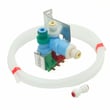
| Ice maker not producing ice | Water line kink, shut-off valve, filter clog/fit | Refrigerator inlet valve W10408179, ice maker assembly 4317943 |
| Water tastes bad or flow is slow | Filter age, correct installation | Refrigerator water filter EDR5RXD1, refrigerator water filter housing WP2186443 |
| Warm refrigerator section | Vents blocked, coils dirty, airflow control | Refrigerator diffuser WP2209751 |
| Frost buildup or moisture | Door seal, door closing habits, vent blockage | (Inspect gaskets and door alignment) |
These problems usually get worse over time: restricted airflow and dirty coils raise run time and temperatures, and water-supply issues can stop ice production or cause leaks. Catching the root cause early helps protect food, reduce noise, and prevent repeat failures.
Last updated: February 2026
What are the dimensions of a Kenmore 10659509990 Elite refrigerator?
The Kenmore 10659509990 side-by-side refrigerator’s exact height, width, and depth are provided in the product specifications section of the 10659509990 owner's manual. Use those published dimensions (not “typical” ranges) to confirm fit through doorways and into the cabinet opening.
In the 10659509990 owner's manual, look for the section typically labeled Product dimensions, Refrigerator dimensions, or Location requirements. That area lists the official measurements used for installation planning.
Even with the manual’s dimensions, we recommend measuring your opening and clearances:
- Measure the opening width at the front and back (walls are often not perfectly square)
- Measure opening height to the lowest overhead cabinet or soffit
- Measure opening depth to the wall, then note any baseboard trim
- Measure the pathway (doorways, hallways, turns) for delivery
- Plan for door swing if the refrigerator sits next to a fixed wall
The manual for this Kenmore design specifies installation clearances that affect real-world “fit”:
- 1/2 in. (1.25 cm) space on each side and at the top for ventilation
- Extra space behind the unit if an ice maker water line is connected
- If installed next to a fixed wall, 2 in. (5.08 cm) minimum on the wall side (depending on setup) so doors can open
| What you’re planning for | Use the manual’s number for | Also account for |
|---|---|---|
| Cabinet opening | Width, height, depth | Ventilation gaps, baseboards |
| Doorway clearance | Depth and width | Handles, door swing, hinges |
| Water hookup | Rear clearance | Tubing bend radius |
Using the manual’s exact dimensions prevents airflow restrictions, pinched water lines, and door-swing problems that can lead to warm temperatures or dispenser and ice maker issues.
Last updated: February 2026