
Are titan chainsaws two stroke?
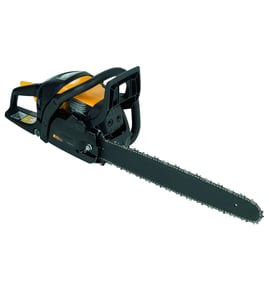
Yes. The Mcculloch TITAN chainsaw is a gas two-stroke design; it runs on a gasoline and 2-cycle oil mixture (not straight gas). Use the correct fuel mix and fresh fuel to prevent hard-starting, poor power, and plug fouling.
- Look for a fuel cap label that mentions a fuel/oil mix or “2-cycle” oil
- Check whether there is no separate engine oil fill (2-strokes do not have a crankcase oil reservoir)
- Identify a small, lightweight engine with a primer bulb and choke lever (common on 2-stroke chainsaws)
- Review the carburetor and air filter layout; most homeowner gas saws use a diaphragm carburetor
Most 2-stroke chainsaws use a 50:1 or 40:1 gas-to-oil ratio depending on the engine spec. Use:
- Fresh, unleaded gasoline (avoid old fuel)
- High-quality 2-cycle oil rated for air-cooled engines
- A clean, approved fuel container
- Bar and chain oil in the separate bar-oil tank (this is different from 2-cycle oil)
| What you’re filling | What goes in it | Purpose |
|---|---|---|
| Fuel tank | Gasoline + 2-cycle oil mix | Lubricates and powers the engine |
| Bar-oil tank | Bar and chain oil | Lubricates the chain and guide bar |
Running straight gas in a 2-stroke chainsaw quickly damages the piston and cylinder. Using the right mix, plus clean air filtration and a good spark plug, keeps your TITAN cutting reliably.
- Drain old fuel and refill with fresh, correctly mixed fuel
- Clean or replace the air filter
- Check the spark plug condition and gap
- Inspect fuel lines for cracks or leaks
- Consider carburetor cleaning or replacement if it surges or won’t idle
For step-by-step help, use our DIY guide: tips for a hard to start chainsaw.
Last updated: February 2026
How many cc's is a McCulloch TITAN chainsaw?
Engine size (cc) depends on the exact Mcculloch TITAN variant and engine family; for the TITAN model line, many homeowner gas chainsaws commonly fall in the mid-range (about 40 cc to 60 cc). For the most accurate cc rating, match the full model and engine ID on your saw to the parts listing.
Look for an ID tag or stamping on the saw (often on the starter housing, crankcase, or near the handle). Use these details to confirm the correct engine size:
- Full model identifier beyond “TITAN” (sometimes includes additional numbers/letters)
- Engine or type code (may be separate from the model)
- Serial number (helps confirm production run)
- Carburetor and air filter style (often differs by displacement)
- Bar length currently installed (not definitive, but a helpful clue)
“cc” is the engine displacement. Higher cc typically means more torque and faster cutting with the right chain, but also more weight and fuel use.
| Typical homeowner gas chainsaw range | Common use | Notes |
|---|---|---|
| 35 to 45 cc | Limbing, light firewood | Lighter, easier handling |
| 45 to 55 cc | Firewood, storm cleanup | Good all-around range |
| 55 to 65 cc | Larger rounds, heavier cutting | Heavier; needs sharp chain |
Knowing the correct cc helps us match the right ignition parts, carburetor/fuel system components, and bar and chain setup. It also helps when troubleshooting hard starting, rough running, or power loss.
For related troubleshooting and tune-up guidance, use our DIY resources like chainsaw common questions and tips for a hard to start chainsaw.
Last updated: February 2026
What happened to McCulloch chainsaws?
Mcculloch chainsaws did not disappear; the Mcculloch name continued after ownership changes and is used today mainly for consumer-focused outdoor power equipment. If you are maintaining a Mcculloch TITAN chainsaw, parts support typically centers on wear items and fuel system components rather than the original factory lineup.
Over time, the Mcculloch brand went through corporate transitions, so you may see differences in:
- Where the saw was manufactured (varies by era)
- Which company licensed or owned the brand name at the time
- Parts availability by model and production run
- Design details such as carburetor style, ignition module, and bar and chain fit
For the Mcculloch TITAN chainsaw, the most important thing is matching parts to the exact model identification on your saw (often on a label or stamped tag). When brand ownership changes, the same “Mcculloch” name can cover multiple generations of designs.
These are the items we most often see customers replace on gas chainsaws like this:
- Spark plug and ignition-related tune-up parts
- Air filter and fuel filter
- Fuel lines and primer bulb
- Carburetor (or carburetor rebuild components)
- Bar, chain, and sprocket wear components
| Symptom | Most common area to check first | Typical next step |
|---|---|---|
| Won’t start | Fuel quality, spark plug, air filter | Inspect fuel lines and carburetor |
| Runs rough | Air leak, dirty carburetor, clogged filter | Clean or rebuild carburetor |
| Leaking gas | Fuel line, tank grommet, primer bulb | Replace cracked rubber lines |
Knowing that Mcculloch changed hands helps explain why two “Mcculloch” saws can take different carburetors, fuel lines, or bar and chain setups. Using the exact model identification prevents ordering the wrong part and reduces repeat failures.
- Use chainsaw common questions to identify what’s normal versus a sign of a failing fuel or ignition component.
- If your saw is hard to fire, follow tips for a hard to start chainsaw before replacing parts.
Last updated: February 2026