Installation guide
 Owner’s manual


What's the average lifespan of a whirlpool dryer?
Most Whirlpool dryers, including the Whirlpool WED8620HC0, typically last 10 to 13 years with normal household use. Consistent airflow maintenance (lint screen and venting) and avoiding chronic overheating are the biggest factors that help a dryer reach the high end of that range.
We see these items make the biggest difference in how long a Whirlpool electric dryer runs reliably:
- Vent airflow: restricted venting increases heat and run time, which accelerates wear
- Lint screen habits: cleaning before every load helps prevent overheating and long dry times
- Load size: frequent overloading strains the motor, belt, and drum support system
- Heat management: repeated overheating can trip safety devices and shorten component life
- Installation conditions: a level floor helps the drum tumble correctly and supports sensor-cycle performance
Use this quick routine as your baseline; it targets the most common causes of early failure:
- Clean the lint screen before each load
- Check outside exhaust airflow periodically; weak airflow usually means the vent or hood is clogged
- Keep venting to 4-inch diameter material and minimize long runs and extra elbows
- Keep the dryer level; an uneven floor can affect tumbling and automatic sensor cycles
- If drying times suddenly increase, address airflow first before replacing parts
These are the parts that most often drive “repair vs. replace” decisions as a dryer ages:
| Item | What you notice | Typical time window |
|---|---|---|
| Drum support system | Thumping, rumbling, squealing | 7 to 12 years |
| Heating system | No heat or weak heat, long dry times | 6 to 12 years |
| Airflow components | Poor airflow, overheating symptoms | Any age (maintenance-driven) |
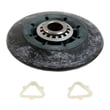
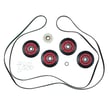
If you’re hearing rumbling or thumping, the drum support system is a common place to start; for this model, a frequent wear part is the dryer drum support roller WPW10314173.
A dryer that runs with poor airflow often takes longer to dry, runs hotter, and cycles safety controls more often. That extra heat and run time can shorten the life of key components like the heating element, thermal fuse, and motor.
For model-specific operating and care guidance, follow the WED8620HC0 owner's manual.
Last updated: January 2026
What is the WED8620HC0 dryer?
The Whirlpool WED8620HC0 is a full-size electric clothes dryer designed for typical household laundry loads. It uses moisture sensing and multiple cycles to help dry efficiently, and it installs like most 27-inch Whirlpool electric dryers when you follow the electrical and clearance requirements in the WED8620HC0 installation guide.
For the Whirlpool WED8620HC0, the key identifiers are:
- Brand: Whirlpool
- Appliance type: electric dryer
- Common size class: 27-inch, full-size
- Typical capacity class: about 7.4 cu. ft. (varies by configuration)
- Typical features for this model family: moisture sensing, multiple dry cycles, steam options (on some configurations)
This model installs with standard dryer planning items like space, ventilation, and the correct electrical hookup.
- Plan extra clearance for servicing and to reduce noise transfer
- For closet installs, provide required door ventilation openings (top and bottom)
- Use proper venting materials and routing for safe airflow
- Confirm the outlet location is within reach of the power cord
| Dryer type | Typical supply | Circuit | Receptacle/notes |
|---|---|---|---|
| Electric dryer | 120/240 V, 60 Hz | 30 A dedicated | Often a 4-wire 14-30R (common setup) |
(Exact requirements depend on your location and installation; the installation guide spells out the approved configurations.)
Knowing the exact model (WED8620HC0) helps us match the correct Whirlpool dryer parts, diagrams, and troubleshooting steps, especially for fit-critical items like a heating element, thermal fuse, or control board.
Last updated: January 2026
How to tell if a whirlpool dryer thermal fuse is blown?
On Whirlpool dryer model WED8620HC0, a blown thermal fuse commonly shows up as a dryer that will not start, or a dryer that runs but will not heat. The sure way to tell is to unplug the dryer and test the fuse for continuity with a multimeter; no continuity means the fuse is blown.
These checks help rule out power and setup issues that can look like a bad fuse.
- Confirm the door closes fully and the Start/Pause is pressed with your fingertip (not a fingernail).
- For electric dryers, confirm you have 240 V supply; the drum can turn even when heat is missing.
- Check both household fuses or both breakers (many electric dryers use two).
- Run a Timed Dry heated cycle (do not use an Air Only setting) to confirm it is a heat issue.
- If the display shows “L2”, treat it as a low line-voltage condition that can prevent heating.
For model-specific operating and troubleshooting details, use the WED8620HC0 owner's manual.
- Unplug the dryer (and shut off gas if you have a gas version).
- Access the thermal fuse (location varies by design; it is commonly on the blower housing or exhaust duct area).
- Pull the wire connectors off the fuse terminals.
- Set a multimeter to continuity or ohms.
- Touch probes to the fuse terminals.
- Good fuse: continuity (beep) or near-zero ohms
- Blown fuse: no beep or infinite resistance
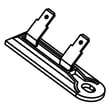
If you need the correct replacement for this model, match it to the thermal fuse W10909685.
A thermal fuse usually opens because the dryer overheated from restricted airflow.
| What to check | What you are looking for | What to do |
|---|---|---|
| Lint screen and housing | Lint buildup | Clean every load; vacuum the chute periodically |
| Vent duct to outside | Kinks, crushing, long runs, lint blockage | Straighten/shorten where possible; clean the full run |
| Outside vent hood | Flapper stuck, screen clogged | Clear obstructions; confirm strong airflow |
If airflow is good and the fuse tests good, heat problems can also involve the heating circuit or temperature sensing.
- Heating element (electric models): dryer heating element WP3387747
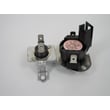
- High-limit thermostat: dryer high-limit thermostat WP8557403
- Temperature sensor: dryer thermistor WP8577274
Last updated: January 2026
What is the most common problem with whirlpool dryers?
On Whirlpool dryers like model WED8620HC0, the most common customer-reported issues are “no heat” and “long dry times.” These are usually caused by a home power supply problem (electric models need full 240V) or restricted airflow from lint buildup and venting.
Start with the items that cause the biggest share of heating and drying complaints:
- Restricted venting/airflow: lint screen clogged, crushed vent hose, blocked exterior hood
- Power supply issue: one breaker tripped or one fuse blown so the drum turns but heat is weak or missing
- Heat control or safety part opened: thermal fuse or thermostat opened after overheating
- Moisture sensing issues: sensor bars coated with residue, causing early shutoff or inconsistent drying
- Normal noises vs. wear: thumping after sitting unused can be normal; persistent squeal/rumble points to support parts
Use these checks before replacing parts:
- Verify the dryer has 240V at the outlet (electric dryers can run without heating if only part of the supply is present).
- Reset both dryer breakers (or replace both fuses if your home uses fuses).
- Clean the lint screen; then confirm strong airflow at the outside vent.
- If the display shows “L2” (low/no line voltage), follow the steps in the WED8620HC0 owner's manual.
- If drying is inconsistent on Auto cycles, clean the moisture sensor bars with rubbing alcohol.
| Symptom | Likely area | Example part for WED8620HC0 |
|---|---|---|
| Runs but no heat | Heating circuit | Dryer heating element WP3387747 |
| No heat after overheating | Safety cutoff | Thermal fuse W10909685 |
| Rumbling or thumping | Drum support | Dryer drum support roller WPW10314173 |
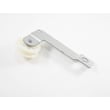
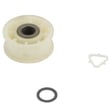
| Squeal, poor tumbling | Belt tension system | Dryer idler pulley W10837240 |
Airflow and power problems can repeatedly overheat the dryer and shorten the life of heating and safety components. Fixing venting and voltage first prevents repeat “no heat” failures.
Last updated: January 2026