Owner’s manual
 View engine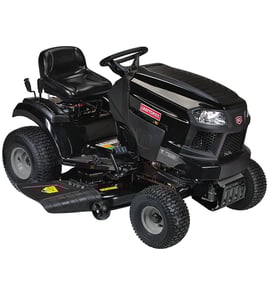



What brand engine does Craftsman use?
For the Craftsman lawn tractor model 917270811, the owner’s manual indicates it uses a Briggs & Stratton (B&S) engine (you’ll see B&S referenced on the engine-related decals and labeling). For other Craftsman riding mowers, the engine brand can vary by model and year, so we always confirm by model number.
How to confirm the engine brand on your tractor
Use these quick checks on your Craftsman 917270811:
- Check the engine shroud or valve cover for a Briggs & Stratton label or stamping
- Look for the engine model/type/code tag (often on the blower housing)
- Match the engine information to the identification section in the owner's manual
- Verify the tractor model number on the frame tag is 917270811
- If you are ordering maintenance parts, use the engine model number to avoid mismatches
What we see for model 917270811
The manual content for this model includes B&S references (for example, “Decal, Engine B&S” and “Decal, Panel Dash B&S 19.5”), which aligns with a Briggs & Stratton-equipped tractor.
| Item to check | What it tells you | Where to look |
|---|---|---|
| Tractor model number | Confirms the correct parts list | Frame tag under seat or on frame |
| Engine brand label | Confirms manufacturer (B&S, etc.) | Engine shroud/blower housing |
| Engine model/type/code | Needed for engine-specific parts | Engine ID tag/label |
Why it matters
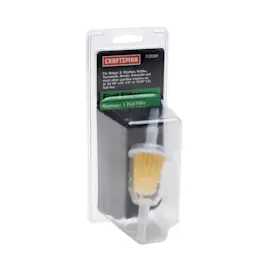
The engine brand and engine model number determine the correct tune-up and engine parts (spark plug, air filter, fuel filter, starter components). Even within Craftsman tractors, similar-looking models can use different engines.
Last updated: February 2026
How to identify a lawn mower engine?
To identify the engine on your Craftsman lawn tractor model 917270811, locate the engine’s ID stamping or label on the engine shroud (sheet metal) near the muffler and air cleaner area; that engine model and type code is what you use to match tune-up and repair parts.
Where to look on the engine
On most front-engine riding lawn tractors like the Craftsman 917270811, the engine identification is found on the engine’s sheet metal shroud.
Check these common spots:
- Directly above the muffler on the engine shroud (muffler can be on the right or left side)
- Near the air cleaner housing on the shroud
- Front area of the engine shroud where the manufacturer stamps model/type information
What numbers you need (and why)
Write down the full set of engine identification numbers so you can match the correct parts.
Typically, you will use:
- Engine model number (identifies the engine family)
- Type or specification code (identifies the exact build configuration)
- Code/date number (helps match running changes)
Why it matters
The tractor model number (917270811) identifies the mower chassis and deck parts, but the engine model and type code is what ensures you get the right ignition parts, filters, and carburetor-related components.
Quick checklist before ordering engine-related parts
Use this checklist to avoid mismatches:
- Clean the shroud area so the stamping/label is readable
- Copy numbers exactly (letters and digits)
- Take a clear photo of the label/stamping for reference
- Use the engine ID (not just the tractor model) when selecting engine tune-up parts
- Confirm the tractor model 917270811 when selecting deck, belt, steering, and chassis parts
Common ID locations at a glance
| What you’re identifying | Where you’ll usually find it | What it’s used for |
|---|---|---|
| Tractor model number (917270811) | Tractor frame tag (often under seat or on frame) | Deck, belts, steering, chassis parts |
| Engine model/type code | Engine shroud near muffler or air cleaner | Filters, spark plug, carburetor, ignition parts |
For additional model-specific operating and maintenance details (including safety and service guidance), use the owner's manual.
Last updated: February 2026
Is it worth replacing a lawn mower engine?
Yes, replacing the engine on your Craftsman lawn tractor model 917270811 is worth it when the tractor’s deck, steering, and drivetrain are still solid and the total engine-swap cost stays well below the cost of replacing the whole mower. If multiple major systems are worn out, a replacement tractor is the better value.
Quick decision checklist
- The mower deck is structurally sound (no severe rust-through or cracking)
- The transaxle drives smoothly and the tractor moves consistently
- Steering and front axle components are tight (no excessive play)
- You can still get common wear parts (belts, blades, pulleys, mandrel parts)
- The engine is the main failure, not a long list of other repairs
Cost and condition guide (rule of thumb)
Use this as a practical way to decide.
| What you’re comparing | Usually favors engine replacement | Usually favors replacing the tractor |
|---|---|---|
| Overall condition | Deck and chassis are strong | Deck/chassis are deteriorated |
| Repair scope | Mostly engine-related | Engine plus multiple systems |
| Parts availability | Wear parts are easy to source | Key parts are hard to source |
| DIY comfort | You can handle wiring, fuel, and controls | You prefer minimal repair time |
What to inspect before you commit
We recommend checking these areas first because they often decide whether an engine swap pays off.
- Deck and blade system: Bent blades or a bent mandrel can cause vibration and poor cut quality; the manual calls out replacing bent/damaged blades and shows correct blade installation and torque practices. Review the owner's manual.
- Blade drive components: If the deck belt is worn or slipping, plan on replacing it during the project (see lawn tractor drive belt 532144200).
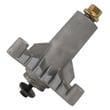
- Mandrel condition: If you have rumbling, wobble, or repeated belt issues, the spindle/mandrel may be worn (see husqvarna lawn tractor mandrel assembly 532130794).
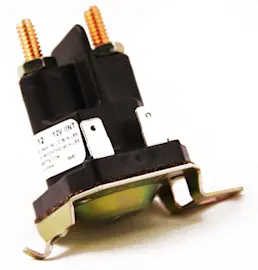
- Starting circuit: A no-crank condition is sometimes electrical, not engine failure; a weak solenoid or wiring issue can mimic a bad engine (see solenoid 532146154).
Why it matters
An engine swap only “wins” when it restores reliable mowing without uncovering expensive deck, belt, mandrel, or drivetrain problems right after. The manual’s maintenance and troubleshooting guidance helps you separate engine issues from deck and safety-interlock problems so you do not replace the wrong thing. See the owner's manual.
Last updated: February 2026
How to find Craftsman parts?
To find the right Craftsman parts for your model 917270811 lawn tractor, we match parts to your exact model number and diagrams so you get the correct fit the first time. Start with the parts list for 917270811, then confirm the part location and description in the owner's manual.
Fast way to find the correct part
- Use the full model number 917270811 (from the tractor’s ID label) when searching.
- Identify the system you’re repairing (mower deck, steering, electrical, wheels and tires).
- Cross-check the diagram callout with the part description before ordering.
- Compare your old part to the listing (mounting holes, length, connector style).
- If multiple versions exist, match by equipment configuration (for example, 42-inch deck).
Common parts customers replace on 917270811
These are examples of parts that are frequently needed for maintenance and repairs on this model:
| Repair need | Example part on this model | What it affects |
|---|---|---|
| Poor cut, clumping | Husqvarna lawn tractor mulching blade, 21-in 532134149 | Cut quality and mulching performance |
| Blades will not engage or slip | Lawn tractor drive belt 532144200 | Blade drive and deck operation |
| Clicking, no crank | Solenoid 532146154 | Starter circuit power to the starter |
| Vibration or noisy deck | Husqvarna lawn tractor mandrel assembly 532130794 | Blade spindle support and smooth rotation |
Why it matters
Using the exact model number and the correct diagram prevents ordering a look-alike part that does not fit your deck, transaxle, or electrical harness. It also helps you avoid repeat repairs caused by mismatched belts, blades, or mandrel components.
Helpful tips before you order
- For deck parts, confirm whether you have the 42-inch mower deck configuration.
- For electrical parts, check battery connections and safety interlocks first.
- For wheels and tires, match tire size and rim style to your existing setup.
- For hardware (nuts, bearings, caps), match thread size and flange style.
Last updated: February 2026