

Is a 2 stage or 3 stage snowblower better?
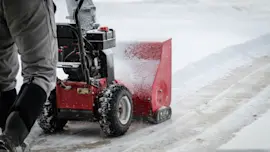
A 2-stage snowblower is the better all-around choice for most driveways because it handles deep snow well with fewer moving parts and typically costs less. A 3-stage is better when you regularly hit dense, icy plow banks and want faster intake and throwing in extreme conditions.
Key differences (2-stage vs 3-stage)
- 2-stage: Front auger pulls snow in; an impeller throws it out the chute.
- 3-stage: Adds an accelerator auger between the intake auger and impeller to move snow faster.
- Best use case: 2-stage for most homes; 3-stage for frequent heavy, wet, compacted, or icy snow.
- Complexity: 3-stage has more components to maintain.
- Weight and handling: 3-stage units are often heavier, which can matter on slopes or tight storage.
Which one is “better” for your situation?
Use this quick comparison to match the stage to your conditions.
| Your typical conditions | Better choice | Why |
|---|---|---|
| 4 to 12 inches, mixed powder and wet snow | 2-stage | Strong performance with simpler design |
| End-of-driveway plow berms, compacted snow | 3-stage | Faster, more aggressive snow processing |
| Long driveway, large clearing area | 3-stage (or strong 2-stage) | Higher throughput can save time |
| Tight budget, easier maintenance priority | 2-stage | Lower cost and fewer wear points |
What to consider for your MTD 315E640F000
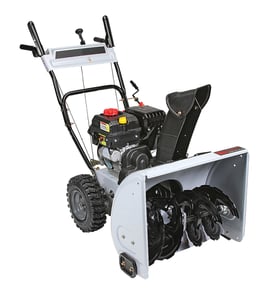
Even within the same “stage,” performance depends on setup and upkeep. For an MTD snow thrower like model 315E640F000, these factors usually make the biggest difference:
- Auger and drive belt condition (slipping belts reduce throwing distance)
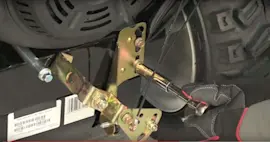
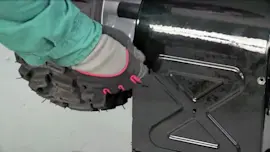
- Skid shoe and shave plate adjustment (controls scraping and intake height)
- Chute control adjustment (keeps aiming smooth and consistent)
- Shear pins (protect the auger; broken pins reduce clearing power)
- Engine tune basics (fresh fuel, correct oil level, clean spark plug)
Why it matters
Choosing the right stage is really about matching the machine’s snow intake and throwing capacity to what you see most often. If you rarely deal with icy berms, a 2-stage typically clears just as effectively with less cost and complexity.
For maintenance and performance tips that apply to most snowblowers, we recommend starting with how to make your snowblower last longer.
Last updated: February 2026
Is it worth fixing an old snowblower?
Yes, it’s worth fixing an older MTD snow thrower like model 315E640F000 when the problem is a normal wear item (belt, skid shoes, shave plate, spark plug, friction wheel) and the machine is otherwise solid; it’s usually not worth it when the repair is a major drivetrain or engine issue that approaches half the cost of a comparable replacement.
Quick decision checklist
- Starts and runs well (or likely will with basic tune-up parts)
- Auger and drive engage without grinding, slipping, or loud knocking
- No major gearbox damage (oil leakage, seized auger shaft, broken case)
- Frame and housing are solid (no severe rust-through or cracked welds)
- Parts availability looks good for your model on Sears PartsDirect
Typical repairs: cost and effort comparison
These are common snowblower repairs and how they usually pencil out.
| Repair type | Typical DIY difficulty | Usually worth fixing? | Notes |
|---|---|---|---|
| Belt replacement | Medium | Yes | Common wear item; restores auger or drive function. |
| Spark plug and fuel refresh | Easy | Yes | Often fixes hard-start or rough-run complaints. |
| Skid shoes and shave plate | Easy | Yes | Protects the housing and improves scraping performance. |
| Friction wheel or drive adjustments | Medium | Often | Good value if the engine is strong and the chassis is solid. |
| Gearbox or engine internal repair | Hard | Often no | Cost and time rise fast; reliability can still be uncertain. |
A simple “50% rule” that works
We use this rule of thumb because it keeps the decision practical:
- Add up parts + any shop labor.
- If the total is under about 50% of a comparable new snowblower, repair is the better value.
- If it’s over about 50%, replacement is the better value unless you specifically want to restore the machine.
Why it matters
A snowblower that already fits your driveway and throws well can be cheaper to keep running than replacing, especially when the fix is routine maintenance. Major engine or gearbox work can turn into a long, expensive project with limited payoff.
If you decide to repair: best first steps
- Drain old fuel; refill with fresh fuel (and stabilizer if stored).
- Check the spark plug condition and gap.
- Inspect belts for glazing, cracking, or stretching.
- Confirm auger shear pins are intact and the auger turns freely.
- Lubricate key points; see how to lubricate a snowblower drive hex shaft video.
Last updated: February 2026
What is the typical lifespan of a gas snowblower?
A gas snowblower like the MTD 315E640F000 typically lasts 10 to 20 years with normal residential use and consistent maintenance. Most replacements happen sooner because of neglected fuel storage, worn belts, or corrosion, not because the machine is “used up.”
Typical lifespan ranges
Lifespan depends most on maintenance, storage conditions, and how often you clear heavy, wet snow.
- 10 to 20 years: common for well-maintained gas snowblowers
- 8 to 12 years: typical when maintenance is occasional and storage is damp
- 15 to 20+ years: common when fuel is stabilized, oil is changed on schedule, and wear items are replaced early
| Usage and care level | What we typically see | What shortens life most |
|---|---|---|
| Light use, good care | 15 to 20+ years | Old fuel, rust from storage |
| Moderate use, average care | 10 to 15 years | Belt wear, friction wheel wear |
| Heavy use, minimal care | 8 to 12 years | Corrosion, drivetrain wear, carburetor issues |
Maintenance that adds the most years
These steps prevent the most common “end of life” failures on a snow thrower: fuel system problems, drive wear, and seized moving parts.
- Change engine oil regularly; dirty oil accelerates engine wear
- Use fresh fuel and stabilize fuel before storage to reduce carburetor varnish
- Inspect and replace worn belts before they slip and overheat
- Lubricate the drive system and rotating shafts to prevent binding and premature wear
- Keep skid shoes and the shave plate adjusted so the housing does not grind on pavement
A good maintenance baseline is covered in how to make your snowblower last longer.
When repair vs. replace makes sense
We recommend repairing when the machine still starts reliably and the auger and drive systems are solid. Replacement usually makes sense when multiple major systems are failing at once.
Replace is usually the better call when:
- The engine has low power plus hard starting (even with fresh fuel and a good spark plug)
- The auger gearbox or drive system has repeated failures
- Corrosion has weakened the housing or key mounting points
- Total repair cost is approaching about half the snowblower’s current value
Why it matters
Knowing the typical lifespan helps you plan maintenance and avoid mid-storm breakdowns. On the MTD 315E640F000, routine oil changes, fuel care, and lubrication usually add more usable years than any single “upgrade.”
Last updated: February 2026