

How to find the exact model of dryer on a dryer?
To find the exact model of your Kenmore dryer, look for the model/serial tag on the dryer cabinet (not the user guide). On model 11086584100, the tag is typically on the door opening or the door frame area, and the full model number is printed on that label.
Where to look on the dryer
Check these common locations in this order:
- Inside the dryer door opening on the front panel (door frame)
- On the back panel of the dryer cabinet
- Along the lower front edge behind the toe panel or lower access panel
- On the side panel near the front (less common)
What to write down (so you get the right parts)
Use the information exactly as printed on the tag.
- Model number (example: 11086584100)
- Serial number (helps confirm production run)
- Type (electric dryer vs. gas dryer)
- Any revision or engineering code if shown
| Label item | Why it matters | Example format |
|---|---|---|
| Model number | Matches the correct parts breakdown | 110.86584100 or 11086584100 |
| Serial number | Confirms version changes within a model | Letters + numbers |
| Power type | Prevents ordering the wrong heating parts | Electric |
Why it matters
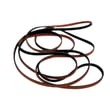
Kenmore model numbers can look similar, but small differences can change the correct drum belt, heating element, or thermal fuse. Using the exact model number helps us match parts like the drum belt 341241 to the correct dryer configuration.
Quick tip if the label is hard to read
If the tag is worn, take a clear photo with good lighting and zoom in. Also check for a second sticker on the back panel.
Last updated: February 2026
What year is my Kenmore dryer model?
For Kenmore electric dryer model 11086584100, the model number alone does not identify the exact year. We date it by the serial number on the rating plate; the serial format indicates the manufacturing week and year for the unit.
Where to find the date information
Check the dryer’s rating plate (usually on the door opening, door frame, or inside the cabinet).
- Locate the serial number (not just the model number).
- Write it down exactly as shown.
- Look for letters and numbers that indicate the production date.
- If the label is worn, use a flashlight and take a close-up photo.
- Compare the serial format to a Kenmore 110-series decoder reference.
How Kenmore 110-series dryers are typically dated
Most Kenmore models that start with 110 were built by Whirlpool for Kenmore. On these units, the serial number format is what matters, not the model number.
| What you have | What it tells you | What to do next |
|---|---|---|
| Model number: 11086584100 | Identifies the design and parts family | Use it to match parts and diagrams |
| Serial number (from rating plate) | Identifies manufacturing date code | Decode it to get the year/week |
Why it matters
Knowing the manufacturing year helps us match the correct version of common wear parts (belt, idler pulley, thermal fuse) and avoid ordering a look-alike part that does not fit your exact production run.
Related parts that commonly vary by production run
If you are dating the dryer because you are planning a repair, these are frequent replacement items for this model family:
- Drum belt 341241 (drum drive belt)
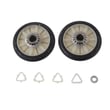
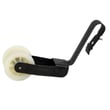
- Dryer idler pulley WP691366 (keeps belt tension)
- Fuse WP3390719 (thermal fuse that can stop the dryer from running)
Last updated: February 2026
What are the most common issues with 11086584100?
The most common issues we see with the Kenmore 11086584100 electric dryer are no heat, long dry times, drum not turning, loud squealing or thumping, and the dryer not starting. These problems usually trace to airflow restrictions, a failed thermal fuse, or worn drum-drive parts.
Common symptoms and what they usually point to
- No heat: heating element, thermal fuse, or power supply issue (electric dryers can run but not heat if one leg of power is missing)
- Long dry times: clogged venting, lint buildup, weak airflow, or a damaged blower wheel
- Drum not turning: broken belt, worn idler pulley, or drum support wear
- Loud noise (squeal, rumble, thump): idler pulley, front bearing, drum baffle, or blower wheel issues
- Won’t start: door switch or start switch problems, or a blown thermal fuse
Parts that commonly fix these problems
If your symptoms match, these model-compatible parts are frequent solutions:
- Fuse WP3390719 (thermal fuse for no-start or no-heat conditions)
- Element WP4391960 (heating element for no-heat)
- Drum belt 341241 (belt for drum not turning)
- Dryer idler pulley WP691366 (squeal and belt tension issues)
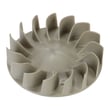
- Dryer blower wheel WP694089 (poor airflow, vibration, or noise)
Quick checks before replacing parts
- Confirm airflow: clean the lint screen and make sure the outside vent flap opens strongly.
- Check power: verify the dryer has full 240V supply (a tripped breaker can leave only 120V).
- Listen and observe: motor runs but drum does not turn often indicates a belt or idler issue.
- Inspect for lint buildup: lint in the blower housing and ducting can cause overheating and blown fuses.
Symptom-to-part guide (fast lookup)
| Symptom | Most likely area | Common part on this model |
|---|---|---|
| Runs but no heat | Heating circuit | Heating element, thermal fuse |
| No start | Safety and start circuit | Thermal fuse, start switch |
| Drum won’t tumble | Drive system | Belt, idler pulley |
| Loud squeal/rumble | Moving supports | Idler pulley, front bearing |
| Long dry times | Airflow | Blower wheel, venting |
Why it matters
Fixing airflow first protects the heating system and helps prevent repeat failures like a blown thermal fuse. Replacing the correct drive or heating part restores normal cycle times and reduces wear on the motor and drum.
Last updated: March 2026