 Installation guide
 Owner’s manual
 Error Codes



How do I know what Frigidaire model I have?
Your Frigidaire dishwasher model number is printed on the appliance’s rating label, not on the control panel. For model FGID2474QF3B, we use that exact model number to match the correct parts list, Use & Care information, and installation requirements in the FGID2474QF3B owner's manual.
Check these common label locations (the label usually shows both Model and Serial):
- Along the interior side of the door (open the door and look on the frame edge)
- On the tub rim near the door opening
- On the left or right side wall just inside the door
- Near the lower kick plate area (sometimes visible when the door is open)
A Frigidaire model number is typically a mix of letters and numbers (for example, FGID2474QF3B). Write it down exactly as shown.
| What to record | Example | Why we need it |
|---|---|---|
| Model number | FGID2474QF3B | Ensures parts fit and diagrams match |
| Serial number | (varies) | Helps identify production details for service |
Using the exact model number prevents ordering the wrong dishwasher parts (like a door seal, spray arm, or control board) and helps you follow the correct operating and installation instructions.
- Match every character in the model number (letters and numbers)
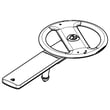
- Use the model number to select parts like the dishwasher spray arm, lower 111920868 only when it matches your exact unit
- If the label is worn, clean it gently and use a flashlight to read faint print
Last updated: February 2026
What is the most common problem with a Frigidaire dishwasher?
The most common problems we see with Frigidaire dishwashers like model FGID2474QF3B are poor cleaning (food left on dishes), draining trouble, and leaks. Most of these trace back to loading, water temperature or pressure, detergent quality, or a clogged spray system; see the owner's manual for model-specific checks.
- Food soils left on dishes: blocked spray arms, incorrect cycle, low water temperature, or hard water buildup.
- Not draining: restricted or pinched drain hose, disposer knockout plug not removed, or a blockage in the drain path.
- Leaks/overflow: loose connections at the water inlet valve or the dishwasher not level.
- Detergent not dissolving well: old or caked detergent, or adding detergent too early.
- Cycle or control interruptions: an error code condition that may clear after canceling or power-cycling.
- Confirm water temperature: incoming water should be at least 120°F (49°C).
- Confirm water pressure: home water pressure should be 20 to 120 psi.
- Use the right detergent: use fresh, household-grade automatic dishwasher detergent; add it right before starting.
- Check loading: avoid nesting items and keep dishes from blocking spray arm rotation.
- Choose a stronger cycle or option: use a longer cycle and consider Hi-Temp Wash for heavy soils.
- If it will not drain: inspect the drain hose routing for kinks and verify the disposer knockout plug is removed (if connected).
| Symptom | Most likely cause | Parts to inspect/clean/replace |
|---|---|---|
| Dishes still dirty | Spray not reaching items, low temp, hard water | Dishwasher spray arm, lower 111920868, sump screen, loading pattern |
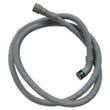
| Standing water | Drain restriction or installation issue | Crosley dishwasher drain hose 807032601, drain path, disposer connection |
| Water on floor | Door sealing or leveling issue | Crosley dishwasher door seal 117158011, leveling feet, inlet connections |
These problems usually get worse over time: restricted spray or drainage can leave residue and odors, and small leaks can damage cabinets or flooring. Fixing the root cause early also prevents unnecessary part replacements.
Last updated: February 2026
What is the average lifespan of a Frigidaire dishwasher?
A Frigidaire dishwasher typically lasts 10 years. With consistent care (cleaning the filter area, keeping spray arms clear, and using the right cycle for the load), many units reach 10 to 13 years of service, including the Frigidaire FGID2474QF3B.
Most dishwashers fall into a similar life range, but real-world lifespan depends heavily on water quality, usage frequency, and maintenance.
- Average expected life: about 10 years
- Common real-world range: 10 to 13 years with good upkeep
- Heavy use (multiple loads daily) typically shortens lifespan
- Hard water can increase scale buildup and wear on the heating and wash system
- Poor cleaning performance often traces back to maintenance items (filters, spray arms, loading)
These steps match how the dishwasher is designed to wash (fill, circulate through spray arms, filter soils, then drain) and help prevent avoidable strain.
- Scrape off large food soils before loading
- Keep the lower spray arm holes clear; replace a damaged arm if it stops spinning (see dishwasher spray arm, lower 111920868)
- Run hot water at the sink before starting a cycle so the first fill is warmer
- Use the correct detergent amount for your water hardness
- Load so items do not block the spray arms or detergent dispenser door
- Periodically clean the filter area and remove debris that can restrict circulation
Some problems feel like the dishwasher is “worn out” but are often repairable with cleaning or a targeted part replacement.
| Symptom | Often caused by | What we recommend first |
|---|---|---|
| Not cleaning well | Clogged spray arm, blocked filter area, loading issues | Clean spray arms and filter area; review dishwasher not cleaning dishes video |
| Leaks at the door | Worn or deformed door seal | Inspect/replace crosley dishwasher door seal 117158011 |
| Not draining | Kinked/clogged drain path or hose | Check hose routing and clogs; review dishwasher not draining video |
| Long cycles | Energy-efficient cycle design | Compare cycle options in the owner's manual |
Knowing the typical lifespan helps you decide when routine maintenance and a few key parts (like a door seal, drain hose, or spray arm) are worth it versus planning for replacement.
Last updated: February 2026
Which dishwasher to stay away from?
We do not recommend avoiding any single dishwasher brand across the board; the best way to “stay away” from problems is to screen specific models for leak risk, cleaning performance, and serviceability. For your Frigidaire FGID2474QF3B, use the FGID2474QF3B installation guide and FGID2474QF3B owner's manual to prevent the most common, avoidable issues.
These model-level red flags most often lead to repeat repairs or disappointing results:
- Leak-prone designs (door seal fit, poor hose routing, hard-to-level cabinets)
- Weak wash coverage (spray arms clog easily, filters are hard to access)
- Chronic drain complaints (complex drain path, hard-to-reach sump screen)
- Control interruptions (cycle stops, unresponsive keys, power resets)
- Limited parts support (common wear parts are hard to source)
| If you see this… | It usually leads to… | Better choice |
|---|---|---|
| Frequent leak complaints | Water damage, odors | Easy-to-replace seals and straightforward leveling |
| Reports of poor cleaning | Dirty dishes | Accessible filters and strong spray coverage |
| “Won’t drain” patterns | Standing water | Simple drain routing and reachable sump area |
| Hard-to-find parts | Longer downtime | Models with readily available wear parts |
For this Frigidaire dishwasher, “stay away” means avoiding the conditions that cause failures: improper installation, neglected filter cleaning, and delayed replacement of wear items.
Common fixes that solve common complaints:
- Door leaks: inspect the crosley dishwasher door seal 117158011 for tears, flattening, or gaps
- Poor lower-rack cleaning: clear clogged jets or replace the dishwasher spray arm, lower 111920868
- Slow or no drain: check routing and replace the crosley dishwasher drain hose 807032601 if kinked or restricted
Most “bad dishwasher” experiences come from three preventable categories: installation errors (leveling, drain setup, electrical), maintenance neglect (filters and spray arms), and worn seals or hoses. Fixing those early protects performance and helps prevent leaks.
Last updated: February 2026





