Owner’s manual
 Error Codes


What is the disadvantage of a side-by-side fridge?
A key disadvantage of a side-by-side refrigerator like the Samsung RS25H5000BC is reduced usable shelf width; wide items (pizza boxes, party platters, sheet pans) often do not fit well. You also typically need more side clearance so the doors can open fully; see the RS25H5000BC owner's manual.
Common drawbacks you will notice day to day
- Narrow compartments and shelves: tall or wide containers can be hard to place without rearranging.
- Less “full-width” storage: you lose the wide, uninterrupted shelf space you get in many top-freezer or French-door layouts.
- Door swing clearance matters: side-by-side doors need room to open easily, especially in tight kitchens.
- More frequent door opening: you may open both sides more often while cooking, which can add frost and temperature swings.
- Ice and water features add complexity: dispensers and ice makers can require more maintenance than a basic configuration.
Space and clearance: what to plan for
Your RS25H5000BC needs enough room for doors to open easily and for airflow around the cabinet.
| What you are planning for | Why it matters | What to do |
|---|---|---|
| Door opening space | Prevents door interference with walls/cabinets | Measure the doorway and nearby cabinetry before moving the unit in |
| Air circulation clearance | Helps reduce power use and supports stable cooling | Leave space at the sides, back, and top as described in the manual |
| Food storage fit | Avoids frustration with wide items | Use bins, rotate shelves, and store wide items on door bins only when safe |
Why it matters
Most side-by-side complaints come down to kitchen layout and storage habits. If you regularly store wide trays or large platters, the split refrigerator/freezer design can feel restrictive even when total capacity is good.
Helpful related reading
Last updated: February 2026
How to reset a Samsung refrigerator ice maker?
To reset the ice maker on your Samsung RS25H5000BC, we recommend running the built-in ice maker test/reset cycle, then confirming the water supply and ice settings. After a reset, normal ice production can take several hours (up to 24 hours for a full bin). See the RS25H5000BC owner's manual for the exact button location and indicator behavior.
Reset steps (most common method)
- Remove the ice bucket/bin so you can access the ice maker.
- Locate the test/reset button on the ice maker (often on the side or underside of the ice maker housing).
- Press and hold the test/reset button until you hear a chime or the mechanism starts moving.
- Reinstall the ice bucket and close the freezer door fully.
- Wait for the test cycle to finish; then allow time for the freezer to return to steady temperature.
Quick checks that prevent “no ice” after a reset
The manual calls out a few basics that must be correct for the ice maker to run normally:
- Water line connected and the shut-off valve open
- Water pressure in the correct range (typically 20 to 125 psi)
- Ice making is not turned off (Ice Off icon not lit)
- Freezer temperature is cold enough and the door closes tightly
- No clumped ice blocking the bucket or ice path
What to expect after you reset
| What you see | What it usually means | What we recommend |
|---|---|---|
| No ice immediately | Normal after reset | Give it several hours; up to 24 hours for full production |
| Unusual noises with ice maker on | Water is not reaching the refrigerator | Turn ice maker off, then restore water supply and retest |
| Ice clumps in bucket | Partial melting and refreezing | Empty bucket, dry it, reinstall, then reset |
Why it matters
Resetting clears minor electronic glitches and helps the ice maker re-home its internal motor and sensors. If the water supply is restricted or the ice maker is set to Ice Off, a reset will not restore ice production until those conditions are corrected.
Related help
If you are troubleshooting repeated ice failures, we recommend our guide: why your Samsung fridge stopped making ice and how to fix it.
Last updated: February 2026
What is the most common problem with Samsung refrigerators?
Cooling and ice maker problems are the most common issues we see with Samsung refrigerators like the Samsung RS25H5000BC. Typical symptoms include warm temperatures, frost or ice buildup that blocks airflow, and an ice maker or dispenser that stops producing ice or water.
Most common symptoms (what you’ll notice)
- Fresh food section not cold enough even though the freezer seems OK
- Freezer temperature swings or heavy frost on the back wall
- Loud humming, buzzing, or fan noise from the freezer area
- Ice maker stops making ice, makes small cubes, or clumps ice
- Water dispenser flow is weak or tastes off
Common causes on side-by-side models
These issues usually trace back to a few systems that control airflow, defrosting, and water supply:
| Problem area | What it affects | Common result |
|---|---|---|
| Airflow (evaporator fan, vents) | Moves cold air through compartments | Warm fridge, noisy operation |
| Defrost system (heater, drain path) | Prevents ice buildup on the evaporator | Frost buildup, blocked airflow |
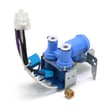
| Water system (filter, inlet valve) | Feeds dispenser and ice maker | No ice, slow water, leaks |
| Temperature sensing/control | Regulates compressor and fans | Temps too warm or too cold |
Checks we recommend first (fast, no special tools)
- Confirm vents are not blocked by food packages; blocked vents can cause overcooling or poor airflow (see the RS25H5000BC owner's manual).
- If the unit was unplugged, wait at least 5 minutes before plugging it back in to protect the controls.
- For ice maker performance, verify household water pressure is 20 to 125 psi and the shutoff valve is fully open.
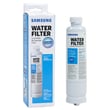
- If water flow is weak or tastes off, replace the refrigerator water filter DA29-00020B and flush several gallons through the dispenser.
- If you see water under the refrigerator or ice buildup, inspect the drain area; a drain restriction can lead to icing and leaks.
Why it matters
Cooling and ice maker complaints often share the same root cause: restricted airflow or water flow. Fixing the underlying issue quickly helps prevent food spoilage, repeated ice jams, and strain on the compressor and control system.
Last updated: February 2026