Installation guide
 Owner’s manual


Where to find part number on GE dryer?
On your GE gas dryer model DCVH680GJ2WW, the model and serial tag (which you will use to match the correct replacement parts) is typically located inside the dryer door opening, on the door frame, or just inside the front panel area. Use the exact model number from the tag when checking the DCVH680GJ2WW owner's manual.
Where to look first (fast checklist)
- Open the dryer door and check the door frame around the opening
- Check the inside face of the door near the hinge side
- Look just inside the front opening near the lint screen housing
- If your unit is installed on a pedestal, check that the label is not partially hidden by trim
What “part number” usually means (and what to write down)
Most customers mean one of these identifiers:
| What you see | What it’s used for | Example format |
|---|---|---|
| Model number | Ensures parts fit your exact dryer | DCVH680GJ2WW |
| Serial number | Helps with service history and production date | Letters and numbers |
| Part number on a component | Identifies a specific replacement part | WE12M29 |
If you need the part number for a specific failed part
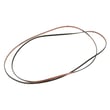
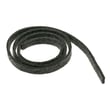
Once you have the model number, match the part by symptom and location. For example, if the drum will not tumble or you hear squealing, common wear items include the dryer drum belt WE03X29897 and the idler pulley WE12X83.
Why it matters
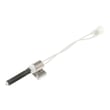
GE often uses similar-looking parts across dryer families; using the exact DCVH680GJ2WW model tag prevents ordering a belt, igniter, or control that does not match your configuration.
Last updated: February 2026
What is the most common problem with a GE dryer?
For the GE DCVH680GJ2WW gas dryer, the most common problem we see is long dry times or “no heat” symptoms caused by restricted airflow (lint buildup or obstructed venting). A partially clogged exhaust can also make the dryer run hotter and less efficiently, so airflow checks come first.
Quick checks that fix the most calls
- Clean the lint filter before every load.
- Inspect the exhaust duct and outside damper; remove lint, kinks, and obstructions.
- Confirm the dryer is level; some shaking and noise is normal, but an uneven dryer can get louder.
- Avoid overloading; large, heavy fabrics hold more moisture and take longer.
- Sort loads by fabric weight (heavy items separate from lightweight items).
What to check next if airflow is good
If airflow is clear and drying is still slow, we move to common wear parts and heat system components.
| Symptom | Most likely area | What we do first |
|---|---|---|
| Takes too long to dry | Venting/ducting | Verify correct venting and clean ducting |
| Thumping or squealing | Drum support/belt path | Inspect belt, idler, and glides |
| Won’t start when door closes | Door switch circuit | Test the door switch for continuity |
| Runs but no heat (gas) | Ignition/gas valve system | Check igniter glow and burner ignition |
Parts that commonly cause noise or tumbling issues
- Dryer drum belt WE03X29897 (broken or stretched belt can stop tumbling)
- Idler pulley WE12X83 (squeal, chirp, or belt tension problems)
- Dryer drum glide bearing (green) WE03X37317 (scraping, rumbling at the front)
- Dryer drum front glide pad WE03X37318 (front drum support wear)
- Felt WE09X27634 (drum seal wear can add noise and affect airflow)
Why it matters
Restricted exhaust airflow is a top root cause because it lengthens dry time and can contribute to overheating. Keeping the lint filter and exhaust duct clean is the fastest way to restore performance and reduce repeat problems.
For model-specific safety, cleaning, and troubleshooting steps, follow the DCVH680GJ2WW owner’s manual.
Last updated: February 2026
What is the lifespan of a GE dryer?
A GE dryer typically lasts 10 years. With consistent care on your GE DCVH680GJ2WW gas dryer (cleaning lint, keeping the vent clear, and avoiding overloads), it commonly reaches 10 to 15 years of service.
What affects dryer lifespan most
- Vent and duct cleaning: A restricted exhaust makes the dryer run hotter and longer.
- Lint filter habits: Cleaning before every load reduces strain and drying time.
- Load size: Overloading increases wear on the drum, belt, and idler system.
- Installation quality: Proper venting and correct setup prevent performance issues.
- Wear parts condition: A worn belt, glide, or idler can shorten life and cause noise.
Maintenance schedule we recommend
Use this as a simple baseline; follow your DCVH680GJ2WW owner’s manual for model-specific care and safety steps.
| Task | How often | Why it helps |
|---|---|---|
| Clean lint filter | Every load | Improves airflow and drying performance |
| Inspect venting for blockage | Monthly | Prevents long dry times and overheating |
| Clean exhaust ducting | Yearly | Reduces clogs; helps the dryer run efficiently |
| Check for squealing/thumping | As needed | Catches belt, glide, or idler wear early |
Parts that commonly wear as a dryer ages
If the dryer still heats but gets noisy, stops tumbling, or takes longer to dry, these are frequent wear items on many GE dryers:
- Dryer drum belt WE03X29897 (drum won’t turn, burning rubber smell)
- Idler pulley WE12X83 (squeal, intermittent tumbling)
- Dryer drum front glide pad WE03X37318 (scraping, thumping, drum drag)
Why it matters
A dryer that maintains strong airflow dries faster, runs cooler, and puts less stress on the motor, drum support, and gas ignition system. That combination is what most often separates a 10-year dryer from a 15-year dryer.
Last updated: February 2026
What size dryer do I need for a 4.5 cu ft washer?
For a 4.5 cu ft washer, we recommend choosing a dryer with at least similar capacity, and ideally slightly larger (about 7.0 cu ft or more) so full loads tumble freely and dry evenly. Your GE DCVH680GJ2WW is a full-size gas dryer designed for typical family-size loads.
Quick sizing guidance (what to buy)
A larger dryer drum helps prevent overdrying, long cycle times, and wrinkling because air can move through the load.
- Match the washer size first: 4.5 cu ft washer pairs best with a full-size dryer.
- Aim for extra room: about 7.0 to 9.0 cu ft is a common target range.
- If you wash bulky items (comforters, towels), choose the larger end of the range.
- If you often do small loads, size still matters less than using the right cycle and dryness setting.
- Plan for proper venting; poor airflow makes any dryer feel “too small” because drying times increase.
Washer-to-dryer capacity comparison
| Washer capacity | Recommended dryer capacity | Best for |
|---|---|---|
| 4.5 cu ft | 7.0 to 9.0 cu ft | Full loads, towels, mixed fabrics |
| 5.0+ cu ft | 8.0 to 9.5 cu ft | Bulky bedding, large households |
Why venting matters as much as drum size
Even with the right-size dryer, restricted exhaust airflow causes long dry times and higher energy use. For best performance, use 4-inch metal ducting, keep the run short, and avoid crushing or kinking the duct. The installation guidance for DCVH680GJ2WW also limits foil-type flexible transition duct to special cases and keeps it short (typically no more than 8 ft) while maintaining a 4-inch diameter throughout.
- Use rigid metal or semi-rigid metal duct when possible.
- Avoid plastic or combustible duct.
- Keep the duct straight and short; minimize elbows.
- Make sure the lint filter is always installed before running the dryer.
For the exact venting and clearance requirements that apply to your setup, follow the DCVH680GJ2WW installation guide.
Why it matters
Correct sizing and good airflow let clothes tumble properly, dry faster, and reduce wear on fabrics and dryer components.
Last updated: February 2026
What brand of dryer has the least problems?
Speed Queen has the fewest problems overall because its dryers are built for long service life and simpler repairs. For a balance of reliability, features, and price, Whirlpool and Maytag are strong picks; LG is also commonly dependable when the venting and maintenance are kept up.
How this applies to your GE DCVH680GJ2WW gas dryer
Even the most reliable brand will have issues if airflow is restricted or the dryer is not maintained. For your GE DCVH680GJ2WW, we follow the venting and safety guidance in the DCVH680GJ2WW installation guide and the operating and care steps in the DCVH680GJ2WW owner's manual.
Reliability basics that matter most
- Vent to the outdoors (gas dryers must be exhausted outdoors)
- Use 4-inch rigid metal ducting when possible
- Avoid flexible plastic ducting; use only UL-listed flexible metal if needed
- Clean the lint filter every load; keep the lint housing clear
- Have the interior and exhaust duct connection cleaned periodically by a qualified technician
Quick brand comparison (what “least problems” usually means)
| Brand | Typical strengths | Typical tradeoffs |
|---|---|---|
| Speed Queen | Very durable, serviceable design | Higher upfront cost, fewer “smart” features |
| Whirlpool / Maytag | Strong reliability for the price, widely available parts/service | Model-to-model variation |
| LG | Good performance and features, often reliable | Repairs can be pricier if electronics fail |
| GE | Solid overall, good parts availability | Reliability depends heavily on venting and upkeep |
Why it matters
Most “dryer problems” customers experience are airflow and maintenance related (long dry times, overheating, shutdowns), not brand defects. Proper venting and routine cleaning reduce wear on key components and help any dryer brand run longer and more consistently.
Last updated: February 2026