Get free shipping on your order, with any water filter subscription. Find my filter

Open Hamburger Menu
Sears Parts Direct
Tips to find your model number
GE WHDSR209D5WW washer

GE WHDSR209D5WW washer Parts

Here are the diagrams and repair parts for GE WHDSR209D5WW washer, as well as links to manuals and error code tables, if available.

By Schematic
By Part
SELECT DIAGRAM
?

This is the number corresponding to the part on the diagram / schematic

Browse Parts for WHDSR209D5WW Washer

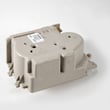
  • Washer Water-level Pressure Switch for GE WHDSR209D5WW - Part WH12X10076

    Controls & backsplash diagram

    Washer Water-level Pressure Switch

    Part #WH12X10076

    The manufacturer no longer makes this part, and there's no substitute part

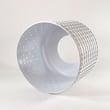
  • Terminal Housing for GE WHDSR209D5WW - Part WH12X0538

    Cabinet, cover & front panel diagram

    Terminal Housing

    Part #WH12X0538

    The manufacturer no longer makes this part, and there's no substitute part

  • Terminal Housing for GE WHDSR209D5WW - Part WH12X0497

    Controls & backsplash diagram

    Terminal Housing

    Part #WH12X0497

    The manufacturer no longer makes this part, and there's no substitute part

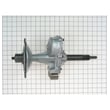
  • Leg Platform for GE WHDSR209D5WW - Part WH17X10003

    Suspension, pump & drive components diagram

    Leg Platform

    Part #WH17X10003

    The manufacturer no longer makes this part, and there's no substitute part

  • Wirefrm Hnge for GE WHDSR209D5WW - Part WH01X2743

    Cabinet, cover & front panel diagram

    Wirefrm Hnge

    Part #WH01X2743

    The manufacturer no longer makes this part, and there's no substitute part

  • Control Panel for GE WHDSR209D5WW - Part WH42X10507

    Controls & backsplash diagram

    Control Panel

    Part #WH42X10507

    The manufacturer no longer makes this part, and there's no substitute part

  • Cover Asm Wh for GE WHDSR209D5WW - Part WH44X10148

    Cabinet, cover & front panel diagram

    Cover Asm Wh

    Part #WH44X10148

    The manufacturer no longer makes this part, and there's no substitute part

  • Button Plug for GE WHDSR209D5WW - Part WH01X2724

    Cabinet, cover & front panel diagram

    Button Plug

    Part #WH01X2724

    The manufacturer no longer makes this part, and there's no substitute part

  • Terminal for GE WHDSR209D5WW - Part WD01X1434

    Controls & backsplash diagram

    Terminal

    Part #WD01X1434

    The manufacturer no longer makes this part, and there's no substitute part

  • Hose Drain A for GE WHDSR209D5WW - Part WH41X10093

    Tub, basket & agitator diagram

    Hose Drain A

    Part #WH41X10093

    The manufacturer no longer makes this part, and there's no substitute part

GE Washer WHDSR209D5WW FAQs

For your GE WHDSR209D5WW washer, “size” usually means either the physical dimensions (width, height, depth) or the wash capacity (how much it holds). The most reliable way to confirm both is to check the specifications section in the WHDSR209D5WW owner's manual.

What “size” can mean
  • Dimensions: helps you confirm fit in a laundry space or under cabinets
  • Capacity: helps you choose load size, avoid overloading, and improve cleaning
  • Basket fill guideline: how full to load the tub for best performance
Quick ways to identify your washer’s size
  1. Confirm the model number: the manual notes you can find the model number on the back of the washer.
  2. Use typical top-load dimensions as a starting point (common industry ranges):
    • Width: about 27 inches
    • Height: about 42 to 44 inches
    • Depth: about 27 to 28 inches
  3. Use the basket loading rule from the manual: load clothes loosely and don’t load higher than the top row of holes in the basket; the water level should just cover the clothes.
Typical size ranges (helpful for planning)
Washer type Typical width Typical height Typical depth
Top load washer (like WHDSR209D5WW) ~27 in. ~42 to 44 in. ~27 to 28 in.
Front load washer ~27 in. ~39 in. ~32 to 34 in.
Why it matters

Knowing the correct “size” prevents installation surprises (tight doorways, cabinet clearance) and helps avoid overloading, which can lead to poor agitation, longer drain times, and extra wear on drive components like the belt WH1X2026.

Last updated: January 2026

WHDSR209D5WW is the GE model number that identifies your specific top-load washer; we use it to match the correct parts list, diagrams, and service information for your exact machine. You’ll find the model and serial tag on the back of the washer (upper right area). See the WHDSR209D5WW owner's manual for the exact tag location and model list.

What the model number tells us

The model number is the “ID” for your washer. It helps us ensure parts like the drive belt, tub seal, and drain pump match your GE washer’s design.

Common ways we use WHDSR209D5WW:

  • Confirm the correct parts catalog for your washer
  • Match control panel and cycle features to the right documentation
  • Identify compatible mechanical parts (tub, hub, bearings)
  • Reduce ordering mistakes when parts look similar
Where to find the model and serial number

On this GE washer family, the manual notes the tag is on the back of the washer, typically in the upper right corner.

Before you start:

  • Unplug the washer (basic safety step)
  • Pull the washer forward enough to see the back panel
  • Write down the full model number and serial number
  • Use the full model number (including the final letters and numbers)
Examples of parts that depend on the exact model

Even within similar GE washer series, parts can vary by revision. For WHDSR209D5WW, examples of model-specific parts include:

Part type Example part for this model What it affects
Drive system Belt WH1X2026 Spin and agitation
Draining Washer drain pump assembly WH23X10030 Drains water at end of cycle
Tub sealing Washer tub seal WH02X10383 Helps prevent tub leaks
Why it matters

Using the exact model number (WHDSR209D5WW) prevents mismatched parts and wasted time, especially for fit-critical items like the tub bearing, tub seal, and drive belt.

Last updated: January 2026

The most common GE washer complaint is a washer that will not spin or will not drain fully, which often shows up as wet clothes at the end of the cycle. On the GE WHDSR209D5WW, start by confirming the lid is closed and the load is balanced, then move to drain and drive checks using the WHDSR209D5WW owner's manual.

Most common symptoms and what they usually point to
  • Won’t spin or leaves clothes wet: unbalanced load, lid not fully closed, drive system issue
  • Won’t drain or drains slowly: drain pump problem, kinked drain hose, blockage
  • Loud noise during spin: worn tub bearing, loose hub hardware
  • Vibration or shaking: leveling issue, worn suspension parts, overloaded tub
  • Not filling properly: water supply issue, water-level sensing hose problem
Quick checks we recommend first (fast, no parts)
  1. Redistribute the load: bulky items can stop or slow spin.
  2. Confirm the lid is fully closed: agitation and spin behavior can change with the lid up.
  3. Use correct loading and water level: load loosely and set water level so it just covers clothes.
  4. Check detergent use: too much or too little detergent can cause performance complaints.
  5. Inspect the drain path: look for a kinked hose or a restriction where the hose enters the standpipe.
Common “won’t spin / won’t drain” parts for this model
Symptom Part to consider What it does
Hums but won’t drain Washer drain pump assembly WH23X10030 Pumps water out during drain/spin
Motor runs but basket won’t spin well Belt WH1X2026 Transfers power from motor to drive
Loud roaring in spin Tub bearing WH2X1198 Supports the spin shaft and basket
Why it matters

A no-spin or poor-drain problem is more than an inconvenience; it can leave clothes soaking wet, strain the drive system, and increase vibration. Catching it early helps prevent secondary damage to the tub, hub, and suspension.

For models that display fault codes, we also use the GE top load washer error codes guide to narrow the cause quickly.

Last updated: January 2026
Most common symptoms to help you fix your washers

Choose a symptom to see related washer repairs.

Main causes: clogged drain hose, house drain clogged, bad drain pump, water-level pressure switch failure, bad control b…

Main causes: broken lid switch or lid lock, bad pressure switch, broken shifter assembly, faulty control system…

Main causes: worn agitator dogs, bad clutch, broken motor coupler, shifter assembly failure, broken door lock, suspensio…

Main causes: water heater failure, bad water temperature switch, faulty control board, bad water valve, faulty water tem…

Main causes: lack of electrical power, wiring failure, bad power cord, electronic control board failure, bad user interf…

Main causes: no water supply, bad water valves, water-level pressure switch failure, control system failure, bad door lo…

Main causes: unbalanced load, loose spanner nut, worn drive block, broken shock absorber or suspension spring, debris in…

Main causes: leaky water inlet valve, faulty water-level pressure switch, bad electronic control board…

Main causes: bad lid switch or door lock, bad timer or electronic control board, wiring failure, bad water inlet valve a…

Repair guides for bottom-mount refrigerators

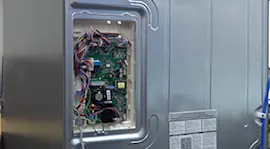
How to replace an electronic control board on the back of a refrigerator

How to replace an electronic control board on the back of a refrigerator

If your refrigerator isn't running, an electronic control board failure could be the problem. A service technician can d…

Repair time and Difficulty

 15 minutes or less
How to replace a door gasket in a French-door refrigerator

How to replace a door gasket in a French-door refrigerator

The door gasket, often called a door seal, seals the gap around the door to keep the cold air in and the warm air out. R…

Repair time and Difficulty

 15 minutes or less
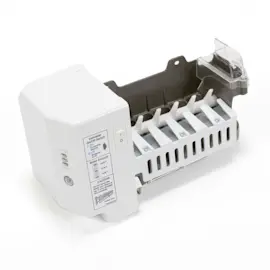
How to replace an in-door ice maker on a French door refrigerator

How to replace an in-door ice maker on a French door refrigerator

Follow these step-by-step instructions how to replace the in-door ice maker in Kenmore TRIO and LG French door refrigera…

Repair time and Difficulty

 15 minutes or less

Effective articles & videos to help repair your washers

Use the advice and tips in these articles and videos to get the most out of your washer.

How auto-load sensing washers work (and when they don't)

How auto-load sensing washers work (and when they don't)

Your washer barely fills or seems stuck in sensing mode? Find out how auto-load sensing and Precise Fill features work, …

How to remove the main control board and user interface from a Maytag Epic Z front-load washer

How to remove the main control board and user interface from a Maytag Epic Z front-load washer

Get step-by-step instructions for removing the main electronic control board and the control panel from a Maytage Epic Z…

Using a wiring schematic to trace a current video

Using a wiring schematic to trace a current video

Find out what’s wrong with your appliance by following a circuit.…

Parts & More

Bottom-Mount Refrigerator
Dishwasher
Front-Engine Lawn Tractor
Gas Snowblower
Gas Walk-Behind Mower
Parts
Side-By-Side Refrigerator
Top-Mount Refrigerator
Treadmill
Washer
Water Softener