Owner’s manual
 Error Codes
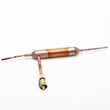


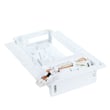

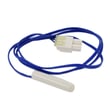
What are the common problems with Kenmore Elite refrigerators?
Common problems on the Kenmore Elite 79578024310 bottom-mount refrigerator include warm temperatures (airflow or sealed-system issues), frost buildup (defrost or door sealing problems), water leaks (clogged drain or water valve issues), and ice maker failures. We use the troubleshooting steps in the 79578024310 owner's manual to pinpoint the cause before replacing parts.
Most common symptoms and what usually causes them
- Not cooling or weak cooling: dirty condenser coils, failed evaporator fan motor, temperature sensor issues, or sealed-system problems
- Frost buildup or ice on the back wall: door left ajar, bad door gasket, defrost heater/control issues, blocked air vents
- Water under the refrigerator or in the crisper: clogged defrost drain, cracked drain pan, water line connection leak
- Ice maker not making ice: water supply shut off, frozen fill tube, failed ice maker, or faulty inlet valve
- Unusual noises (buzzing, clicking, rattling): fan blade hitting ice, condenser fan area debris, compressor/start components
Quick checks we recommend before ordering parts
- Confirm settings: refrigerator about 37°F, freezer about 0°F.
- Make sure vents are not blocked by food packages.
- Clean condenser coils and verify the unit has airflow around it.
- Check door closing and sealing with the “paper test” (paper should drag when pulled).
- If your model supports it, use Kenmore Connect phone diagnostics as described in the manual.
Parts that commonly solve these problems on model 79578024310
| Symptom | Likely part area | Example part for this model |
|---|---|---|
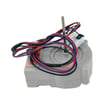
| Warm refrigerator/freezer | Evaporator airflow | Lg refrigerator evaporator fan motor 4681JB1027C |
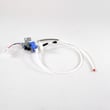
| Ice maker not filling | Water supply control | Lg refrigerator water inlet valve AJU73753101 |
| Ice maker not producing | Ice maker assembly | Lg refrigerator ice maker assembly model AEQ72909603 AEQ72909603 |
| Lights not working when door opens | Door switch | Refrigerator door switch 6600JB1010A |
Why it matters
Catching airflow, defrost, and water-supply problems early helps protect food temperatures, prevents recurring ice buildup, and reduces strain on the compressor and electronic control board.
Last updated: January 2026
Why is my refrigerator not getting cold at the bottom?
If your Kenmore Elite refrigerator model 79578024310 is warm at the bottom, the most common causes are restricted airflow (blocked vents or overpacked shelves), doors being opened often or not sealing well, or the unit recovering from a recent defrost cycle. Start with airflow and door checks, then confirm temperature settings in the 79578024310 owner's manual.
Quick checks that fix most “warm bottom” complaints
- Make sure food packages are not blocking interior air vents; move items a few inches away from vent openings.
- Reduce long door openings; warm, humid air raises compartment temperature.
- Confirm doors close fully and do not pop open after you shut them.
- Wait about 30 minutes after a defrost cycle ends to see if temperatures return to normal.
- Adjust the temperature control one increment at a time, then allow time for the temperature to stabilize.
Airflow and loading: what to look for
Cold air has to circulate from the evaporator area through ducts and vents. When the bottom area is warm, airflow is usually the issue.
| What you notice | Likely cause | What we recommend |
|---|---|---|
| Top shelves are cooler than bottom | Vents blocked by food | Reposition items; keep vents clear |
| Temps swing after shopping | Warm food load | Let hot food cool to room temp before loading |
| Warmth after frequent use | Doors opened often/long | Shorten openings; organize items for quick access |
Parts that can contribute (when checks do not help)
If airflow is clear and settings are correct but the bottom stays warm, a failed fan or a control issue can prevent proper circulation.
- Evaporator fan not running or noisy: consider the lg refrigerator evaporator fan motor 4681JB1027C (or the alternate motor version used on some builds).
- Temperature sensing problems: a drifting sensor can misread compartment temperature; check the refrigerator temperature sensor 6500JB2002X.
- If you see an error code on the display, use the Kenmore 795 model bottom freezer refrigerator error codes guide to narrow the failure.
Why it matters
A warm lower refrigerator section can push food above safe storage temperatures and also forces longer run times, which increases frost, moisture, and energy use. Restoring airflow and proper control settings usually resolves it quickly.
Last updated: January 2026
What does DH mean on Kenmore Elite refrigerator?
On Kenmore Elite refrigerator model 79578024310, dH (often shown as Er dH) points to a defrost heating problem. The refrigerator is detecting that the defrost heater is not warming the evaporator area as expected, which can lead to frost buildup and poor cooling. See the 79578024310 owner's manual for troubleshooting steps and service guidance.
What you’ll usually notice
- Frost or ice buildup on the freezer back wall
- Freezer temperature rising, fresh food section warming
- Fan noise changes (fan hitting ice) or reduced airflow
- Water leaking or puddles after a manual defrost
- The code returning after a reset or power cycle
Quick checks we recommend (safe, no special tools)
- Power reset: Unplug the refrigerator for 5 minutes, then restore power.
- Check door closure: Make sure freezer door seals fully and nothing blocks it.
- Look for airflow blockage: Avoid overpacking; keep vents clear.
- Listen for the evaporator fan: If airflow is weak, cooling performance drops fast.
Parts commonly involved in a dH/defrost heat issue
A defrost heat error is typically caused by a failed heater circuit, sensor issue, or control problem. These model-related parts are often checked during diagnosis:
| What can fail | What it affects | Example part for this model |
|---|---|---|
| Temperature sensor (thermistor) | Defrost timing and temperature feedback | Refrigerator temperature sensor 6500JB2002X |
| Electronic control board | Sends power to defrost system and monitors temps | Refrigerator electronic control board EBR76671401 |
Why it matters
If the defrost system is not heating, frost can blanket the evaporator coil and block airflow. That forces longer run times, warmer food temps, and can eventually stop cooling altogether.
Helpful reference
For code meaning and common fixes for Kenmore 795 bottom-freezer models, use the Kenmore 795 model bottom freezer refrigerator error codes guide.
Last updated: January 2026
Why is my Kenmore Elite refrigerator leaking water out of the bottom?
Water leaking from the bottom of your Kenmore Elite refrigerator model 79578024310 is typically caused by a clogged defrost drain overflowing into the base, or a leak in the water supply system (tubing, fittings, or inlet valve). Use the 79578024310 owner's manual to find access panels and safe service steps.
Most common causes to check
- Clogged defrost drain: Meltwater backs up, then runs into the bottom and out to the floor.
- Water supply line or fitting leak: Drips behind the unit from loose compression nuts or damaged 1/4-inch tubing.
- Inlet valve seepage: A valve that does not fully close can slowly create a puddle.
- Ice maker fill leak: A misaligned fill tube can spill water into the freezer, then down.
- Door seal issue: Warm air causes excess frost that later melts and overwhelms the drain.
Quick troubleshooting steps we recommend
- Unplug the refrigerator and dry the area so you can see fresh drips.
- Check the freezer floor for an ice sheet; that strongly points to a defrost drain blockage.
- Inspect the rear lower area for water trails around the supply line and valve.
- Turn off the house water to the refrigerator for a few hours; if leaking stops, the issue is in the water supply circuit.
Symptoms-to-cause guide
| What you notice | Most likely cause | Where to look |
|---|---|---|
| Ice on freezer bottom, then water on floor | Clogged defrost drain | Freezer floor, drain trough |
| Puddle even when not dispensing water | Supply line or inlet valve seep | Back of unit, valve area |
| Leak mainly during ice production | Ice maker fill leak | Fill tube, ice maker area |
Why it matters
Bottom leaks can damage flooring and can also lead to recurring ice buildup, odors, and temperature swings if the defrost drain keeps backing up.
Last updated: January 2026