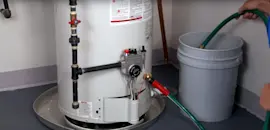
Owner’s manual
 Error Codes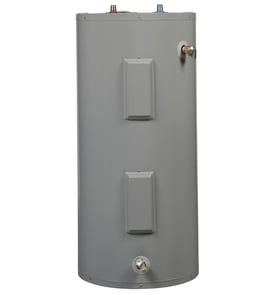



How old is my American water heater by serial number?
For American water heaters like model E2F80HD045V, the serial number format is not standardized across every production run, so we can’t reliably calculate the exact manufacture date from the serial number alone without matching it to the data plate details for your specific unit. Use the label information and the E2F80HD045V manual to confirm where to find the serial number and related identification fields.
Where to find the serial number on E2F80HD045V
On this model family, the data plate is typically located adjacent to an element access door. Once you find it, write down the full serial number exactly as shown.
- Look near the upper or lower element access door
- Check for a data plate with model and serial information
- Record the serial number and any product number listed
- Note the installation date if it’s written on the tank or paperwork
- Take a clear photo before the label fades further
How to estimate age when the serial number isn’t enough
If the serial number doesn’t decode cleanly, we use these practical checks to narrow the age range.
| What you have | What it tells you | How accurate it is |
|---|---|---|
| Installation date on paperwork | When it was put in service | High |
| Home inspection or permit record | Approximate install timeframe | Medium |
| Serial number + data plate details | May indicate production batch | Medium to low |
| First-time maintenance history | Helps bracket years in service | Medium |
Why it matters
Knowing the approximate age helps us choose the right repair path for your American electric water heater: older units are more likely to need maintenance items like an anode rod, thermostats, or a drain valve, while newer units may point to electrical supply or setup issues.
Common age-related maintenance items for this model
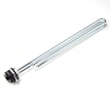
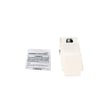
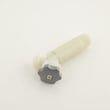
- Water heater anode rod 100110266 (helps protect the tank from corrosion)
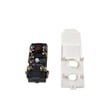
- Top t-stat 100108683 and lwr t-stat 100108421 (temperature control)
- Drain valve 100109106 (used for draining and flushing sediment)
Last updated: January 2026
What are the parts of an electric water heater?
An American electric water heater model E2F80HD045V is built around a storage tank plus electrical heating and safety controls. The key parts include the heating element(s), upper and lower thermostats (with a high-limit reset), anode rod, dip tube, drain valve, and the temperature and pressure (T&P) relief valve; see the E2F80HD045V use & care manual for diagrams and safety notes.
Main parts you will typically find
These are the most common components you will see on the E2F80HD045V and similar residential electric tank water heaters:
- Tank: stores and insulates hot water
- Heating element(s): heat the water inside the tank
- Thermostats and high-limit control: regulate temperature and shut power off if water overheats
- Anode rod: protects the tank from corrosion
- Dip tube: directs incoming cold water to the bottom of the tank
- Drain valve: lets you drain and flush sediment
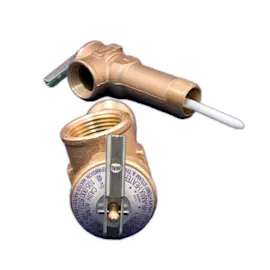
- T&P relief valve and discharge line: safety device that relieves excess pressure/temperature
Common replacement parts for this model
If you are troubleshooting “no hot water,” slow recovery, or maintenance tasks like flushing, these model-compatible parts are often involved:
- Drain valve 100109106 (Drain valve): used for draining and flushing the tank
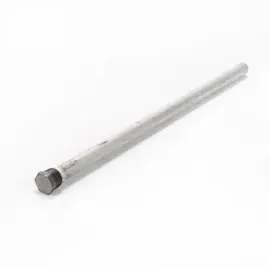
- Water heater anode rod 100110266 (Water Heater Anode Rod): sacrificial rod that helps prevent tank corrosion
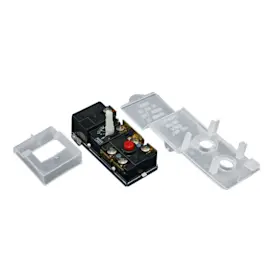
- Top t-stat 100108683 (Top T-stat): upper thermostat that controls heating sequence and temperature regulation
- Lwr t-stat 100108421 (Lwr T-stat): lower thermostat that helps maintain stored water temperature
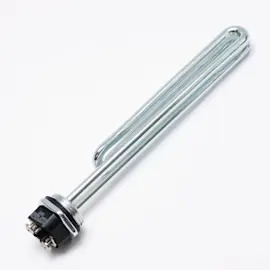
- Element 100108290 (Element): heating element that warms the water
Quick “what it does” reference
| Part | What it does | When it’s commonly suspected |
|---|---|---|
| Thermostat(s) | Senses water temp and cycles element(s) | Water too hot, not hot enough, fluctuating temps |
| Heating element | Converts electricity to heat | No hot water, slow recovery |
| Anode rod | Reduces tank corrosion | Rotten-egg odor, routine maintenance |
| Drain valve | Drains tank for flushing/service | Sediment noise, maintenance flushing |
| T&P relief valve | Prevents dangerous overpressure/overtemp | Dripping/discharge, safety concern |
Why it matters
Knowing the major parts helps you troubleshoot safely and avoid replacing the wrong component. On electric water heaters, many “no hot water” complaints trace back to power supply, a tripped high-limit reset, a thermostat issue, or a failed heating element.
Last updated: January 2026
What is the average cost for an 80-gallon water heater?
An 80-gallon water heater typically costs about $1,200 to $3,500 for a standard electric tank, and about $3,500 to $5,500+ for many hybrid heat pump models (unit only, before installation). Your American E2F80HD045V is a standard electric tank model; use the E2F80HD045V use & care manual to confirm electrical and installation requirements that can affect total cost.
Typical 80-gallon unit price ranges (before installation)
- Standard electric tank: $1,200 to $3,500
- Hybrid heat pump: $3,500 to $5,500+
- Commercial/specialty models: $6,000+
| Type | What you get | Typical unit cost | Best fit |
|---|---|---|---|
| Standard electric tank (like E2F80HD045V) | Simple design, resistance elements | $1,200 to $3,500 | Most homes needing high capacity |
| Hybrid heat pump | Higher efficiency, needs airflow/space | $3,500 to $5,500+ | Homes prioritizing energy savings |
| Commercial/specialty | Heavier-duty components | $6,000+ | High-demand or commercial use |
What changes the total project cost
- Electrical work: breaker size, wire gauge, junction box connections
- Plumbing updates: shutoff valve, unions, piping changes
- Code and safety items: drain pan, discharge piping, expansion tank in closed systems
- Access and labor: tight closets, attic installs, hauling away the old tank
- Water conditions: sediment or corrosion can drive add-on parts and labor
Why it matters
Two 80-gallon heaters with similar tank prices can have very different installed costs if your home needs electrical upgrades or closed-system thermal expansion protection.
Last updated: January 2026
What is the average labor cost to install an electric water heater?
For the American water heater model E2F80HD045V, an “average labor cost” is not something we can identify from model-specific information because labor pricing is set by local plumbers and electricians, not by the water heater model. For safe, code-compliant requirements that can affect labor time, use the E2F80HD045V use & care manual.
What typically makes labor higher or lower
Even for a straightforward replacement, labor can change based on what must be updated to meet local code and safe operation.
Common labor drivers include:
- Electrical work (correct breaker size, wire gauge, grounding, junction box connections)
- Plumbing changes (shutoff valve access, unions, pipe material changes)
- Adding or reworking a drain pan and drain line (when leakage could cause damage)
- Installing or correcting the temperature and pressure (T&P) relief valve discharge line
- Tight access, relocation, or bringing an older installation up to current code
Model-specific install items that can affect time
The E2F80HD045V manual calls out several requirements that often add steps during installation:
- Install indoors, in a vertical position, on a level surface
- Protect the unit and piping from freezing temperatures
- Fill the tank completely with water before applying electrical power
- Install a T&P relief valve and route the discharge line to an appropriate drain location
Quick comparison: what you can estimate vs. what you cannot
| Item | Can be determined for E2F80HD045V from the manual? | Notes |
|---|---|---|
| Installation safety and connection requirements | Yes | Electrical, piping, T&P relief guidance is provided. |
| Average labor price in dollars | No | Pricing varies by region, access, and code upgrades. |
| Whether extra parts may be needed | Sometimes | Depends on your existing plumbing and electrical setup. |
Why it matters
Labor is often driven by electrical safety, pressure protection (T&P valve), and code compliance. Those steps help prevent element damage, leaks, and unsafe water temperature or pressure conditions.
Last updated: January 2026
What is the life expectancy of a 40-gallon electric water heater?
A 40-gallon electric water heater typically lasts 10 to 15 years. For your American water heater model E2F80HD045V, the exact lifespan depends most on water quality and maintenance, especially regular tank flushing and timely anode rod replacement (see the maintenance schedule in the E2F80HD045V use & care manual).
What affects lifespan the most
- Sediment buildup from hard water; it insulates the heating element and can overheat the tank bottom
- Anode rod condition; once it is heavily depleted, tank corrosion accelerates
- Water temperature setting; higher settings increase stress and scale
- Water pressure and thermal expansion; frequent relief valve discharge can signal a closed system issue
- Leak history at fittings, drain valve, or element gasket areas
Maintenance that extends service life
We recommend these habits for electric tank water heaters like the E2F80HD045V:
- Flush the tank every 6 months to remove sediment
- Inspect the anode rod about every 3 years and replace it if more than 50% depleted
- Test the temperature and pressure (T&P) relief valve yearly (use caution, water can be hot)
- Keep thermostat settings reasonable (many homes start around 120°F)
If you need the wear item most tied to tank longevity, use the model-matched water heater anode rod 100110266.
Quick reference: typical lifespan vs. what you can control
| Item | Typical range | What you can do |
|---|---|---|
| Tank life (40-gallon electric) | 10 to 15 years | Flush sediment, maintain anode rod, avoid excessive temperature |
| Anode rod service interval | About every 3 years | Inspect and replace when heavily depleted |
| Flush interval | Every 6 months | Drain and flush to reduce scale and noise |
Why it matters
A water heater usually fails from internal tank corrosion or sediment-related overheating. Staying ahead of sediment and the anode rod is the most reliable way to get the full expected life from a 40-gallon electric water heater.
Last updated: January 2026