 Error Codes


Does my Whirlpool dishwasher have a filter to clean?
Yes. Your Whirlpool GU1200XTLB3 dishwasher uses a filter system in the bottom of the tub to trap food soil so it does not recirculate onto dishes; cleaning it regularly helps prevent poor washing, odors, and drainage issues.
Where the filter is (and what you will see)
On most Whirlpool undercounter dishwashers like model GU1200XTLB3, the filter area is at the bottom of the tub, under the lower spray arm. You typically access it by removing the lower rack and then twisting or lifting the filter pieces out.
How we recommend cleaning the dishwasher filter
- Turn the dishwasher off; let it cool if it just ran.
- Pull out the lower rack.
- Remove the filter assembly (usually a twist-lock or lift-out design).
- Rinse under hot running water.
- Use a soft brush (old toothbrush) to loosen stuck-on debris.
- Reinstall the filter fully seated and locked before running a cycle.
Cleaning frequency guide
| Household use | Typical filter cleaning interval | What you may notice if overdue |
|---|---|---|
| Light use (few loads/week) | Every 2 to 3 months | Film on glasses, mild odor |
| Average use (daily) | Monthly | Grit on dishes, cloudy glass |
| Heavy soil loads | Every 2 to 4 weeks | Poor wash, standing water |
Why it matters
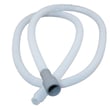
A clogged filter restricts water flow and can leave food particles in the wash water. That can reduce cleaning performance, increase odors, and contribute to drain problems that may also stress components like the dishwasher drain hose 8269144A.
When cleaning the filter is not enough
If you still have standing water, loud grinding, or weak spray after cleaning:
- Check for a kinked or clogged drain line.
- Inspect the sump area for broken glass or labels.
- Consider a worn chopper or circulation issue (common causes of poor wash).
Last updated: February 2026
What could be wrong with my Whirlpool dishwasher?
On a Whirlpool GU1200XTLB3 undercounter dishwasher, the most common problems come from a drain restriction, a wash system issue, a door leak, or a heating and drying fault. We recommend starting with simple checks, then testing likely parts such as the fuse 8193762 or dishwasher heater W10518394 if symptoms point there.
Quick symptom-to-cause checklist
- Won’t start or goes dead: tripped breaker, door not latching, blown thermal fuse
- Not draining: clogged drain hose, blocked sink/disposer connection, pump obstruction
- Dishes still dirty: spray arm blockage, chopper clogged, weak circulation
- Leaks: door seal not sealing, tub gasket issues, loose clamps or hose routing
- Poor drying: heater problem, vent issue, rinse aid empty
What to check first (fast, no parts)
- Confirm the breaker is on and the dishwasher has power.
- Make sure the door closes and latches firmly.
- Clean the filter area and sump; remove debris that can block flow.
- Inspect the drain path: air gap (if used), disposer inlet plug, and hose for kinks.
- Run hot water at the sink for 30 to 60 seconds before starting a cycle.
Common parts that match specific symptoms
| Symptom | Likely area | Example part for GU1200XTLB3 |
|---|---|---|
| No power / stops mid-cycle | Overheat protection | Fuse 8193762 |
| Poor drying / water not heating | Heating circuit | Dishwasher heater W10518394 |
| Standing water | Drain path | Dishwasher drain hose 8269144A |
| Food bits left on dishes | Chopping/filtration | Dishwasher chopper assembly W10083957V |
| Water at the bottom of the door | Door sealing | Dishwasher door seal W10542314 |
Why it matters
Dishwasher symptoms often overlap; a simple clog can look like a bad pump motor, and a small door seal gap can mimic a tub leak. Checking the drain path, wash system, and heating function in a logical order prevents unnecessary part replacement.
Last updated: February 2026
What does F3 mean on a Whirlpool dishwasher?
On the Whirlpool GU1200XTLB3 dishwasher, an F3 code points to a water-heating problem: the dishwasher is not sensing the expected temperature rise during the wash cycle. The most common causes are a failed heater circuit, a temperature sensor issue, or a control that is not powering the heater.
What to check first (fast, no parts)
- Reset power: turn the breaker off for 1 minute, then back on.
- Run a cycle with hot water primed: run the kitchen faucet hot for 30 to 60 seconds before starting.
- Confirm the cycle and options: heated dry or high temp options increase heater use.
- Check for poor wash symptoms: cool water in the tub, greasy film, or weak drying.
- Look for standing water or slow drain; a drain issue can shorten heating time.
Likely failed parts for an F3 heating fault
If the basics look good, we focus on the heater circuit and temperature sensing.
| What failed | What you typically notice | Model-matched part to consider |
|---|---|---|
| Heater not heating | Water stays lukewarm; poor drying | Dishwasher heater W10518394 |
| Heater not getting power | Intermittent heat; may trip error mid-cycle | Control or wiring (inspect harness/connectors) |
| Temperature sensing unstable | Error appears when water is hot; heats sometimes | Sensor/NTC (varies by build) |
| Overheat protection open | Unit stops heating; may appear “dead” in heat circuit | Fuse 8193762 |
Safe DIY testing steps (power off)
- Shut off the breaker before removing panels.
- Inspect heater wiring for burnt terminals or loose connectors.
- Check continuity of the heater and thermal fuse with a meter.
- If wiring and heater test good, the control relay or temperature sensor is the next suspect.
Helpful how-to references:
Why it matters
A true F3 heating fault affects cleaning and drying, and it can cause the dishwasher to stop mid-cycle to protect the unit. Fixing the heater circuit restores normal wash temperatures and helps prevent repeat error codes.
Last updated: February 2026







