Installation guide
 Owner’s manual



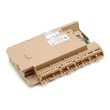
What is the average lifespan of a KitchenAid dishwasher?
A KitchenAid dishwasher typically lasts 10 to 14 years with normal household use. For your KitchenAid KUDE70FXPA5, consistent cleaning, correct installation, and good drying practices (including rinse aid) are the biggest factors that help it reach the high end of that range.
What affects lifespan the most
- Water quality: Hard water speeds up mineral buildup on the heater, pump, and internal passages.
- Maintenance habits: Regular filter and tub cleaning reduces strain on the circulation system.
- Loading and detergent use: Overloading and excess detergent can cause poor wash performance and residue.
- Drying setup: Using rinse aid improves drying and helps control hard-water deposits.
- Installation quality: A dishwasher that is centered, level, and not rubbing the cabinet opening avoids door and hinge stress.
Maintenance checklist (high impact, low effort)
- Clean the filter and sump area regularly; remove labels, glass, and food debris.
- Keep rinse aid filled to improve drying and reduce spotting.
- Run hot water at the sink before starting a cycle so the dishwasher fills with hotter water.
- Use a cycle that matches the soil level; avoid always using the shortest cycle for heavy loads.
- Inspect for leaks or slow draining; address issues early to prevent motor and control damage.
Common “wear items” and what they do
| Part area | What wears out | What you may notice |
|---|---|---|
| Drain system | Drain pump, drain hose | Standing water, gurgling, slow drain |
| Wash system | Heater, circulation components | Poor cleaning, cool water, wet dishes |
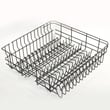
| Racks | Wheels, adjusters, clips | Rack won’t roll, sags, won’t stay level |
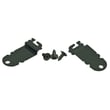
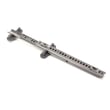
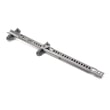
If you are already seeing rack issues, the adjuster WPW10546503 is a common fix for upper rack height or alignment problems on this platform.
Why it matters
Dishwashers are designed to run long, energy-efficient cycles; many loads average 2 to 3 hours, and some options can push cycles longer. Longer cycles are normal and help cleaning, but they also make maintenance (filter care, rinse aid, and good water conditions) more important for long-term reliability.
For model-specific care and operating tips, follow the KUDE70FXPA5 owner’s manual.
Last updated: January 2026
What is the most common problem with a KitchenAid dishwasher?
On the KitchenAid KUDE70FXPA5 dishwasher, the most common problems we see are poor cleaning (often tied to a dirty filter or restricted water flow) and “won’t start” or “won’t drain” symptoms caused by a door latch issue, power interruption, or a drain restriction. Use the KUDE70FXPA5 installation guide checks to quickly rule out basics like power, door latching, and water supply.
Most common symptoms and what usually causes them
- Dishes come out dirty: filter area needs cleaning, spray arms blocked, low water temperature, or low fill.
- Dishwasher won’t start: door not fully latched, breaker tripped, cycle not set correctly, or water supply turned off.
- Dishwasher won’t drain: drain hose restriction, disposer knockout not removed (if applicable), or a weak drain pump.
- Leaks: loose water connection, drain connection seepage, or door sealing issues.
- Long cycle times: normal on many newer designs; 2 to 3 hours per load is common.
Quick checks we recommend first (fast, no parts)
- Confirm the circuit breaker is on and the dishwasher has power.
- Close the door firmly; verify it is closed tightly and latched.
- Make sure the cycle is set correctly and actually started.
- Confirm the water supply valve is turned on.
- Start a short cycle; after about 2 minutes, open the door and verify there is water in the bottom of the tub.
Parts that commonly solve “won’t drain” or “no/low water” complaints
If the basic checks pass and the symptom persists, these model-matched parts are common next steps:
| Symptom | Common part to inspect/replace | What it does |
|---|---|---|
| Won’t drain, water left in tub | Dishwasher drain pump WPW10531320 | Pumps water out through the drain hose |
| Slow fill, no fill, or fill errors | Dishwasher water inlet valve W11175771 | Opens to let water into the dishwasher |
| Poor cleaning, debris recirculating | Dishwasher filter W10872845 | Traps food soil to protect the wash system |
Why it matters
Most “KitchenAid dishwasher problems” are really flow problems: not enough clean water moving through the spray system, or not enough dirty water leaving the tub. Fixing the root cause improves cleaning, reduces odors, and prevents repeat clogs.
Last updated: January 2026
Is it worth fixing a KitchenAid dishwasher?
Yes. Fixing a KitchenAid KUDE70FXPA5 dishwasher is worth it when the failure is isolated (drain, fill, leak, heating) and the repair total stays well below the cost of a comparable new dishwasher. Replacement makes sense when multiple major systems are failing.
Quick decision checklist
Use these checkpoints before you commit to a repair:
- Repair when the problem is limited to one system (drain, water inlet, heating, rack hardware).
- Replace when you need several expensive parts at once (for example, control plus pump/motor).
- Repair when the estimate is under about 50% of replacement cost.
- Replace when the dishwasher is 10+ years old and needs a major motor or electronic repair.
- Repair when cleaning and sealing have been good and this is the first major failure.
Common “worth fixing” repairs on KUDE70FXPA5
These targeted repairs often restore normal operation without rebuilding the whole dishwasher.
| Symptom | Likely area | Example part |
|---|---|---|
| Won’t drain, water left in tub | Drain system | Dishwasher drain pump WPW10531320 |
| Not filling or fills slowly | Water supply | Dishwasher water inlet valve W11175771 |
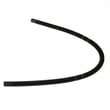
| Leaking at hose connections | Drain hose and connections | Dishwasher drain hose 8269144A |
| Poor drying or no heat | Heating circuit | Dishwasher heater W10703867 |
Checks to do before buying parts
The KUDE70FXPA5 installation instructions include a “does not operate” checklist and a quick operational check.
- Reset the breaker or replace a blown house fuse.
- Close the door firmly so it latches.
- Set a cycle correctly and start it.
- Turn the water supply on.
- Start the shortest cycle; after about 2 minutes, open the door and confirm there is water in the tub.
For the model-specific steps, use the KUDE70FXPA5 installation guide.
Why it matters
Dishwashers often fail in one area (drain, fill, heat). Confirming power, door latch, and water supply first prevents unnecessary part replacement and keeps repair costs predictable.
Last updated: January 2026