 Error Codes



Are Bosch dishwashers a standard size?
Yes. Most Bosch built-in dishwashers (including the Bosch SHU9906UC) are designed to fit a standard 24-inch-wide built-in dishwasher opening; the key is confirming your cabinet cutout width, height, and depth and allowing room for the water line, drain hose, and power connection.
What “standard size” usually means
Most built-in 24-inch dishwashers are made to fit these common cabinet opening ranges:
- Width: about 24 inches
- Height: about 34 to 35 inches (adjustable legs help fine-tune fit)
- Depth: about 24 inches to align with standard countertops
If your opening is close to these ranges, a Bosch unit is typically a direct fit.
Quick fit checklist (what we recommend measuring)
Before you commit to an install or replacement, measure these items:
- Cabinet opening width at the front and back
- Cabinet opening height from floor to underside of countertop
- Cabinet opening depth to the back wall (and note any pipes)
- Clearance for the door to open fully without hitting adjacent cabinets
- Space for hoses and wiring so the dishwasher can slide in without kinking lines
Common “it doesn’t fit” causes
Even when the opening is standard, these issues can make a dishwasher seem non-standard:
| Issue | What happens | What to check |
|---|---|---|
| Flooring added after install | Opening height becomes too short | Tile, LVP, or hardwood thickness in front of the unit |
| Hoses/wiring behind unit | Dishwasher won’t slide back fully | Route lines through side openings, not directly behind |
| Cabinet opening not square | Tight at one corner | Measure front vs back width |
| Countertop overhang | Door rubs or won’t open smoothly | Clearance at the top front edge |
Why it matters
A dishwasher that is forced into a tight opening can pinch the drain hose, stress the water inlet connection, or prevent the door from sealing correctly. That can lead to poor draining, filling problems, or leaks over time.
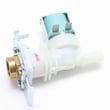
If you are troubleshooting a fill issue after installation, the inlet side is a good place to start; the valve 00425458 is one of the parts that controls water entering the dishwasher.
Last updated: February 2026
What's the most common problem with a Bosch dishwasher?
The most common Bosch dishwasher issue is poor cleaning caused by restricted water flow or circulation, usually from a dirty filter area, blocked spray paths, or low incoming water temperature. On the Bosch SHU9906UC, the next most common complaints are draining problems and door leaks.
What to check first (fast, no-parts steps)
- Clean the filter area and remove any food debris from the sump.
- Confirm the spray arms spin freely and the holes are not clogged.
- Run hot water at the sink until it is hot before starting the cycle.
- Use the correct detergent amount; too much can cause residue, too little can reduce cleaning.
- Avoid blocking the detergent cup with large items in the lower rack.
Common symptoms and the parts that often fix them
If basic cleaning and loading checks do not help, these are the most frequent part-related causes on this model.
| Symptom | Most likely area | Part on this model that’s commonly involved |
|---|---|---|
| Not filling or fills slowly | Water inlet | Valve 00425458 |
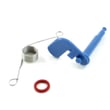
| Won’t start or won’t stay closed | Door latch system | Dishwasher door latch 00419828 |
| Leaks at the door | Door sealing surfaces | Door gasket 00263096 or door seal (gray) 00298550 |
| Poor wash, weak spray | Wash circulation | Motor 00263835 |
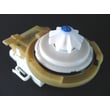
| Overfills or acts like it’s flooding | Float/overfill protection | Float 00165301 |
Why it matters
A dishwasher can have power and still clean poorly if water flow is restricted. Fixing the root cause (water in, water circulation, or door sealing) prevents repeat problems like cloudy glassware, odors, and leaks that can damage flooring.
When an error code is showing
If your Bosch SHU9906UC displays an error code, match the code to the failure first, then troubleshoot the specific system (fill, drain, heat, or door). Use our Bosch dishwasher error codes guide to narrow it down quickly.
Last updated: February 2026
Do I need a technician for the E24 error?
You usually do not need a technician right away for an E24 error on your Bosch SHU9906UC dishwasher; it most often points to a drain problem you can fix by clearing restrictions in the filter area, drain path, or drain hose. Use the steps below, then consider service only if the error returns.
What to do first (DIY checks that fix most E24 errors)
- Turn off power to the dishwasher at the breaker for 1 minute, then restore power and try a Drain/Cancel.
- Remove standing water (if present) so you can inspect the sump area safely.
- Clean the filter and sump area; remove labels, glass, bones, twist ties, and other debris.
- Check the drain hose under the sink for kinks, crushing, or a high loop that has slipped down.
- If connected to a garbage disposal, make sure the disposal inlet knockout plug was removed.
- If you have an air gap, remove the cap and clear any buildup.
When a technician makes sense
Schedule service when the E24 error comes back after you have cleared the drain path and verified the hose and sink connection. At that point, the issue is typically a failed drain component or an internal restriction.
Common parts involved on this model include:
- Drain or fill related valve issues (less common for E24, but can contribute to poor draining symptoms)
- Float or overfill protection problems
- Pump or motor problems that prevent proper water movement
Parts that commonly relate to drain and water movement
| Symptom you notice | What it often points to | Example part on this model |
|---|---|---|
| Hums but won’t drain | Debris in pump area or weak pump | Motor 00263835 |
| Intermittent drain errors | Water level sensing or stuck float | Float 00165301 |
| Slow fill then odd drain behavior | Water supply restriction | Valve 00425458 |
Why it matters
E24 is a “drain path” warning; if water cannot leave the tub quickly, the dishwasher can stop mid-cycle, leave dirty water behind, and increase the chance of leaks at the door seal and hose connections.
For code-specific guidance, use our Bosch dishwasher error codes reference.
Last updated: February 2026
How do I force a Bosch dishwasher to drain?
To force your Bosch SHU9906UC dishwasher to drain, cancel the current cycle so the drain pump runs. On many Bosch models, you do this by pressing and holding Start (or Cancel/Reset) until the unit resets, then letting it run the drain-out.
Quick steps to force a drain
- Press Start (or Cancel/Reset) and hold until the cycle cancels (often a few seconds).
- Close the door fully and wait while the drain pump runs.
- If the pump runs but water stays, remove standing water from the tub so you can check for a blockage.
- Clean the sump area and screen if you see debris.
- Check the drain hose routing under the sink for kinks or a sag that traps water.
If it still will not drain: what to check
A forced drain only works if water can flow out. These are the most common drain blockers:
- Filter/sump screen clogged: food debris can block the drain path; inspect and clean the screen area.
- Drain hose restriction: look for kinks, pinches, or a clogged connection at the sink/disposer.
- Air gap or high loop issue (if equipped): a clogged air gap or missing high loop can stop draining.
- Float stuck up: a stuck float can confuse fill and drain behavior; make sure it moves freely (see float 00165301).
- Drain pump or motor problem: if you hear humming but no drain flow, the pump may be jammed or failing; on this model, the drive motor is motor 00263835.
Symptoms and likely causes
| What you notice | What it usually means | What we do next |
|---|---|---|
| Pump runs, little or no water leaves | Clog in filter, hose, air gap | Clean filter/sump; clear hose/air gap |
| No pump sound when canceling | Control not canceling, door not latched, electrical issue | Confirm door closes and latches; retry cancel |
| Water drains slowly | Partial restriction or hose routing issue | Correct hose routing; clear partial clog |
Why it matters
Standing water can lead to odors, poor cleaning, and repeated drain errors. A successful cancel-and-drain confirms the control is trying to drain; the next step is clearing the drain path or addressing a failed component.
For model-specific fault indicators, use Bosch dishwasher error codes.
Last updated: February 2026
Can you get parts for a Bosch dishwasher?
Yes. We carry replacement parts for Bosch dishwashers, including the Bosch SHU9906UC. You can match parts by model number and then choose the exact component you need, such as a door seal, latch, rack, or fill valve.
How to find the right part for Bosch SHU9906UC
Use your model number (SHU9906UC) to narrow the parts list, then confirm the part by where it installs and what symptom you are fixing.
- Match the part to the symptom (leak, won’t fill, door won’t latch, rack won’t roll)
- Compare the part name and part ID to what you’re replacing
- Check left vs. right orientation on door and hinge-related parts
- Replace worn seals and rollers early to prevent bigger issues
- If multiple parts could cause the same symptom, start with the easiest visual checks
Common Bosch dishwasher parts customers replace
These are examples of parts available for this model that often solve everyday problems:
| Problem you’re seeing | Part that often fixes it | Example from this model’s parts list |
|---|---|---|
| Dishwasher won’t fill or fills slowly | Water inlet valve | Valve 00425458 |
| Water leaking at the door | Door gasket or door seal | Door gasket 00263096 or door seal (gray) 00298550 |
| Door won’t stay closed or won’t start | Door latch/latch assembly | Dishwasher door latch 00419828 or latch 00166630 |
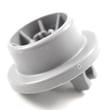
| Lower rack won’t roll smoothly | Rack wheels/roller kit | Dishwasher lower rack wheels 00165314 |
Why it matters
Using the correct Bosch SHU9906UC part ID helps ensure proper fit and performance. A mismatched seal, latch, or rack wheel can cause leaks, startup problems, or poor rack movement even if it looks similar.
For troubleshooting help before you order, use our DIY resources like Bosch dishwasher error codes.
Last updated: February 2026





