 Installation guide


What's the life expectancy of a Maytag dryer?
A Maytag dryer typically lasts 10 to 13 years; commercial-style units like the Maytag MDG25PRAWW2 gas commercial dryer commonly reach 15 years with consistent vent cleaning, lint removal, and timely replacement of wear parts. Follow the maintenance schedule in the installation guide to keep performance steady.
Most dryers fail from heat, airflow restriction, or normal wear in the drum support and drive system. For the MDG25PRAWW2, these ranges are realistic:
| Dryer type | Typical lifespan | What most often ends it |
|---|---|---|
| Standard residential dryer | 10 to 13 years | Poor venting, overheating, worn rollers/belt |
| Commercial-style dryer (like MDG25PRAWW2) | 12 to 15 years | Heavy use, airflow restriction, ignition wear |
The installation guide calls out routine lint and vent cleaning; that is the biggest factor in lifespan.
- Clean the lint screen after every cycle.
- Remove lint from inside the cabinet about every 2 years (more often with heavy use); have a qualified person do it.
- Clean the exhaust vent about every 2 years (more often if drying slows).
- Keep the area around the dryer clear so combustion and ventilation air can flow.
- If the dryer will not run, confirm power, door closed, controls ON, and gas shutoff valve open (gas models).
When a dryer is otherwise solid, replacing a few wear items often restores quiet operation and proper heat.
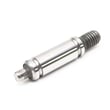
- Squealing or thumping: drum support roller wear; consider dryer drum support roller WPW10314173.
- Intermittent heat or no heat after it ignites once: gas valve coils; consider dryer gas valve coil kit 279834.
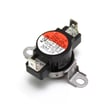
- Overheating or repeated thermal cutoffs: fix vent restriction first, then inspect thermostats and fuses.
A dryer that runs hot or can’t move air wears out faster and can damage components like the igniter, gas valve coils, and thermal cutoffs. Good airflow keeps dry times short and protects the heating system.
Last updated: February 2026
Where to find part number on Maytag dryer?
On your Maytag MDG25PRAWW2 gas commercial dryer, the most reliable place to find the correct part information is the model/serial (serial-rating) plate in the dryer door well. Use the model number and serial number from that plate to look up the exact replacement part number.
Check these common ID locations first:
- Dryer door well (open the door and look around the opening; this is where the serial-rating plate is located)
- Inside the door area near the front panel edges
- Rear panel label area (less common for the primary ID plate)
- Cabinet side label area (varies by build)
For diagrams and location details, use the installation guide.
Once you locate the plate, write down:
- Model number (example: MDG25PRAWW2)
- Serial number (helps match production changes)
- Gas type or rating info if shown (useful for burner and valve-related parts)
Then search parts by model, and confirm the part by matching the description and where it installs (for example, a drum support roller vs. an igniter).
| What you’re trying to identify | What to use | Why it helps |
|---|---|---|
| Correct replacement part number | Model number + serial number | Prevents ordering a look-alike part that does not fit |
| Heating parts (gas) | Model/serial plate info + symptom | Narrows to igniter, coils, radiant sensor, etc. |
| Door and lint area parts | Visual match + model lookup | Confirms style and mounting points |
Commercial dryers like the MDG25PRAWW2 can have part variations by production run. Using the model/serial plate in the door well is the fastest way to match the right Maytag-compatible part the first time.
Last updated: February 2026
Why is my Maytag dryer leaking water from the bottom?
On the Maytag MDG25PRAWW2 gas commercial dryer, water leaking from the bottom is almost always condensation caused by restricted airflow or a cold, poorly routed vent. Fixing the venting and installation conditions typically stops the leak without replacing major parts.
- Vent restriction: lint buildup in the duct or a plugged exhaust hood traps moist air.
- Crushed or kinked vent behind the dryer after it was pushed back.
- Improper vent material: plastic or foil-style venting can sag and collect moisture.
- Cold vent run (long run through an unheated space) causing water to condense and drip back.
- Dryer not level: moisture can pool and exit at the lowest point.
- Clean the entire vent system from the dryer outlet to the outside hood.
- Confirm the exhaust hood is at least 12 inches off the ground and not blocked by lint or debris.
- Replace any plastic or foil vent with rigid metal or flexible metal venting.
- Reposition the dryer so the vent is not crushed; keep bends gradual to prevent kinks.
- Level the dryer front-to-back and side-to-side using the leveling legs.
For model-specific vent routing and installation details, follow the installation guide.
| Item | Best practice | What it prevents |
|---|---|---|
| Vent type | Rigid metal (best) or flexible metal | Sagging, lint traps, moisture pooling |
| Elbows/turns | Fewest possible | Backpressure and wet exhaust |
| Outside hood | Clear, unblocked, 12 inches minimum above ground | Moist air backing up into dryer |
If you see water only during humid weather or heavy loads, it is usually vent-related. If water appears even with a short, clean vent, inspect for lint buildup inside the cabinet and consider replacing worn airflow-related seals during service (for example, the dryer blower seal WP697770).
A wet base area usually means the dryer is not exhausting properly. That same restriction can increase dry times, overheat components, and create repeated shutdowns.
Last updated: February 2026








