 Installation guide
 Owner’s manual
 Error Codes


How long does a Maytag Bravos dryer last?
A Maytag Bravos dryer typically lasts 10 to 15 years. For a Maytag MGDE300VF2 29" gas dryer, regular lint removal, proper venting, and timely replacement of wear parts (rollers, belt, idler) are what most often push lifespan toward the high end; see the MGDE300VF2 owner’s manual.
Typical lifespan and what changes it
Most dryers reach their full service life when airflow stays strong and the drum support system stays quiet and smooth.
- Usage volume: daily loads wear drum supports and the drive system faster
- Airflow: restricted venting overheats components and lengthens dry times
- Maintenance: lint buildup inside the cabinet and vent is a common life-shortener
- Load habits: chronic overloading strains the motor, belt, and idler pulley
- Repairs: replacing common wear parts early prevents secondary damage
Maintenance schedule we recommend
Your manual calls out periodic lint removal from inside the cabinet and the exhaust vent (commonly every 2 years, more often with heavy use). Use this as a baseline and adjust for your household.
| Task | Good interval | Why it helps |
|---|---|---|
| Clean lint screen | Every load | Improves airflow and drying performance |
| Clean exhaust vent run | At least every 2 years | Reduces heat stress and dry time |
| Clean lint inside cabinet | At least every 2 years (qualified service) | Prevents lint-related overheating |
| Inspect drum support noise | When squealing/thumping starts | Catches roller/idler wear early |
Parts that most often determine “how long it lasts”
If your MGDE300VF2 starts squealing, thumping, or rumbling, the drum support and belt path are the first places we check.
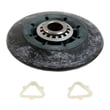
- Drum support rollers such as the support WPW10314173
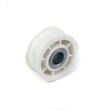
- Belt tension components such as the dryer idler pulley 279640
- Blower wheel issues that reduce airflow (common cause of long dry times)
- Gas heat ignition components (igniter, radiant sensor, gas valve coils)
Why it matters
A dryer can “still run” but effectively be at end-of-life if it takes too long to dry or overheats. Keeping airflow clear and replacing wear parts early usually costs less than running the dryer hot and hard for months.
Last updated: February 2026
How to read error codes on Maytag dryer?
On the Maytag MGDE300VF2 dryer, error or diagnostic codes show on the display as short letter and number combinations (for example PF, L2, or AF). We use the code to identify the problem area, then clear it and follow the recommended checks in the MGDE300VF2 owner’s manual.
How to view and clear a code
Most codes can be cleared so you can confirm whether the issue returns.
- Note the exact code shown (letters and numbers matter).
- Press any key to clear the code from the display.
- If the dryer stopped mid-cycle and shows PF, press and hold START/PAUSE to restart.
- If the code returns quickly, troubleshoot the cause before running more loads.
What common codes usually mean (and what to do)
These are common display messages called out in the documentation for this dryer family.
| Code on display | What it points to | What we do first |
|---|---|---|
| PF | Power failure interrupted the cycle | Restart with START/PAUSE |
| L2 | Low or no line voltage condition | Check breakers, cord installation, then retry a heated Timed Dry |
| AF | Low airflow condition | Clean lint screen and inspect the full venting path |
| E1 / E2 / E3 (service codes) | A condition that needs service-level diagnosis | Stop using heated cycles until checked |
Airflow and power checks that fix many codes
When you see AF (airflow) or L2 (voltage), these steps solve the most common root causes.
- Clean the lint screen before every load.
- Check the vent run behind the dryer for crushing or kinks.
- Confirm the duct to the outside is clear of lint and debris.
- Make sure the exterior vent hood opens freely and is not blocked.
- For L2, check for a tripped breaker or blown fuse; then run a Timed Dry heated cycle to test.
Why it matters
Error codes help prevent long dry times, no-heat complaints, and repeat shutdowns. Fixing airflow restrictions also protects key components like the dryer blower wheel and temperature sensing parts such as the dryer thermistor WP8577274.
Last updated: February 2026
What are the main parts of a dryer?
For the Maytag MGDE300VF2 29" gas dryer, the main parts are the drum system that tumbles clothes, the drive system that turns the drum, the airflow system that moves air through the load, and the gas heating system that creates heat. See the MGDE300VF2 installation guide for component and setup details.
Main dryer systems (and what they do)
- Drum and support system: Holds the load and lets it tumble smoothly.
- Drive system: Motor, belt path, and idler keep the drum turning.
- Airflow system: Blower wheel pulls air through the drum and pushes it out the vent.
- Heating system (gas models): Igniter and gas valve components create heat.
- Temperature and moisture sensing: Sensors help control heat and cycle length.
- Door and safety switches: Help the dryer run only when conditions are safe.
Common MGDE300VF2 parts you may see referenced
These are examples of key components that commonly wear or are involved in troubleshooting:
- Dryer idler pulley 279640 (keeps proper belt tension)
- Support WPW10314173 (drum support roller)
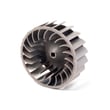
- Dryer blower wheel WP697772 (moves air through the dryer)
- Igniter 279311 (lights the gas burner)
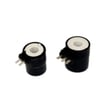
- Dryer gas valve coil kit 279834 (opens the gas valve during heating)
Quick “what it does” table
| Dryer part or system | What you’ll notice when it’s working | Common symptom when it fails |
|---|---|---|
| Blower and venting | Strong airflow at the outside vent | Long dry times, overheating, poor airflow |
| Idler pulley and belt path | Drum turns smoothly and quietly | Squealing, thumping, drum not turning |
| Ignition and gas valve | Consistent heat during heated cycles | No heat or heat that cuts in and out |
| Sensors (thermistor/moisture) | Cycles end close to “dry” | Over-drying, under-drying, odd cycle behavior |
Why it matters
Knowing the main parts helps you troubleshoot faster. For example, “no heat” on a gas dryer usually points to the ignition or gas valve side, while “takes too long to dry” often points to airflow (blower wheel, lint buildup, or venting).
Last updated: February 2026
How do I know if my Maytag dryer heating element is bad?
If your Maytag MGDE300VF2 gas dryer runs but produces no heat, the most reliable way to confirm a failed heater circuit is a continuity test on the heating components after you verify power and airflow basics. Our installation checks also recommend feeling for heat after 5 minutes of running a cycle.
Quick symptoms that point to a heat-system problem
- Dryer tumbles but blows cool air for a full cycle
- Clothes take much longer than normal to dry
- Heat starts, then stops partway through the cycle
- You see an L2 code (power supply issue can prevent heat)
- You notice a “new heater” odor only on first use (normal), but ongoing burning smells are not
What to check first (fast, no tools)
Follow the heat check described in the MGDE300VF2 installation guide: run the dryer about 5 minutes, then open the door and feel for heat.
- Confirm the dryer door fully closes and the cycle actually starts
- Check the lint screen and venting for restrictions (poor airflow can mimic “no heat”)
- Verify your home power supply: many dryers use two fuses/breakers; if one trips, the dryer can run but not heat
What the results mean
| What you observe | Most likely direction | Next step |
|---|---|---|
| No heat at all | Power supply issue or failed heat component | Check both breakers, then test components |
| Heat comes and goes | Weak ignition or sensor issue | Test gas ignition parts |
| Heat is present but drying is slow | Airflow restriction | Clean venting and blower area |
How we confirm a “bad heating element” on this model
MGDE300VF2 is a gas dryer, so “no heat” is usually tied to the gas ignition system and temperature sensing, not an electric heater coil.
With power disconnected, we use a multimeter to check for continuity on common no-heat parts:
- Igniter
- Radiant sensor
- Gas valve coils
- Thermistor
If the igniter does not glow or the burner lights briefly then shuts off, the dryer gas valve coil kit 279834 is a common fix.
Why it matters
Replacing parts based only on symptoms can waste time and money. A quick power and airflow check, followed by a continuity test, pinpoints whether the failure is electrical supply, ignition, sensing, or gas valve related.
Last updated: February 2026








