Owner’s manual


How do I tell what model KitchenAid dishwasher I have?
To identify your KitchenAid dishwasher model, open the door and look for the rating label on the inside edge of the tub or door frame; it lists the model number and serial number. For KUDI01TJBL0, the complete model number is what you use to match parts and manuals.
Where to look for the rating label
Check these common label locations first:
- Inside the dishwasher door, along the left or right inner edge
- On the tub frame just inside the door opening
- Along the side of the door frame near the latch area
- Near the bottom edge of the door opening (visible with the door open)
If you find multiple numbers, use the full model number (letters and numbers) exactly as printed.
What to write down (and why)
We recommend recording both identifiers because they serve different purposes.
| Item | What it’s used for | Example format |
|---|---|---|
| Model number | Matching the correct parts diagrams and replacement parts | KUDI01TJBL0 |
| Serial number | Determining production details for service and support | Varies by unit |
The KUDI01TJBL0 owner’s manual also notes you will need your complete model number and serial number when requesting assistance or service.
Why it matters for parts and troubleshooting
Using the exact model number prevents ordering the wrong KitchenAid dishwasher parts (like a door seal, drain hose, or pump and motor assembly) that may look similar but fit differently.
If you are diagnosing a symptom after you identify the model, use a model-matched guide such as KitchenAid he dishwasher error codes to narrow down what the dishwasher is reporting.
Last updated: February 2026
How to fix rubber seal on KitchenAid dishwasher?
On KitchenAid dishwasher model KUDI01TJBL0, a “rubber seal” issue is usually the door gasket pulling out of its channel or getting nicked. We fix it by cleaning the channel, pressing the gasket in evenly all the way around, then keeping the door closed so the seal seats correctly (see the KUDI01TJBL0 owner's manual).
Quick fix steps (reseat the seal)
- Turn off power at the breaker for safety.
- Open the door and inspect the gasket for twists, gaps, or hardened sections.
- Wipe the gasket and the mounting channel with a damp cloth; remove detergent residue and debris.
- Starting at the top center, press the gasket into the channel using your fingers, working evenly down both sides.
- Close and latch the door; keep it closed for several hours so the gasket conforms.
- Run a short cycle and check for drips along the bottom corners.
When reseating is not enough
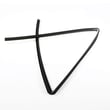
If the gasket is torn, flattened, or won’t stay in the channel, replacement is the reliable fix. For this model, the correct part is the dishwasher door seal W10542314.
Common causes of repeat leaks
- Sharp utensils contacting the seal during loading
- Food debris or detergent buildup preventing full contact
- Door not latching tightly or door alignment issues
What to check while you are there
| Checkpoint | What “good” looks like | What to do if it’s not |
|---|---|---|
| Gasket seating | Fully tucked into channel, no waves | Reseat from top center outward |
| Corners | No gaps at lower corners | Press corners firmly into channel |
| Door closure | Door latches smoothly | Inspect latch and hinges for binding |
Why it matters
A properly seated door gasket keeps wash water inside the tub and helps protect nearby cabinets and flooring. The manual also recommends loading sharp items so they are not likely to damage the door seal, which prevents repeat failures.
Last updated: February 2026
What is the most common problem with KitchenAid dishwashers?
The most common KitchenAid dishwasher problems are poor cleaning (food left on dishes), draining issues (standing water), and leaks. On the KitchenAid KUDI01TJBL0, these symptoms usually trace back to wash system restrictions (spray arm or chopper area), a drain path blockage, or worn seals and gaskets; start with the checks in the KUDI01TJBL0 owner’s manual.
Most common symptoms and what they usually mean
- Not cleaning well: spray arm holes clogged, chopper area jammed, or low water flow
- Not draining: drain hose kinked or blocked, pump obstruction, or sink/disposer restriction
- Leaking at the door: door seal worn, dirty sealing surfaces, or door not closing squarely
- Stops mid-cycle or dead: power supply issue, blown thermal fuse, or control problem
- Noisy operation: debris in pump/chopper area or a worn motor/pump component
Quick checks we recommend first (fast, no parts guessing)
- Confirm the door latches fully and nothing blocks the racks from closing.
- Clean the tub sealing surfaces and inspect the door perimeter for tears or flattening.
- Check the drain hose routing for kinks and verify the sink drain path is clear.
- If cleaning is poor, inspect spray arm holes for debris and remove trapped food from the wash system.
- If the unit is completely dead, check the house breaker, then test the dishwasher’s fuse.
Common parts that match these problems on KUDI01TJBL0
| Symptom | Likely area | Example part for this model |
|---|---|---|
| Water at the bottom of the door | Door sealing | Dishwasher door seal W10542314 |
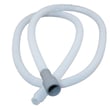
| Standing water after cycle | Drain path | Dishwasher drain hose 8269144A |
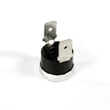
| No power or shuts off | Electrical protection | Fuse 8193762 |
| Poor cleaning, grinding noise | Wash system | Dishwasher chopper assembly W10083957V |
Why it matters
Catching the root cause early prevents repeat wash failures, reduces leaks that can damage flooring, and avoids unnecessary replacement of high-cost assemblies like a pump and motor.
Last updated: February 2026
What's the average lifespan of a KitchenAid dishwasher?
Most KitchenAid dishwashers last 10 to 14 years in normal home use. For your KitchenAid KUDI01TJBL0, consistent cleaning, correct detergent use, and fixing small leaks or drain issues quickly are what most often determine whether you land closer to 10 years or push past it (see the care and operating guidance in the KUDI01TJBL0 owner's manual).
What affects lifespan the most
- Water quality: hard water speeds up mineral buildup on the heating system and internal parts
- Maintenance habits: regular cleaning reduces pump strain and odor-causing residue
- Loading and detergent: overloading and excess detergent can reduce cleaning performance and increase wear
- Drain and leak issues: slow draining or small door leaks can lead to bigger failures if ignored
- Usage frequency: multiple loads per day typically shortens lifespan versus light weekly use
Quick maintenance routine (high impact)
- Clean the tub and interior surfaces monthly (especially if you notice odor)
- Check for standing water after cycles; address slow draining early
- Inspect the door sealing surfaces; replace a worn seal if you see drips
- Keep spray arms clear of debris so the circulation system is not overworked
- Use rinse aid if drying performance drops and plastics stay wet
Common “end-of-life” symptoms and likely causes
| Symptom | What it often points to | Example part that may be involved |
|---|---|---|
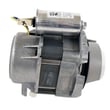
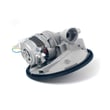
| Loud grinding or weak wash | circulation system wear or blockage | Dishwasher pump and motor assembly W10782773 |
| Water on floor at door | worn or deformed door sealing | Dishwasher door seal W10542314 |
| Won’t drain well | drain path restriction or hose issue | Dishwasher drain hose 8269144A |
| Intermittent no-start | power interruption or protection device | Fuse 8193762 |
Why it matters
A dishwasher that is maintained and repaired early usually costs less to keep running and cleans better over its full life. On KUDI01TJBL0, preventing leaks and keeping the wash and drain system clear helps protect major components.
Last updated: February 2026