Owner’s manual
 Error Codes


What model is my Kenmore Elite refrigerator?
Your Kenmore Elite refrigerator’s model number is printed on the model and serial number sticker inside the fresh food (refrigerator) section; on model 59675523400, it’s located on the left wall. Use that full number when ordering parts or looking up service information in the 59675523400 owner's manual.
Where to look for the model number label
Check these common locations first (in order):
- Inside the refrigerator compartment on the left wall (most common for this model)
- On an inside side wall near the crisper drawers
- On the ceiling of the fresh food compartment near the light housing
- Inside the freezer compartment side wall (less common)
- Behind the lower toe grille or kickplate area (occasionally)
What the label information means
The sticker typically includes both a model number and a serial number.
| Label item | What it’s used for | Example format |
|---|---|---|
| Model number | Identifies the exact refrigerator design and parts list | 59675523400 |
| Serial number | Identifies the production run and date coding | Letters and numbers |
Tips to make sure you have the right model
Use these quick checks before you buy a Kenmore part or troubleshoot an issue:
- Write the model number exactly as shown (include all digits)
- Take a clear photo of the sticker for reference
- Match the model number to the parts list before ordering items like an ice maker
- If you’re diagnosing a display or beeping issue, use a Kenmore error code resource that matches your style of refrigerator
Why it matters
Kenmore Elite refrigerators can look similar across multiple model families, but parts like the control board, door gasket, and ice maker can vary by model number. Using the exact model number helps us match the correct diagrams, parts, and troubleshooting steps.
Last updated: February 2026
What are the common problems with Kenmore Elite refrigerators?
For Kenmore Elite model 59675523400, the most common problems we see are weak or uneven cooling, ice maker and water dispensing issues (often tied to low water pressure or a clogged filter), door sealing problems, and defrost-related frost buildup that restricts airflow. Start with basic airflow, sealing, and water-supply checks in the 59675523400 owner's manual.
Most common symptoms and likely causes
- Not cooling well (fresh food or freezer): dirty condenser area, restricted vents, evaporator fan issues, or a control/temperature sensing problem
- Frost buildup or warm freezer: defrost heater, defrost thermostat, or airflow blockage
- Ice maker not making ice: low water pressure, frozen fill tube, or ice maker failure
- Slow water flow or small/hollow cubes: low water pressure, clogged filter, or a poor saddle valve connection
- Door not closing or sweating around the door: gasket not sealing, bins/drawers obstructing closure, or door alignment issues
Quick checks we recommend first (before replacing parts)
- Confirm door seal and closure: check for obstructions (bins, drawers, oversized containers) and inspect the gasket for gaps.
- Check airflow: make sure interior vents are not blocked by food packages.
- Check water supply quality: avoid self-piercing/saddle valves; kinks and low pressure commonly cause slow flow and ice issues.
- If you use reverse osmosis (RO): expect lower pressure; that can cause slow dispensing and small cubes.
Parts that commonly fix these issues on 59675523400
| Symptom | Common fix | Example model-matched part |
|---|---|---|
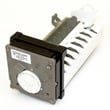
| No ice or intermittent ice | Replace ice maker assembly | Refrigerator ice maker D7824706Q |
| Frost buildup, warm temps | Diagnose defrost circuit | Refrigerator defrost heater WP67002493 or refrigerator defrost bi-metal thermostat WP67003426 |
| Temps fluctuate | Check sensing and control | Refrigerator temperature sensor 12002355 or refrigerator control board WPW10503278 |
| Door leaks air | Replace gasket if torn/warped | Refrigerator door gasket W11368721 |
Why it matters
Cooling, defrost, and door-seal problems all reduce airflow and force longer run times; that leads to warmer food storage, more frost, and higher energy use. Water pressure problems also show up as slow dispensing and poor ice production.
Related DIY help
Last updated: February 2026
What does DH mean on Kenmore Elite refrigerator?
On Kenmore Elite refrigerator model 59675523400, DH commonly indicates a defrost heating issue (the refrigerator is not sensing normal defrost heater operation). Start by checking for heavy frost on the evaporator cover and then test the defrost circuit components.
What to check first (fast, no tools)
- Unplug the refrigerator for 5 minutes, then restore power and watch for the code returning.
- Look for symptoms that match a defrost problem:
- Frost or ice buildup on the back wall inside the freezer
- Warm refrigerator section while the freezer is still cold
- Reduced airflow from vents
- Make sure doors close fully and the gasket seals; air leaks can worsen frost.
- Confirm the temperature controls are set normally (not set too warm).
Likely causes and the parts involved
A DH-related defrost fault is usually caused by one of these:
- Failed defrost heater
- Failed defrost thermostat (bi-metal)
- Wiring/connector issue in the defrost circuit
- Control not powering the heater (electronic control issue)
| What failed | What you may notice | Example part for this model |
|---|---|---|
| Defrost heater | Heavy frost, poor cooling | Refrigerator defrost heater WP67002493 |
| Defrost thermostat (bi-metal) | Frost returns quickly after manual defrost | Refrigerator defrost bi-metal thermostat WP67003426 |
| Control board | Intermittent defrost, recurring code | Refrigerator control board WPW10503278 |
Safe DIY steps we recommend
- Unplug power before removing panels.
- Remove the freezer rear interior panel and inspect for a solid frost blanket.
- If heavily frosted, do a manual defrost (doors open, towels down) to restore cooling temporarily.
- Test the heater and thermostat for continuity (thermostat must be cold to test correctly).
- If heater and thermostat test good, move to wiring checks and then the control.
Why it matters
A DH/defrost heating problem lets frost build up on the evaporator, which blocks airflow. That forces longer run times and can cause warm temperatures in the fresh food section even when the compressor is running.
For model-specific component locations and access steps, use the 59675523400 owner's manual.
Last updated: February 2026
How many cubic feet is my Kenmore refrigerator by model number?
For Kenmore Elite refrigerator model 59675523400, the most reliable way to get the exact cubic-foot capacity is to look up the specifications in the 59675523400 owner's manual or on the model and serial number sticker inside the fresh food section. That gives the true factory capacity for your exact configuration.
Fast ways to find the capacity
Use these options in order; they are the quickest and most accurate for this model series:
- Check the model and serial number sticker inside the refrigerator section (commonly on the left wall); it confirms the exact model and is the best starting point for spec lookup.
- Look in the specifications section of the 59675523400 owner's manual.
- If you are measuring for fit, compare your cabinet opening to typical bottom-mount sizes (capacity alone does not guarantee exterior dimensions).
- If the refrigerator has been modified (door swap, bin changes), capacity stays the same, but usable space can feel different.
What “cubic feet” means (and why it matters)
Cubic feet is the total interior storage volume (fresh food plus freezer). It matters because it helps you:
- Compare storage space between Kenmore models
- Confirm you are buying the right replacement refrigerator size
- Set realistic expectations for shelf and bin capacity
Typical capacity range for this style
Most Kenmore bottom-mount refrigerators in the 596-prefix family commonly fall into a mid-to-large capacity range.
| Refrigerator style | Typical total capacity range | Best for |
|---|---|---|
| Bottom-mount (freezer drawer) | 18 to 25 cu. ft. | Balanced fresh food and freezer storage |
| French door (bottom freezer) | 20 to 28 cu. ft. | Wide shelves, party trays |
| Top freezer | 14 to 22 cu. ft. | Value and simplicity |
If you are asking because of cooling or ice issues
Capacity does not affect cooling performance by itself. If you are troubleshooting ice production or water flow, focus on the ice and water system components and checks instead, such as the ice maker and water supply.
- Confirm the shutoff arm or ice maker setting is ON
- Verify household water pressure is strong and steady
- Check for a kinked supply line or a restricted filter path
Related parts customers often replace for ice issues include the refrigerator ice maker D7824706Q.
Last updated: February 2026
What is the average lifespan of a Kenmore Elite refrigerator?
Most Kenmore Elite refrigerators, including model 59675523400, last 10 to 15 years with normal household use. Regular maintenance (cleaning condenser coils, keeping door gaskets sealing, and fixing cooling issues early) is what most often determines whether you land closer to 10 years or closer to 15.
Typical lifespan by what you maintain
- Condenser coils: keeping them clean reduces compressor run time and heat stress
- Door seals (gaskets): good sealing prevents warm air leaks and frost buildup
- Evaporator airflow: steady airflow keeps temperatures stable and reduces icing
- Defrost system: prevents heavy frost that can block airflow and cause warm temps
- Water and ice system: good water pressure and timely filter changes help prevent ice maker issues
Quick guide: repair vs. replace timing
| Refrigerator age | What we typically see | Practical next step |
|---|---|---|
| 0 to 5 years | Minor issues, adjustments, small parts | Maintain and repair |
| 6 to 10 years | Fans, sensors, ice maker, seals | Repair if cooling is solid |
| 11 to 15 years | More frequent failures, efficiency drop | Repair selectively |
| 16+ years | Major system wear more common | Consider replacement planning |
Model-specific notes for 59675523400
Your 59675523400 manual includes warranty details such as a five-year sealed refrigeration system coverage (compressor, refrigerant, and connecting tubing) when operated and maintained as instructed. For the exact care and maintenance schedule, use the 59675523400 owner's manual.
Why it matters
A refrigerator that runs longer than necessary (dirty coils, leaking gasket, restricted airflow) puts extra load on the sealed system. That extra run time is one of the biggest factors that shortens overall refrigerator life.
Parts that commonly affect longevity
If you are troubleshooting temperature swings, frost, or weak cooling, these parts are often involved:
- Refrigerator door gasket W11368721 (warm air leaks, moisture, frost)
- Refrigerator evaporator fan blade WP2169142 (poor airflow, warm fresh food section)
- Refrigerator control board WPW10503278 (erratic cooling or fan/defrost control)
Last updated: February 2026
How to tell if a Kenmore refrigerator compressor is bad?
On Kenmore Elite refrigerator model 59675523400, a bad compressor usually shows up as poor cooling with the compressor running hot, loud, or constantly, or as a compressor that will not start even though the lights and controls work. Before condemning the compressor, follow the defrost and restart checks in the 59675523400 owner's manual.
Quick checks before you blame the compressor
Many “compressor” symptoms are caused by power, control, or airflow issues.
- If lights are on but the compressor is off, wait 40 minutes; the refrigerator may be in a normal defrost cycle.
- Verify the outlet has power; reset the house breaker if it tripped.
- Confirm temperature controls are set correctly (a too-warm setting can mimic weak cooling).
- Listen for normal sounds: a high-pitched hum from the compressor and sizzling from the defrost heater can be normal.
- Make sure vents are not blocked by food packages; restricted airflow causes warm temperatures.
Signs that point to a compressor problem
These symptoms are the most consistent with a failing compressor or sealed system issue:
- Refrigerator and freezer stay warm even though the unit runs for long periods
- Compressor is very hot to the touch and cycles off on overload
- Clicking every few minutes (start attempt, then overload trips)
- Breaker trips when the compressor tries to start
- You hear the condenser fan running but the compressor never settles into a steady run
Symptom guide
| What you notice | What it often means | What to do next |
|---|---|---|
| Lights on, compressor off | Defrost mode or control delay | Wait 40 minutes; recheck temps |
| Repeated click, no start | Overload/start issue or locked compressor | Check/replace overload; then test compressor |
| Runs constantly, still warm | Weak compressor or sealed system | Check airflow/coil cleanliness; then service |
Why it matters
A compressor is part of the sealed refrigeration system; misdiagnosing it can lead to unnecessary cost. Ruling out defrost mode, control settings, and airflow problems first helps you target the real failure faster.
If you confirm the compressor is the issue, match parts by model and consider professional sealed-system service. For parts identification, we commonly see the refrigerator compressor W10160407 listed for this model.
Last updated: February 2026