Owner’s manual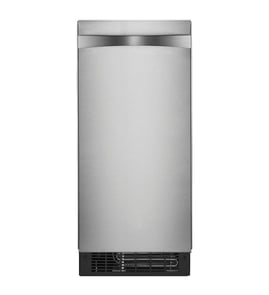

What is the life expectancy of an ice maker?
Most ice makers last 5 to 10 years. A freestanding unit like the Edgestar OIM450SS often reaches the upper end of that range when it is kept clean, installed in proper ambient temperatures, and supplied with good water quality and steady water pressure (see the OIM450SS owner's manual).
| Ice maker type | Typical life expectancy | What most affects it |
|---|---|---|
| Refrigerator ice maker (built-in) | 5 to 8 years | Freezer temps, fill valve wear, ice mold heater cycles |
| Freestanding residential (like OIM450SS) | 7 to 10 years | Cleaning, ventilation, water quality, pump and fan runtime |
| Light commercial | 10 to 15 years | Maintenance schedule, scale control, duty cycle |
The manual calls out conditions that directly impact performance and longevity, including ventilation, correct ambient temperature, and regular cleaning.
- Keep the unit level so the freeze and harvest cycles run correctly.
- Install it in a well-ventilated location.
- Keep ambient temperature between 50°F and 100°F.
- Use a continuous water supply within the specified pressure range; avoid kinks or pinched water lines.
- Follow a regular cleaning routine (interior, condenser, water distribution tube, and ice-making system).
- If the unit will sit unused, drain it, dry the bin, and leave the door open to reduce mold and mildew.
These symptoms usually point to a failing sealed system component, control issue, or water system problem.
- Longer freeze times (slow production) even in normal room temperatures
- Ice that is thin, hollow, or inconsistent batch to batch
- Water leaks or recurring drain overflow
- Loud or new mechanical noises from the fan, pump, or compressor area
- Frequent stopping before the bin is full
For targeted troubleshooting steps, use freestanding ice maker troubleshooting.
A freestanding ice maker is a small refrigeration system that depends on airflow, clean water paths, and a clean condenser. Scale buildup and poor ventilation force longer run times, which accelerates wear on the compressor, recirculation pump, and electronic controls.
Last updated: February 2026
What is the most common reason for an ice maker not working?
For the Edgestar OIM450SS freestanding ice maker, the most common “not working” causes are simple: the ICE/OFF/WASH switch is not set to LCE (ON), the unit is unplugged or has a blown fuse, the water supply tap is off, or the ice bin is full and the ice-full probe is held open by ice.
- Confirm the ICE/OFF/WASH switch is set to ICE (not OFF or WASH).
- Make sure the ice maker is plugged in and the outlet has power.
- Verify the water supply tap is fully on.
- If the bin is full, remove ice so the ice-full probe swings freely.
- Keep the door closed except when removing ice; this reduces melting and helps proper ice formation.
- Check that the unit is upright, level, and well ventilated (airflow blocked can reduce or stop production).
The OIM450SS runs two cycles (freeze and harvest). A full cycle typically takes 15 to 40 minutes, depending on room and water conditions. If the machine seems idle, it is often either:
| What you see | Most likely cause | What to do |
|---|---|---|
| No lights, no sound | No power, switch OFF | Plug in; set switch to ICE; check fuse |
| Runs but stops quickly | Bin full, probe held open | Remove ice; free the probe |
| Starts but no water enters | Water tap off or line issue | Turn on tap; check for kinks/pinches |
| Makes some ice but bin won’t fill | Dirty condenser or poor airflow, high ambient temp | Clean condenser; improve ventilation; move away from heat |
Most “ice maker not working” calls come down to power, water supply, or the automatic shutoff system. Fixing those basics first prevents unnecessary part replacement and gets ice production back faster.
For model-specific operating details and troubleshooting, follow the owner's manual. You can also use our DIY steps for ice maker not running when the unit has power but will not start.
Last updated: February 2026
Is EdgeStar a good ice maker?
Edgestar ice makers are a solid choice for home use when they’re installed correctly and maintained regularly. For the Edgestar OIM450SS, the key to good performance is proper leveling, correct electrical hookup (115V, 60Hz, 15A), and following the care and safety guidance in the OIM450SS owner's manual.
A freestanding ice maker is doing its job when it makes consistent ice, runs without frequent stoppages, and keeps ice from clumping in the bin.
- Produces ice consistently through normal cycles
- Sits level so water flows and freezes correctly
- Uses a properly grounded 3-prong outlet (no adapter, no extension cord)
- Has adequate airflow and isn’t heat-soaked by nearby appliances
- Gets routine cleaning to reduce scale and off-tastes
The manual calls out a few items that directly affect reliability and ice quality.
| Factor | What we recommend | Why it affects performance |
|---|---|---|
| Leveling | Adjust the feet until level front-to-back and side-to-side | Helps the unit run properly and prevents uneven freezing |
| Power | Dedicated, grounded 115VAC outlet; no extension cord | Reduces nuisance shutdowns and electrical risk |
| Installation | Use proper water and drain connections; follow local codes | Prevents leaks, poor fill, and drainage issues |
| Cleaning | Clean on a routine schedule based on water hardness | Improves taste and reduces mineral buildup |
If you are questioning whether your Edgestar is “good” because it is not performing well, these checks usually identify the real issue.
- Confirm the unit is level; adjust leveling feet as needed
- Verify the outlet is grounded and not shared with heavy loads
- Make sure the power cord is not kinked or pinched
- Check for symptoms like no ice, leaking, or unusual noise and troubleshoot by symptom
- If the unit runs but output is low, focus on airflow, ambient temperature, and cleaning
For step-by-step symptom help, use freestanding ice maker troubleshooting and match the guidance to what your OIM450SS is doing.
Most “bad ice maker” complaints come from installation, power, leveling, or maintenance problems, not the brand itself. When the OIM450SS is level, correctly powered, and kept clean, it typically delivers the steady ice production people expect from a dedicated freestanding unit.
Last updated: February 2026
Is it worth repairing an ice maker?
Yes; repairing your Edgestar OIM450SS freestanding ice maker is worth it when the problem is a common service item (cleaning, drain issue, pump, or control) and the total repair cost stays well below the price of a comparable replacement. Replacement makes sense for sealed-system cooling failures or repeated breakdowns.
- Repair when the issue is maintenance-related (scale buildup, dirty condenser, clogged drain).
- Repair when the unit runs but makes little or no ice after cleaning and basic checks.
- Replace when the repair involves sealed-system work (compressor, evaporator, refrigerant).
- Replace when you have repeated failures within the last year.
- Stop using it if you notice smoke or burning smell; unplug it and have it serviced.
The OIM450SS guidance focuses on safe power and routine cleaning for performance and long life.
- Use a properly grounded 115 V, 60 Hz outlet; do not use extension cords or power strips.
- Keep ambient temperature in the normal operating range (about 50°F to 100°F).
- Clean the condenser and the ice-making system; restricted airflow and scale reduce ice production.
- If it sat unused, drain water, dry the bin, and leave the door open to prevent mold and odors.
| Symptom | Likely area | Usually worth repairing? |
|---|---|---|
| Runs but no ice or very little ice | Cleaning, water flow, pump, control | Yes |
| Leaking water | Drain, tubing, fittings | Yes |
| New or loud noise | Fan, pump, loose panels | Often |
| Not cooling | Sealed system | Usually no |
Freestanding ice makers depend on clean water paths, good condenser airflow, and steady power. Fixing those basics often turns “no ice” into a straightforward repair instead of an unnecessary replacement.
- Follow the safety, cleaning, and operating requirements in the OIM450SS owner's manual.
- Use freestanding ice maker troubleshooting to match symptoms like no ice, leaking, or noise to the most likely fixes.
Last updated: February 2026