Installation guide
 Owner’s manual
 Error Codes

How long do Dacor wall ovens last?
Most Dacor wall ovens, including model EO230SCH, typically last about 15 years with normal use and basic care (keeping vents clear, avoiding harsh cleaners, and fixing heating issues early). Heavy use and frequent self-clean cycles can shorten that lifespan.
Typical lifespan and what affects it
A wall oven’s service life depends more on heat stress and maintenance than on age alone.
- Typical lifespan: ~15 years
- Light use: often longer
- Heavy daily use: often shorter
- Frequent self-cleaning: can accelerate wear on door parts, wiring, and controls
- Power quality: surges and loose connections can damage electronic controls
What usually fails first (and what it looks like)
These are common wear points on electric wall ovens:
| Symptom | Common cause | What to check first |
|---|---|---|
| Oven will not heat | Heating circuit issue | Breaker, wiring connections, element continuity |
| Uneven baking | Airflow or sensor issue | Convection fan operation, temperature calibration |
| Door does not close well | Hinge wear or alignment | Hinge play, door seal contact |
| Error code or beeping | Control or sensor fault | Record code, power reset, wiring inspection |
Maintenance that helps you reach 15+ years
We recommend these practical habits for the EO230SCH electric wall oven:
- Keep the cooling/vent openings unobstructed so heat can escape.
- Wipe spills after the oven cools; avoid abrasive pads on interior coatings.
- Use self-clean only when needed; remove racks first.
- If preheat times suddenly increase, address it early (before it stresses the control).
- After any installation or service, confirm proper electrical connections per the EO230SCH installation guide.
Why it matters
A wall oven is a high-heat, high-current appliance; reducing heat buildup and electrical stress is the most reliable way to extend the life of key components like the control area, wiring harnesses, and door hardware.
Last updated: February 2026
Where to find model number on Dacor wall oven?
On your Dacor EO230SCH wall oven, the model number is printed on the product data plate along with the serial number. You typically find this data plate on the oven frame area you can see when the door is open; check the perimeter around the opening.
Where to look (fast checklist)
- Open the oven door and look around the oven opening (frame) for a rating label.
- Check the left and right side trim areas just inside the door opening.
- Look along the bottom edge of the opening (near the door hinge area).
- Use a flashlight; the print can be small or lightly stamped.
- Write down both the model and serial number; service and parts lookups use both.
What the data plate includes
The product data plate is the official ID label for your oven.
| Item on the data plate | Why you need it |
|---|---|
| Model number (example: EO230SCH) | Ensures you get the correct Dacor wall oven parts and diagrams |
| Serial number | Helps match production version and service information |
Why it matters
Dacor wall ovens can have similar-looking doors and control panels across series. Using the exact model number (EO230SCH) prevents ordering the wrong component, especially for high-variation items like a control panel assembly, door parts, or wiring harnesses.
If you still cannot spot it
Use the model identification notes in the EO230SCH installation guide; it explains that the model and serial number are printed on the product data plate and should be available before calling for service.
Last updated: February 2026
Is Dacor high end?
Yes. Dacor is positioned as a premium, high-end appliance brand, and the EO230SCH electric wall oven is built and marketed for upscale kitchens with pro-style design, higher price points, and feature-focused cooking performance. For model-specific features and operating details, use the EO230SCH owner's manual.
What “high end” means for Dacor wall ovens
High-end brands typically differentiate through materials, fit and finish, cooking features, and service support. With Dacor wall ovens, that usually shows up as:
- Premium exterior finishes and heavier door construction
- Feature-driven cooking modes (such as broil and convection broil)
- Built-in installation designs intended for custom cabinetry
- More complex controls and wiring compared to entry-level ovens
- Higher replacement-part costs for major assemblies (door panels, glass, control components)
How to confirm what your EO230SCH includes
The fastest way to validate what is included on your exact EO230SCH configuration is to match the model identification and then review the feature list and operating instructions.
- Locate the model and serial number on the product data plate
- Confirm the configuration (single vs. double oven) and size family
- Review required operating conditions (for example, door position during broil modes)
- Follow the installation checklist and grounding requirements
For installation requirements and safety notes, use the EO230SCH installation guide.
Quick comparison: high-end vs. standard wall ovens
| Category | High-end wall oven (typical) | Standard wall oven (typical) |
|---|---|---|
| Materials and finish | Heavier, premium trim and glass | Lighter, simpler trim |
| Features | More cooking modes and options | Core bake and broil |
| Service complexity | More electronics and harnessing | Simpler controls |
| Part costs | Higher for door, glass, controls | Lower overall |
Why it matters
High-end ovens like the Dacor EO230SCH often deliver better fit and finish and more cooking options, but they also require correct installation and operation. Following the documented door and ventilation requirements helps prevent performance issues and avoid heat-related damage.
Last updated: February 2026
What are the parts of an electric oven?
An electric oven like the Dacor EO230SCH is built around heating components (bake and broil), temperature sensing and controls, airflow and venting, and the door and insulation that keep heat in. Exact layouts vary by model; use the EO230SCH owner’s manual for your oven’s component locations and features.
Main parts you will find in most electric wall ovens
- Bake element: primary heat source for baking and roasting (often at the bottom of the cavity).
- Broil element: high, direct heat at the top for broiling and browning.
- Oven temperature sensor: tells the control how hot the cavity is.
- Electronic control and user interface: sets modes, temperature, timers, and displays error codes.
- Convection fan and fan blade (if equipped): circulates hot air for more even cooking.
- Door assembly: hinges, glass, gasket, and handle; keeps heat contained.
Parts you may replace on the EO230SCH
Some service parts are cosmetic or structural, while others affect heating performance.
| Part type | What it does | Common symptom when it fails |
|---|---|---|
| Heating element | Produces heat for bake or broil | Oven will not heat, uneven browning |
| Door parts | Seals and insulates the cavity | Heat loss, longer preheat, hot exterior |
| Venting/ducting | Routes heat and moisture out | Excess heat around cabinet, poor airflow |
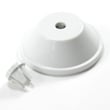
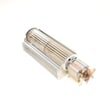
Model-specific examples from our parts list include the broil element 13719 and venting pieces like the exhaust duct 46194.
Why it matters
Knowing the major oven parts helps you troubleshoot faster. For example, a no-heat complaint often points to a failed element or a control or sensor issue, while heat escaping around the door points to door alignment, hinges, or sealing problems.
Quick safety notes before inspecting parts
- Turn off power at the circuit breaker or fuse box before removing panels.
- Do not lift or move the oven by the door handle.
- Use a qualified technician for electrical testing or wiring repairs.
Last updated: February 2026
Why is my Dacor oven not heating properly?
If your Dacor EO230SCH electric wall oven is not heating properly, the most common causes are a power supply issue, the oven door not fully closed (especially in Broil modes), or restricted airflow at the cool air intake or exhaust area. Start with basic checks before scheduling service.
Quick checks we recommend first
- Confirm the circuit breaker is fully on (reset it off, then on).
- Verify the oven is getting power and the clock is set.
- Make sure the oven door is completely shut; Broil and Convection Broil require a fully closed door.
- Do not block the cool air intake and do not bend the exhaust deflector.
- Remove any foil or liners that could block airflow through the oven.
- Run a simple bake test (for example, set Bake to 350°F and allow time to preheat).
What to look for based on the symptom
| Symptom | Most likely direction | What we do next |
|---|---|---|
| No heat in any mode | Power supply, wiring, control issue | Check breaker, then inspect connections per the EO230SCH installation guide |
| Broil works but Bake is weak | Bake circuit or airflow restriction | Check for blocked vents, then consider element or control diagnostics |
| Heats sometimes, then stops | Overheating protection or loose connection | Check intake/exhaust clearance and electrical connections |
| Long preheat or uneven temps | Airflow, sensor/control calibration | Verify vents are clear; compare with guidance in the EO230SCH owner’s manual |
Why installation and airflow matter
This oven relies on a clear cool air intake and an unobstructed exhaust area to manage heat. If the support platform is not installed correctly or the exhaust area is obstructed, the oven can malfunction or heat inconsistently.
Parts that are sometimes involved
Heating problems are often tied to components like heating elements, wiring harnesses, or controls. If you are diagnosing a broil-heat issue specifically, one model-listed option is the broil element 13719.
Last updated: February 2026
How much does a 27 inch wall oven weigh?
A 27-inch wall oven typically weighs about 120 to 180 lb for a single oven and about 200 to 300 lb for a double oven. Your Dacor EO230SCH is a different size class; use the model-specific handling and cabinet support requirements in the EO230SCH installation guide.
Typical 27-inch wall oven weights
These ranges cover most 27-inch built-in electric wall ovens (installed weight, not crated):
- Single wall oven: 120 to 180 lb
- Double wall oven: 200 to 300 lb
- Shipping weight: usually 10 to 40 lb higher due to packaging
- Heavier units: thicker insulation, larger door glass, and convection hardware add weight
Quick comparison table
| Wall oven type | Nominal width | Typical installed weight |
|---|---|---|
| Single wall oven | 27 in | 120 to 180 lb |
| Double wall oven | 27 in | 200 to 300 lb |
How this applies to Dacor EO230SCH
The EO230SCH is not a 27-inch wall oven. For safe installation planning, follow the installation instructions for your exact model, including cutout, support platform, and clearances.
- Verify the cabinet cutout and support platform details
- Plan for a multi-person lift and controlled slide-in
- Keep the oven upright; do not lift by the door handle
- Confirm electrical junction box location before moving the oven into place
Why it matters
Correct weight and support requirements prevent cabinet damage and reduce the risk of bending the chassis, stressing hinges, or pinching wiring during installation.
Last updated: February 2026