Installation guide
 Owner’s manual
 Error Codes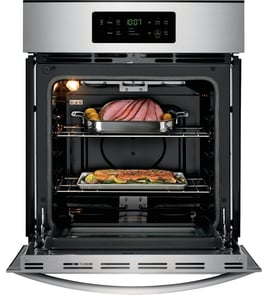

What is the disadvantage of a wall oven?
A wall oven like the Maytag MEW6630DDS costs more to buy and install than a freestanding range, and service can be harder because it is built into cabinetry. You also need a separate cooktop, and the installed height can be inconvenient for some users.
Common disadvantages (what we see most often)
- Higher total cost: wall oven plus a separate cooktop, plus cabinetry and electrical work.
- More complex installation: built-in mounting, clearances, and dedicated wiring requirements.
- Harder access for repairs: technicians often need to pull the oven from the cabinet.
- Ergonomics can be tricky: depending on install height, you may bend more or lift hot/heavy dishes higher.
- Heat management around the cabinet: the vent area can get hot during use, so airflow matters.
What to check before you choose (or before you install)
Use the MEW6630DDS installation guide to confirm the details that drive cost and comfort.
| Decision factor | Why it matters | What to verify |
|---|---|---|
| Cutout size and support | Prevents fit issues and cabinet damage | Cabinet opening and mounting specs |
| Electrical supply | Avoids nuisance trips and unsafe wiring | Voltage, breaker, wire size |
| Installed height | Improves comfort and safety | Rack height vs. your reach |
| Venting/airflow | Helps prevent overheating | Keep vent path clear |
Why it matters
Wall ovens can bake and broil very well, but the built-in design changes the whole kitchen plan. Getting the cutout, wiring, and venting right reduces overheating complaints and makes future service much easier.
Last updated: January 2026
Do I need an electrician to install a wall oven?
For the Maytag MEW6630DDS electric wall oven, we recommend using a qualified electrician if you are installing new wiring, a new junction box, or a new 120/240V (or 120/208V) circuit. If you are swapping an existing electric wall oven on the same correctly sized circuit, many homeowners can handle the cabinet fit and mounting, but the electrical hookup still needs to meet code.
When an electrician is the right call
Use an electrician for any of these situations:
- You are converting from a gas oven to an electric wall oven
- You need a new 120/240V or 120/208V 60 Hz circuit run to the cabinet
- The existing wiring is aluminum, damaged, undersized, or has overheated connections
- You are unsure how to make the hardwired conduit connection in the junction box
- Local code requires a licensed electrician for new circuits or modifications
The installation instructions also note the unit must be properly circuit protected and wired to local code and the National Electrical Code, and that electrical wiring and hookup should be done by a competent electrician. See the MEW6630DDS installation guide.
What you can usually do yourself (non-electrical)
These steps are commonly DIY-friendly if you are comfortable with basic tools:
- Verify the cabinet cutout is level and straight (the oven typically cannot be leveled after installation)
- Confirm required clearances for door operation (especially with flush-front cabinets)
- Install the required plywood support floor in the cutout
- Slide the oven into the opening without pinching the conduit
- Secure the oven using the mounting holes in the side trim (pre-drill as directed)
Quick decision guide
| Scenario | Electrician recommended? | Why |
|---|---|---|
| Replace existing electric wall oven on same circuit | Often yes for hookup | Ensures safe, code-compliant connections |
| New circuit, new junction box, or circuit changes | Yes | Code compliance and correct circuit protection |
| Converting gas to electric | Yes | New electrical supply is typically required |
Why it matters
Wall ovens draw high current; a loose or incorrect connection can overheat, trip breakers, or damage wiring. A correct, code-compliant hookup protects the oven controls, heating elements, and your home’s electrical system.
Last updated: January 2026
What does F3 mean on a Maytag oven?
On a Maytag MEW6630DDS electric wall oven, an F3 error typically points to a temperature sensing problem (the oven thinks it is too hot, too cold, or getting an invalid temperature signal). The most common causes are a failed oven temperature sensor circuit or an electronic control issue.
What to check first (safe, quick steps)
- Press CANCEL to clear the code and let the oven cool.
- Turn power off at the breaker for 1 minute, then restore power and retest.
- If the code returns quickly, avoid using self-clean until the issue is corrected.
- If the oven was recently installed or moved, confirm the power connection is tight and correct.
- Review any error-code or troubleshooting notes in the MEW6630DDS owner's manual.
Likely causes of an F3 code
F3 is usually triggered when the control cannot trust the temperature feedback.
- Oven temperature sensor circuit problem (sensor out of range, wiring damage, loose connector)
- Electronic oven control (clock/control board) problem
- Harness/connector issue between the sensor and control
- Overheating condition (less common), sometimes related to airflow or door sealing
Parts that can be involved
These parts are not “the” F3 fix by themselves, but they are commonly checked during diagnosis on wall ovens:
| What it affects | What you may notice | Example part for this model |
|---|---|---|
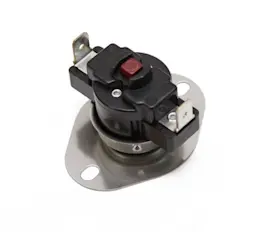
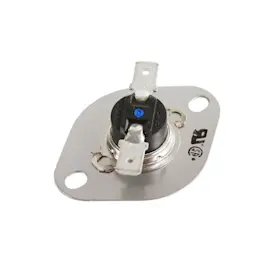
| Overheat protection | Oven shuts down, intermittent heat issues | Wall oven safety thermostat 74008265 |
| Power connection point | Heat-related electrical smell, intermittent power | Terminal block WPW10245259 |
Why it matters
When the oven cannot read temperature correctly, it can overheat or underheat, causing poor baking results and potentially triggering a shutdown to protect the appliance. Fixing the root cause restores accurate temperature control and reliable operation.
When to schedule service
- F3 returns immediately after a power reset
- Oven will not heat, overheats, or shuts off mid-cycle
- You see damaged wiring, melted connectors, or signs of overheating
Last updated: January 2026