 Installation guide
 Owner’s manual


How to hard reset a Kenmore Elite washer?
For Kenmore washer model 11024832200, a “hard reset” is simply a power reset: unplug the washer (or turn off the breaker) for 1 minute, then restore power and restart the cycle using the Cycle Control knob as shown in the 11024832200 owner's manual.
- Push in the Cycle Control knob to stop the washer.
- Unplug the washer (or switch the breaker OFF).
- Wait 60 seconds.
- Restore power.
- Close the lid.
- Select a cycle; pull out the Cycle Control knob to start.
These checks solve most “reset didn’t work” situations on this Kenmore top-load design:
- Confirm the washer is not in a normal cycle pause (some cycles pause for about 2 minutes).
- Make sure the lid is fully closed; this washer will not agitate or spin with the lid open.
- Avoid extension cords; plug directly into a wall outlet.
- Check for excessive suds; use the correct amount of detergent.
- Verify the drain hose is not clogged and is installed correctly (height and routing); see the 11024832200 installation guide.
| What you see | Most likely cause | What to do next |
|---|---|---|
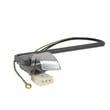
| Won’t spin or agitate | Lid not closed or lid switch issue | Close lid; if intermittent, test/replace the washer lid switch WP3949238 |
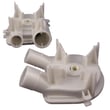
| Won’t drain | Drain restriction or weak pump | Check hose for clogs; inspect/replace the washer drain pump WP3363394 |
| Stops mid-cycle | Normal pause, overload, or suds | Wait 2 minutes; reduce load; correct detergent use |
A power reset clears a stuck timer state and gets the control back to a known “start” position. If a safety input (like the lid switch) is open, the washer will still refuse to spin or agitate even after a reset.
Last updated: February 2026
How can I tell what model washer I have?
For Kenmore washers like model 11024832200, the model and serial number are printed on the appliance’s model/serial label. On this style of top-load washer, that label is located under the washer lid, so lifting the lid is the fastest way to confirm the exact model.
- Top-load washer (like Kenmore 11024832200): under the lid on the tub rim or underside area
- Front-load washer: inside the door opening, on the door frame, or behind the door
- Any washer: back panel label near the power cord, or on the side panel near the base
- If a panel blocks the label: check behind the lower access/kick plate (some designs)
- Lift the lid and find the model/serial label.
- Write the model number exactly as shown (letters and numbers, no spaces).
- Record the serial number too; it helps confirm production details.
- Use the model number when ordering parts like a lid switch, drain pump, or inlet valve.
| Label item | What it’s used for | Example for this page |
|---|---|---|
| Model number | Correct parts diagrams and part fit | 11024832200 |
| Serial number | Manufacturing run identification | Varies by unit |
| Purchase date | Service and maintenance records | Your date |
Kenmore model numbers can look similar, but small differences change the correct parts (agitator components, timer, motor coupling, lid switch). Using the exact model number prevents ordering the wrong replacement.
For the exact label location and other model-specific details, use the 11024832200 owner’s manual.
Last updated: February 2026
What is the UL code on the Kenmore Elite Oasis HE washer?
On Kenmore Elite Oasis HE washers, a UL code means the washer detected an unbalanced load and stopped or limited the spin to protect the basket and drive system. For Kenmore model 11024832200, the fix is to rebalance the load and confirm the washer is level per the 11024832200 owner's manual.
- Pause the cycle and open the lid.
- Redistribute items evenly around the basket (mix large and small items).
- Remove a few items if the tub is tightly packed.
- Check that the washer sits solidly on the floor (no rocking).
- Re-start the spin or run a Drain and Spin cycle.
An Oasis-style top-load washer is very sensitive to leveling; if it rocks, it will keep going out of balance.
- Place a level across the lid opening (front-to-back, then side-to-side).
- Adjust the leveling feet until the cabinet is steady.
- Tighten the locknuts on the feet after adjustment.
- Confirm the drain hose is secured correctly so it does not tug the washer during spin (see the installation guide).
| What you notice | Most common cause | Best next step |
|---|---|---|
| UL happens with bulky items (blankets, towels) | Load distribution | Re-load evenly; use a lower spin if available |
| UL happens on most loads | Washer not level or weak suspension | Level the washer; inspect suspension springs |
| UL happens with loud banging | Basket striking cabinet | Stop cycle; re-level; reduce load size |
If the washer is level and UL still happens frequently, a worn suspension component can let the tub swing too far during spin.
- Inspect for stretched or broken washer suspension spring WP63907.
- Check for a loose basket or drive components if you also hear grinding or see poor spin.
Running repeated out-of-balance spins increases wear on the basket, clutch, and gearcase; correcting leveling and load size prevents repeat UL codes and helps the washer spin out water properly.
Last updated: February 2026
Is it worth repairing a Kenmore washing machine?
Yes; repairing a Kenmore washer is usually worth it when the fix restores reliable washing and costs less than replacing the machine. For Kenmore model 11024832200, common wear items (like a lid switch, drain pump, or motor coupling) are often straightforward repairs that extend the washer’s usable life.
Use these practical checkpoints before spending money:
- Total repair cost vs. replacement: If parts plus labor are well under the cost of a comparable new washer, repair wins.
- What failed: Simple mechanical parts (switches, pumps, couplings) are typically good-value repairs.
- How the washer has been performing: If it has been cleaning well and not leaking, a targeted repair is usually smart.
- Safety and usability: If the washer will not spin or drain, fix that first so you can evaluate overall condition.
- DIY vs. service call: DIY can make a repair economical; a diagnosis visit can still be worth it to avoid guessing.
These parts often solve the most common “won’t run, won’t drain, won’t spin” complaints:
| Symptom | Likely area | Example part for this model |
|---|---|---|
| Won’t spin or stops mid-cycle | Lid safety circuit | Washer lid switch WP3949238 |
| Won’t drain or leaves water in tub | Drain system | Washer drain pump WP3363394 |
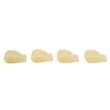
| Agitates poorly or won’t agitate | Drive connection | Washer motor coupling 285753A |
Replacement usually makes more sense when you have multiple major failures at once, such as repeated leaks plus a noisy gearcase, or when the tub and drive system both need major work.
A well-chosen repair prevents repeat breakdowns and protects clothing; for example, the manual warns against reaching into the washer while the tub or agitator is moving and recommends following proper service guidance. Using the correct procedure from the 11024832200 owner’s manual helps you repair safely and avoid damaging other components.
Last updated: February 2026
What is the average lifespan of a Kenmore washer?
A Kenmore washer typically lasts 10 to 15 years. For Kenmore model 11024832200, correct installation and routine care help you reach the longer end of that range, while chronic overloading, poor leveling, and repeated drain or spin problems shorten service life (see the 11024832200 owner’s manual).
Most washers land in the 10 to 15 year window; the difference is usually how the machine is installed, loaded, and maintained.
- Keep loads from being overpacked so items move freely during washing.
- Level the washer on a solid floor; an unlevel cabinet increases vibration and wear.
- Use proper water supply conditions (steady pressure and appropriate hot water temperature).
- Address small leaks or slow-drain symptoms early.
- Avoid running the washer in freezing conditions; trapped water can cause damage.
The installation requirements in the documentation are a good baseline for longevity.
| Item | Good target for longevity | Why it matters |
|---|---|---|
| Hot water temperature | About 120°F (49°C) | Helps cleaning performance without excessive stress |
| Water pressure | 5 to 100 psi | Prevents fill issues and valve strain |
| Floor slope | Max 1 in. under the washer | Reduces out-of-balance wear |
| Outlet distance | Within 4 ft (1.2 m) | Prevents cord strain and unsafe setups |
When a washer stops agitating, spinning, or draining well, these wear items are common culprits on many Kenmore top-load designs.
- Washer lid switch WP3949238 (won’t spin or drain if the lid switch fails)
- Washer drain pump WP3363394 (slow drain, no drain, or grinding noise)
- Washer motor coupling 285753A (motor runs but tub does not agitate or spin)
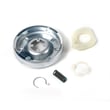
- Clutch 285785 (weak spin, burning smell, intermittent spin)
A washer that is level, supplied with correct water conditions, and not overloaded runs smoother, drains correctly, and puts less stress on the drive system. That directly translates into fewer breakdowns and a longer usable lifespan.
Last updated: February 2026





