Owner’s manual
 View engine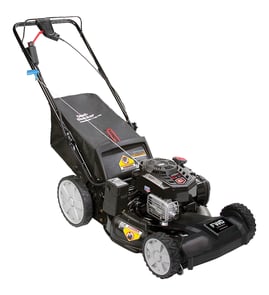
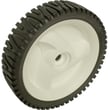


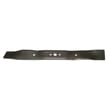

What is the best lawn mower for an elderly person?
For many older adults, the best lawn mower is a self-propelled walk-behind mower with simple controls, easy height adjustment, and low push effort. If you already own a Craftsman rotary lawn mower model 917377060, focusing on safe operation, correct cutting height, and a sharp blade often makes it feel much easier to use.
What to look for (comfort, safety, and effort)
- Self-propelled drive with an easy-to-squeeze drive control bar
- One-step or simple wheel height adjusters (never adjust while the engine is running)
- A sharp, balanced blade to reduce vibration and improve cut quality
- A comfortable handle height and secure grip
- A grass catcher or mulching setup that matches how you want to handle clippings
How to make a mower easier for an elderly user
We see the biggest improvement when you reduce the physical strain and the number of “extra” passes.
- Mow when grass is dry to prevent clumping and heavy pushing
- Set cutting height to remove only the top one-third of the grass
- Slow down in thick grass and overlap passes to reduce load
- Keep the underside of the deck clean to prevent grass buildup
- Use the operator presence control correctly; release it to stop the engine
For model-specific control locations and operating steps, use the 917377060 owner's manual.
Quick comparison: common mower choices for seniors
| Option | Physical effort | Best for | Notes |
|---|---|---|---|
| Self-propelled walk-behind | Low to moderate | Most yards | Best balance of control and cost |
| Push mower (non-propelled) | Moderate to high | Small, flat lawns | Can be tiring on slopes |
| Riding mower | Low | Large lawns | Requires storage space and safe turning |
| Robotic mower | Very low | Smaller, simpler lawns | Needs boundary setup and maintenance |
Why it matters
A mower that is easy to control and set up reduces fatigue and helps prevent unsafe habits, like trying to adjust wheel height with the engine running or mowing wet, heavy grass that overloads the mower.
Last updated: January 2026
Where to find model number on Craftsman lawn mower?
On the Craftsman rotary lawn mower model 917377060, the model and serial numbers are printed on a decal on the rear of the lawn mower housing. Use that decal information when ordering parts or looking up specifications in the 917377060 owner's manual.
What to look for on the decal
The decal typically includes both identifiers; we recommend writing them down exactly as shown.
- Model number (for example: 917.377060)
- Serial number (unique to your mower)
- Sometimes a date code or other manufacturing info
- The decal is usually on the rear of the mower deck/housing, not on the handle
Quick steps to find it fast
- Turn the mower off and let the engine cool.
- Stand behind the mower and look at the back side of the deck (housing).
- Wipe off grass and dirt; the decal can be hard to read when coated.
- Record the model and serial number; keep it with your paperwork.
Why the model number matters
Craftsman walk-behind mowers often share similar-looking handles, wheels, and drive systems, but parts can vary by model. Using the exact model number helps us match the correct drive components, hardware, and cutting parts.
| You need this | To do this correctly |
|---|---|
| Model number | Find the right parts diagrams and part listings for your mower |
| Serial number | Match production changes when the same model had revisions |
If the decal is missing or unreadable
- Check for a faint “shadow” outline where the decal was and look closely under bright light.
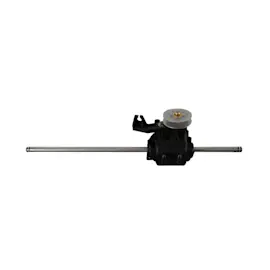
- If you are servicing the drive system, confirm parts by diagram and description (for example, the lawn mower drive control 583230601 is a common drive-control assembly listed for this model).
- Use the mower’s parts breakdown in the manual to cross-check assemblies.
Last updated: January 2026
How long to mow 1 acre with a 48 inch mower?
Mowing 1 acre with a 48-inch mower typically takes about 45 to 75 minutes in average conditions. Time varies most with ground speed, how much you overlap passes, and whether you need to slow down for thick or wet grass (which our Craftsman 917377060 manual also advises avoiding). See the 917377060 owner's manual for mowing best practices that affect speed and cut quality.
Quick estimate (use this for planning)
A simple way to estimate mowing time is:
- Acres per hour = (Deck width in feet × Speed in mph × Efficiency) ÷ 8.25
- Time (hours) = 1 ÷ Acres per hour
Typical real-world efficiency is 70% to 85% (turns, obstacles, overlap).
Common scenarios
- Open, flat acre (few trees, minimal trimming): faster
- Many obstacles (trees, beds, slopes): slower
- Heavy or overgrown grass: slower (you may need to overlap more and reduce speed)
Example time table for a 48-inch deck
48 inches = 4.0 ft.
| Ground speed | Efficiency | Acres/hour | Time for 1 acre |
|---|---|---|---|
| 4 mph | 70% | ~1.36 | ~44 min |
| 4 mph | 80% | ~1.55 | ~39 min |
| 5 mph | 70% | ~1.70 | ~35 min |
| 5 mph | 80% | ~1.94 | ~31 min |
In practice, most homeowners land closer to 45 to 75 minutes once you include turning, overlap, and a little cleanup.
What slows mowing down the most
Our mower manual guidance lines up with what impacts time in the yard:
- Wet grass: clumps and forces slower mowing
- Overgrown or very thick grass: requires higher cut height first, then a second pass
- Extra overlap: needed when grass is heavy (reduces effective cutting width)
- Bagging vs. mulching: bagging can add stops to empty the catcher
- Blade condition: dull blades cut poorly and can force slower travel
Why it matters
Estimating time helps you choose the right mowing pattern and pace so you do not overload the engine, leave clumps, or end up needing a second cut. For best results, the manual recommends mowing dry grass and cutting only the top one-third of the blade.
Last updated: January 2026
Should I use 87 or 91 gas for lawn mower?
For the Craftsman 917377060 rotary lawn mower, we recommend using fresh regular unleaded gasoline (87 octane). Higher octane (like 91) does not add power or improve reliability in a mower engine; fuel freshness and proper storage matter far more for easy starting and smooth running.
What to use (and what to avoid)
- Use fresh, clean unleaded gasoline, typically 87 octane.
- Avoid using old fuel; stale gas is a common no-start cause.
- Alcohol-blended fuels can attract moisture during storage; manage fuel carefully if the mower will sit.
- Never add engine or carburetor cleaner products directly into the fuel tank.
- If your mower will be stored 30 days or longer, plan to run the fuel system dry.
Storage guidance for fuel (30 days or longer)
The 917377060 owner information warns that alcohol-blended fuels can lead to moisture and acid formation during storage. For longer storage, we follow the manual’s approach:
- Empty the gas tank.
- Start the engine and let it run until the fuel lines and carburetor are empty.
- Refill with fresh fuel next season.
For the full storage procedure and safety notes, use the 917377060 owner's manual.
Quick troubleshooting if it will not start after refueling
Stale fuel and fuel contamination show up as hard starting, surging, or no-start. Check these basics first:
- Confirm the tank has fresh fuel (not last season’s gas)
- Check the air filter condition
- Verify the spark plug wire is firmly connected
- Inspect the blade area for a loose blade or damaged adapter
- Make sure the operator presence control bar is held down for starting
Common fuel-related symptoms
| Symptom | Most likely fuel cause | What we do first |
|---|---|---|
| Starts then dies | Stale fuel or water in fuel | Drain and refill with fresh gas |
| Surges at idle | Old fuel, varnish in carburetor | Replace fuel with fresh gas, then inspect fuel system |
| Won’t start | Empty tank or stale fuel | Refill with fresh gas, check spark and air |
Why it matters
Using the correct fuel (fresh 87 octane) helps prevent hard-start complaints, reduces carburetor issues caused by stale gas, and supports consistent engine performance. Octane is not a “quality” rating for small engines; freshness and clean storage practices are what protect the fuel system.
Last updated: January 2026