Owner’s manual
 Error Codes


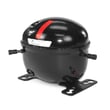
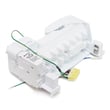
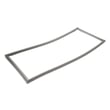
What are the common problems with Kenmore Elite refrigerators?
Common problems on the Kenmore Elite 79571053013 bottom-mount refrigerator include weak cooling from dirty condenser coils, doors not sealing (warm air leaks), and ice maker or dispenser issues. Many symptoms improve with cleaning, leveling, and checking airflow and door closure as outlined in the 79571053013 owner's manual.
Most common issues we see (and what to check first)
- Not cooling well or temperature swings: clean condenser coils; confirm vents are not blocked by food.
- Compressor runs a lot: frequent door openings, warm room temperature, or warm food loads can make run time normal.
- Ice maker not making ice: make sure the ice compartment door closes tightly; level the ice in the bin if it piles up.
- Water tastes bad or flow is slow: replace the water filter on schedule.
- Door not closing or gaps at the gasket: level the cabinet so the front is slightly higher than the rear.
Quick troubleshooting steps (safe DIY)
- Clean the condenser coils (dust buildup is a top cause of poor cooling and long run times).
- Verify installation conditions: keep the room between 55°F and 110°F and allow enough clearance for doors.
- Level the refrigerator: adjust leveling legs so doors self-close and seals compress evenly.
- Check ice bin and ice door habits: keep the ice compartment door closed; do not store items in the ice bin.
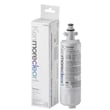
- Replace the filter if needed: use the correct filter for this model, such as the genuine Kenmore refrigerator water filter 9690 AGF80300801.
Symptom-to-likely-cause guide
| Symptom | Most likely cause | First action |
|---|---|---|
| Warm fridge, freezer OK | Airflow restriction, dirty coils | Clean coils; clear vents |
| Runs most of the day | Warm room, frequent openings, heavy load | Reduce openings; allow recovery time |
| Ice stops early | Ice piled unevenly, door not sealed | Shake/level ice; close door tightly |
| Water slow/bad taste | Clogged/old filter | Replace filter |
Why it matters
Cooling and ice-making problems often start with airflow, coil cleanliness, and door sealing. Fixing those basics first prevents food spoilage, reduces energy use, and avoids unnecessary part replacement.
Last updated: February 2026
What model is my Kenmore Elite refrigerator?
Your Kenmore Elite refrigerator’s model number is printed on the identification label inside the fresh food (refrigerator) compartment. For Kenmore Elite model 79571053013, the label is located on the right-hand side wall of the refrigerator compartment; match the full model number exactly.
Where to look first (fastest method)
Check these spots in this order:
- Inside the refrigerator compartment, on the right-hand side wall (most common for this Kenmore Elite style)
- On the side wall near the crisper drawers (look behind bins and drawers)
- On the inside door liner (open the door wide and scan the inner frame)
- Near the base cover (kick plate) area (less common, but worth a quick check)
For diagrams and label examples, use the 79571053013 owner’s manual.
What the model number looks like
Kenmore Elite model numbers are typically a series of digits (sometimes with punctuation in the manual family listing). Use the exact model number from the label when ordering parts or checking compatibility.
| What you might see | What it means | What to write down |
|---|---|---|
| Model No. | The full model identifier | The entire model number (example: 79571053013) |
| Serial No. | Production identifier | The full serial number |
| Date of purchase | Ownership record | Optional, but helpful |
Why it matters
We use the model number to match the correct Kenmore Elite parts and configurations (ice maker, water filter style, door gasket shape, and dispenser components). A single digit off can point to a different parts list.
Pro tips before you order parts
- Write the model number exactly as shown (no guessing)
- Take a clear photo of the label for reference
- If you’re replacing a water filter, confirm the filter type by model; this model commonly uses the genuine Kenmore refrigerator water filter 9690 AGF80300801
- If the label is hard to read, wipe it gently with a damp cloth and dry it
Last updated: February 2026
How many cubic feet is my Kenmore refrigerator model 79571053013?
The Kenmore Elite 79571053013 bottom-mount refrigerator is typically in the 22 cubic foot class. For the exact capacity for your specific 795.7105* version, we recommend confirming it in the 79571053013 owner's manual, since this manual covers several closely related models.
How to confirm the exact cubic feet for 79571053013
Use these quick checks to get the precise number for your unit:
- Look in the specifications section of the 79571053013 owner's manual.
- Check the model/serial label inside the fresh food compartment (right-hand side) and match it to the manual’s model listing.
- If your refrigerator has a water filter and in-door ice, it is usually one of the larger-capacity configurations in this series.
- Compare your interior layout (ice room, bins, drawers) to the “Parts and features” pages in the manual.
Typical capacity range for this Kenmore 795.7105* platform
Most Kenmore bottom-mount refrigerators in the 795.7105* family fall into a narrow range.
| Refrigerator type | Typical capacity | What you’ll notice |
|---|---|---|
| Bottom-mount (795.7105* family) | ~21 to 23 cu. ft. | Full-width shelves, lower freezer drawer |
| Compact bottom-mount | ~18 to 20 cu. ft. | Shorter cabinet, smaller freezer |
Why it matters
Cubic feet affects how much food you can store, but it also helps when you are choosing compatible accessories and maintenance items (for example, the correct water filter and expected ice production). If you are replacing the filter, the correct match for this model is the genuine Kenmore refrigerator water filter 9690 AGF80300801.
Last updated: February 2026
Where to find model number on Kenmore Elite refrigerator?
On Kenmore Elite refrigerator model 79571053013, the model and serial number are printed on an identification label inside the fresh food (refrigerator) compartment on the right-hand side. Use that exact model number when ordering parts or checking troubleshooting steps in the 79571053013 owner's manual.
Where to look (fast checklist)
- Open the refrigerator (upper) door and look along the right interior wall
- Check near the front edge of the liner where the door gasket seals
- Look for a white or silver identification label with both model and serial
- Use a flashlight; the label can be easier to read from an angle
- Write the number down exactly as shown (include all digits)
What the label typically shows
| Item on label | What it’s used for |
|---|---|
| Model number (example: 79571053013) | Matching the correct parts diagrams and replacement parts |
| Serial number | Identifying production details for service and support |
| Electrical ratings | Confirming power requirements when troubleshooting |
Why it matters
Using the exact model number prevents ordering the wrong Kenmore parts (like a door gasket, door switch, or ice maker) that may look similar but fit differently across 795-series refrigerators.
Pro tip for parts ordering
If you are replacing a common maintenance item, match it to your model before you buy:
- Water filter: genuine Kenmore refrigerator water filter 9690 AGF80300801
- Door switch (light and door-closed sensing): refrigerator door switch 6600JB1010A
- Ice maker assembly: ice maker assembly AEQ73110203
Last updated: February 2026
Why is my Kenmore Elite refrigerator leaking water out of the bottom?
Water leaking from the bottom of your Kenmore Elite refrigerator model 79571053013 is usually caused by a defrost drain problem (water cannot reach the drain pan), a leak in the dispenser water line, or a water supply connection that is dripping. Use the steps in the 79571053013 owner's manual to safely access and inspect the likely leak points.
Most common causes (and what to check first)
- Clogged or frozen defrost drain: Water from defrosting backs up and can spill into the cabinet and down to the floor.
- Cracked or loose water tubing to the dispenser or icemaker: Look for wet tubing, mineral tracks, or drips.
- Dripping water line connection at the rear water valve: The manual notes to tighten any connections that leak.
- Drain pan overflow or misalignment: Defrost water should drip into the pan; if it misses, it can leak out.
- Door not sealing well: Excess frost can increase defrost water and contribute to drain issues.
Step-by-step troubleshooting
- Unplug the refrigerator and pull it out enough to inspect the back.
- Check the house water line and fittings for slow drips; the manual calls out checking for leaks at connections.
- Inspect the water tubing for cracks or loose couplers; if damaged, replace the line such as refrigerator water tubing MJU62070602.
- Look under the unit for water in the drain pan and signs of water missing the pan.
- Check door gaskets for gaps or tears; a poor seal can drive frost buildup and heavier defrost runoff.
Quick symptom-to-cause guide
| What you see | Most likely cause | What to do next |
|---|---|---|
| Water appears after a defrost cycle | Defrost drain clogged/frozen | Clear the drain path; confirm water reaches the drain pan |
| Leak only when dispensing water/ice | Dispenser line or inlet valve leak | Inspect tubing and valve area for drips |
| Slow puddle near back of fridge | Water supply connection seep | Tighten fittings; recheck for drips |
| Moisture and frost near door edges | Door gasket not sealing | Clean/reshape gasket; replace if torn |
Why it matters
Bottom leaks can lead to repeated puddles, ice buildup in the freezer area, and inconsistent cooling if airflow passages start icing over. Fixing the source early also helps protect nearby flooring.
Last updated: February 2026
What is the average lifespan of a Kenmore Elite refrigerator?
A Kenmore Elite refrigerator like model 79571053013 typically lasts 12 to 15 years. Consistent maintenance (cleaning condenser coils, keeping door gaskets sealing, and using the correct water filter) helps you reach the high end of that range.
What affects lifespan the most
- Condenser coil cleanliness: Dusty coils make the compressor run longer and hotter.
- Door seal condition: Leaky gaskets cause longer run times and temperature swings.
- Room temperature and ventilation: Hot kitchens and tight clearances increase run time.
- How often doors are opened: Frequent openings add heat and moisture load.
- Ice maker and dispenser use: More water and ice use means more wear on valves, tubing, and motors.
Maintenance that extends life (high impact)
Use these as your baseline routine for Kenmore Elite 795.7105 series bottom-mount units:
| Task | How often | Why it helps |
|---|---|---|
| Clean condenser coils | Every 6 to 12 months | Reduces compressor run time and heat stress |
| Inspect/clean door gaskets | Every 3 to 6 months | Prevents air leaks and frost/moisture issues |
| Replace water filter | About every 6 months | Protects water flow and reduces dispenser/ice issues |
| Keep vents clear inside | Ongoing | Maintains even cooling and prevents warm spots |
For model-specific care and cleaning guidance, follow the 79571053013 owner's manual.
Quick signs your fridge is nearing end-of-life
- Compressor runs most of the day even after coil cleaning
- Temperatures drift (fresh food warms or freezer softens)
- Excess frost or moisture that keeps returning
- Repeated dispenser or ice maker failures
- Unusual vibration or rattling that persists after leveling
Parts that commonly support reliability
If you are maintaining water and ice performance, these model-matched parts are often involved:
- Genuine Kenmore refrigerator water filter 9690 AGF80300801 (replace on schedule)
- Door gaskets (replace if torn, warped, or no longer sealing)
- Water inlet valve and water tubing (address slow fill or leaks)
Why it matters
A refrigerator that runs longer than normal uses more energy and puts extra wear on the sealed system and compressor. The manual notes that modern refrigerators can run 40% to 80% of the time at normal room temperatures, and even more in warm conditions; keeping coils clean and seals tight helps keep run time in the normal range.
Last updated: February 2026
Why does ice form on the bottom of my Kenmore freezer?
Ice on the bottom of the freezer in your Kenmore Elite 79571053013 almost always happens when defrost water cannot drain away; it pools, then refreezes into a sheet of ice. The most common cause is a clogged or frozen defrost drain, sometimes made worse by door sealing issues.
Most common causes
- Clogged defrost drain (food particles, sludge, or ice blockage)
- Frozen drain tube after a defrost cycle
- Door not closing tightly, letting humid air in that later freezes
- Damaged or warped door gasket that leaks air
- Drain tube not seated correctly at the rear drain outlet
What we recommend (safe DIY checks)
- Unplug the refrigerator and remove items from the freezer floor.
- Melt the ice sheet with a hair dryer on low or by placing towels and letting it thaw (avoid sharp tools).
- Find the drain opening under/behind the evaporator cover area and flush with hot water using a turkey baster.
- At the back of the unit, check the drain outlet and tube for gunk; clean and confirm it drains freely.
- Confirm doors close squarely and seals contact all the way around; use the cleaning and gasket tips in the 79571053013 owner’s manual.
Parts that commonly relate to this symptom
If you find a split, loose, or restricted drain path, these model-matched parts are often involved:
| Symptom you see | Likely area | Example model-matched part |
|---|---|---|
| Water/ice returns after clearing | Drain path to pan | Refrigerator drain tube 5251JA3003D |
| Frost buildup plus moisture | Door sealing | Refrigerator door gasket, right ADX73550624 |
| Frost buildup plus moisture | Door sealing | Gasket asy,d ADX73550621 |
Why it matters
When defrost water cannot reach the drain pan, it refreezes and can block airflow, reduce cooling performance, and lead to recurring leaks and ice buildup. Fixing the drain and sealing issues restores normal defrost drainage and temperature stability.
Last updated: February 2026