Owner’s manual


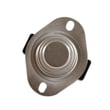
How do I know if my Kenmore dryer thermal fuse is blown?
If your Kenmore dryer model 11074642400 won’t start, or it runs but won’t heat, a blown thermal fuse is a common cause. The sure way to know is to unplug the dryer and test the fuse for continuity with a multimeter as shown in the 11074642400 owner's manual.
A blown thermal fuse often shows up as one of these conditions:
- Dryer will not run at all (no motor, no tumble)
- Dryer tumbles but there is no heat (especially if you have an electric supply issue ruled out)
- Cycle starts only intermittently, then stops after overheating
- You recently noticed poor airflow, long dry times, or a very hot cabinet
- Unplug the dryer (or shut off power at the breaker).
- Access the fuse (location varies by design; many are on the blower housing or exhaust duct inside the cabinet).
- Remove at least one wire from the fuse terminal.
- Set a multimeter to continuity or lowest ohms.
- Touch probes to the fuse terminals.
- Good fuse: continuity (beep or near 0 ohms)
- Blown fuse: no continuity (no beep or OL)
A thermal fuse usually opens because the dryer overheated. Before replacing parts, correct airflow and heat-control issues:
- Clean the lint screen and make sure it seats fully
- Check the vent hose for kinks, crushing, or excessive length
- Clear lint buildup in the exhaust duct and outside hood
- Confirm the correct cycle and temperature settings are being used
- If the dryer is gas, verify the supply valve is open and airflow is strong
| What you observe | More likely cause | What to check next |
|---|---|---|
| Drum turns, no heat | House power issue (electric) or heating circuit problem | Check both breakers/fuses; then test heat components |
| Dryer won’t run | Door/start circuit or safety device | Door switch, start switch, thermal fuse |
| Heat starts then stops | Overheating/airflow restriction | Venting, lint buildup, cycling thermostat |
The thermal fuse is a safety device; if it’s blown, the dryer is protecting itself from overheating. Restoring proper venting and lint control helps prevent repeat failures and improves drying performance.
Last updated: February 2026
How to check Kenmore dryer model number?
For Kenmore dryer model 11074642400, we check the model number on the model and serial number label located at the top inside the dryer door well. This label lists the complete model number and serial number you can use for parts and service.
Check these common label locations in this order:
- Top inside the dryer door well (most common for this model)
- Inside the door opening on the cabinet frame
- Rear panel near the top (some configurations)
Use the location diagram and wording in the 11074642400 owner's manual to match what you see on your dryer.
Record these items exactly as printed:
- Model number (example format: 110.XXXXXXXX)
- Serial number
- Purchase date (if available)
The full model number ensures we match the correct Kenmore drum, motor, thermostat, and gas burner parts. Even small model-number differences can change the correct belt length, switch style, or burner components.
| If you need to replace | Example part to match by model | What the model number helps confirm |
|---|---|---|
| Drum won’t turn | Dryer drum belt 341241 | Correct belt size and routing |
| Dryer won’t start when door closes | Dryer door switch WP3406107 | Correct switch style and terminals |
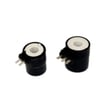
| No heat on gas dryer | Dryer gas valve coil kit 279834 | Correct burner system components |
Last updated: February 2026
What is the average lifespan of 11074642400?
A Kenmore dryer like model 11074642400 typically lasts 13 years with normal household use. Regular vent cleaning, proper loading, and replacing wear items (belt, rollers, idler) on time are the biggest factors in reaching that lifespan.
Most dryers reach their full service life when airflow stays strong and the drum support parts stay tight and smooth.
- Keep the exhaust vent clear and correctly routed (restricted airflow overheats parts)
- Avoid overloading; clothes should tumble freely
- Clean the lint screen every load and the vent system on a schedule
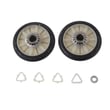
- Replace worn drum support parts before they damage the drum or motor
- Address heat or no-start symptoms early to prevent secondary failures
The Kenmore manual emphasizes proper venting and periodic vent cleaning; it also notes that plastic venting can create problems. Use your owner's manual for the exact care and safety guidance for this model.
| Task | Best interval | Why it matters |
|---|---|---|
| Clean lint screen | Every load | Maintains airflow and drying performance |
| Inspect vent path and hood | Every 3 to 6 months | Prevents long dry times and overheating |
| Clean exhaust vent | At least every 2 years | Reduces heat stress on thermostats and motor |
| Check belt/rollers/idler noise | When squealing, thumping, or slipping starts | Prevents breakdowns and drum damage |
If your 11074642400 starts squealing, thumping, or the drum stops turning, these are common wear items to check.
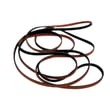
- Dryer drum belt 341241 (broken or stretched belt)
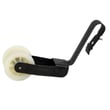
- Dryer idler pulley WP691366 (squeal, belt slack)
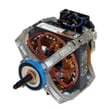
- Dryer motor 279827 (hums, won’t start, overheats)
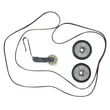
- Dryer repair kit 4392065 (often includes multiple drum support wear items)
A dryer can run for years, but restricted venting and ignored drum-support wear force the motor and thermostats to run hotter and longer. That shortens life and increases the chance of a no-heat or no-start failure.
Last updated: March 2026