Error Codes



What is the average lifespan of a KitchenAid refrigerator?
Most KitchenAid refrigerators, including the KitchenAid KFFS20EYMS04 bottom-mount refrigerator, typically last 12 to 17 years with normal household use and routine maintenance. Keeping airflow clear, temperatures stable, and filters fresh helps you reach the high end of that range.
Typical lifespan and what affects it
A refrigerator’s life depends more on operating conditions and maintenance than the badge on the door.
- Maintenance habits (cleaning, filter changes, door seal care)
- Installation conditions (heat, ventilation, level cabinet)
- Usage patterns (frequent door openings, overpacking)
- Water quality (affects ice maker and dispenser components)
- Power quality (surges can stress electronics and compressor start components)
Maintenance that extends life (high impact)
These steps reduce strain on the sealed system, fans, and temperature sensors.
- Replace the water filter on schedule; a restricted filter can reduce water flow and stress the inlet valve
- Replace the air filter regularly to help control odors and keep airflow fresher
- Keep door gaskets clean and sealing flat to prevent warm air leaks and excess run time
- Avoid blocking vents inside the fresh food and freezer sections
- Clean dust from condenser areas as accessible (unplug the refrigerator first)
Helpful DIY guidance: how to replace the water filter in a KitchenAid refrigerator
Parts that commonly support long service life
If performance issues show up, replacing a worn maintenance part early often prevents bigger problems.
| What you maintain | What it helps prevent | Example part for KFFS20EYMS04 |
|---|---|---|
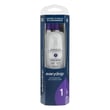
| Water filtration | Slow dispensing, ice maker fill issues, taste/odor complaints | Refrigerator filter EDR1RXD1 |
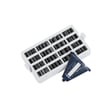
| Air filtration | Persistent food odors | Refrigerator air filter W10311524 |
| Temperature sensing | Warm temps, cycling issues | Refrigerator thermistor WPW10383615 |
Why it matters
A refrigerator that runs longer than necessary uses more energy and puts extra wear on the compressor, evaporator fan motor, and defrost system. Simple upkeep helps your KitchenAid KFFS20EYMS04 cool more consistently and last closer to its expected lifespan.
Last updated: February 2026
Are all refrigerators 36 inches wide?
No. Refrigerators are not all 36 inches wide; width depends on the style and capacity. For KitchenAid model KFFS20EYMS04, you should measure your existing opening and the cabinet cutout because common refrigerator widths range from about 24 inches up to 36 inches and beyond.
Typical refrigerator widths (what you’ll usually see)
Most refrigerators fall into a few common width “families,” but there are plenty of exceptions.
- 24 inches: apartment or compact full-size models
- 28 to 33 inches: many top-freezer and bottom-freezer models
- 33 to 36 inches: many French door and side-by-side models
- 36 inches and wider: larger-capacity French door and built-in styles
How to measure the right way
Measure before you shop for a replacement refrigerator or plan cabinetry changes.
- Measure the opening width at the top, middle, and bottom
- Measure height to the lowest overhead cabinet or trim
- Measure depth from the back wall to the front edge of counters
- Leave space for door swing and drawer clearance (bottom-mount freezers need room to pull out)
- Allow ventilation space behind and above the unit (as your installation requires)
Quick width guide by style
| Refrigerator style | Common width range | Notes |
|---|---|---|
| Top freezer | 28 to 33 in. | Often fits tighter kitchens |
| Bottom mount | 29 to 33 in. | Similar to many top-freezers |
| Side-by-side | 33 to 36 in. | Narrow doors, wide cabinet |
| French door | 33 to 36+ in. | Wider cabinet, big capacity |
Why it matters
A “36-inch refrigerator” label is not a guarantee it will fit. Even small differences (hinges, door handles, and required airflow) can cause rubbing doors, poor ventilation, or a freezer drawer that cannot open fully.
If you’re keeping your KFFS20EYMS04 and just maintaining it, we stock common fit-and-function items like the refrigerator filter EDR1RXD1 and refrigerator air filter W10311524 to help keep water and airflow performing normally.
Last updated: February 2026
What is the most common problem with KitchenAid refrigerators?
Temperature inconsistency is the most common KitchenAid refrigerator complaint, including on the KitchenAid KFFS20EYMS04; it shows up as warm fresh food, soft ice cream, or food freezing in the refrigerator section. Ice maker issues and water leaks are also frequent and usually trace back to airflow, water supply, or filtration maintenance.
Most common issues we see (and what to check first)
- Temperature swings or uneven cooling: confirm vents are not blocked, condenser coils are clean, and doors seal tightly.
- Ice maker not making ice or making small cubes: verify the shutoff arm is down, water supply is on, and the filter is not overdue.
- Water leaking: check for a clogged defrost drain, loose water line connections, or a seeping inlet valve.
- Bad odors: replace the air filter and clean spills promptly.
- Noisy operation: listen for an evaporator fan that is rubbing ice or failing.
Quick symptom-to-likely-cause guide
| Symptom | Most likely cause | Common next step |
|---|---|---|
| Fresh food warm, freezer OK | Restricted airflow or weak evaporator fan | Inspect/replace refrigerator evaporator motor WPW10464673 |
| Ice maker slow or no ice | Clogged water filter or low water flow | Replace refrigerator filter EDR1RXD1 and purge air |
| Water under fridge or in crisper | Drain issue or inlet valve seep | Inspect tubing; test refrigerator water inlet valve WPW10238100 |
| Fridge smells | Saturated air filter | Replace refrigerator air filter W10311524 |
Why it matters
Cooling and water-system problems can snowball quickly in a bottom-mount refrigerator: poor airflow makes temperatures unstable, and restricted water flow can strain the ice maker and cause leaks. Staying ahead of filters, seals, and airflow keeps food safer and reduces wear on key components.
Helpful DIY guidance
- Follow how to replace the water filter in a KitchenAid refrigerator when changing the filter.
- Use how to diagnose a faulty refrigerator water inlet valve if you suspect slow fill or leaking.
- If you hear buzzing or the fridge warms up, how to fix your evaporator cooling fan helps you narrow it down.
Last updated: February 2026
Do you have to turn off the water supply to change the fridge filter?
You typically do not need to shut off the household water supply to replace the water filter in your KitchenAid KFFS20EYMS04 refrigerator. Most filters are designed to seal as you remove and install them; just dispense a few cups of water afterward to clear air and carbon fines.
How to change the filter without shutting off water
- Turn the filter counterclockwise (or release it, depending on the housing style) and remove it.
- Keep a towel handy for a small amount of water drips.
- Install the new filter fully seated and locked.
- Run water through the dispenser for several minutes to purge air.
- Check the filter area for leaks for the next few minutes.
A common replacement for this model is the refrigerator filter EDR1RXD1.
When you should turn off the water
Turn off the water supply valve if you notice any of these conditions:
- Water continues to flow or spray when the filter is removed
- The filter housing is cracked or won’t lock
- You see leaking at the filter head after installation
- The filter is stuck and you need extra force to remove it
- You are also servicing the water line or valve
If leaking continues after a new filter, the issue is often upstream, such as the refrigerator water inlet valve WPW10238100.
Quick troubleshooting table
| Symptom after filter change | Most likely cause | What to do |
|---|---|---|
| Sputtering dispenser | Air in water line | Purge by dispensing several cups of water |
| Cloudy water | Carbon fines | Flush for a few minutes until clear |
| Slow flow | Clogged filter or low supply pressure | Replace filter; verify supply valve is fully open |
| Drip at filter area | Filter not seated or damaged O-rings | Reinstall firmly; replace filter if needed |
Why it matters
Replacing the refrigerator water filter on schedule helps protect the water system from sediment buildup, keeps dispenser flow steady, and reduces the chance of leaks caused by a partially seated or overdue filter.
Last updated: February 2026