

How to read Whirlpool model numbers?
Whirlpool model numbers identify the product type, feature set, and engineering revision; for your Whirlpool washer model 7MWTW9920EM0, the characters typically indicate the platform/series and the final digits often reflect version changes. For the exact build date, we use the serial number on the rating tag.
On most Whirlpool top-load washers, the tag is commonly located in one of these spots:
- Under the lid along the top rim of the tub opening
- On the back of the control console
- On the rear panel of the cabinet
- Inside the lid area near the hinge
Model numbers are great for ordering the right replacement parts; serial numbers are what we use to pinpoint when the washer was built.
| What you’re reading | What it tells you | What we use it for |
|---|---|---|
| Model number (example: 7MWTW9920EM0) | Series/platform, configuration, engineering revision | Matching parts like a lid lock, drive belt, or control board |
| Serial number | Production date code (varies by Whirlpool format) | Determining approximate manufacture date |
If you’re reading the model number to repair or maintain the washer, these steps prevent the most common ordering mistakes:
- Copy the full model number exactly as shown: 7MWTW9920EM0
- Match parts by model first, then confirm by part ID
- Replace related wear items together when it makes sense (for example, belt and pulley)
- If the washer will not start or will not lock, check the lid lock circuit first
- If you have a no-spin or squeal issue, inspect the belt drive components underneath
Whirlpool can make small engineering changes within a model series; using the full model number helps us match the correct washer parts (like the gear case, brake actuator, or electronic control board) and reduces returns caused by look-alike components.
Last updated: February 2026
How to fix long drain fault on whirlpool washer?
A long drain fault on your Whirlpool washer model 7MWTW9920EM0 means the washer is taking too long to pump water out. We fix it by clearing drain restrictions first, then checking the drain pump and related drain parts such as the water pump WPW10465543.
- Unplug the washer for 1 minute (power reset), then try a Drain and Spin cycle.
- Make sure the drain hose is not kinked, crushed, or pushed too far down the standpipe.
- Confirm the standpipe is not clogged and the laundry sink drain is flowing freely.
- Remove any lint, coins, socks, or debris from the pump inlet area (if accessible).
- If the tub is full of water, bail out water first to avoid a spill when opening drain connections.
A bad drain hose setup can mimic a failed pump by slowing flow.
| Check | What to look for | What to do |
|---|---|---|
| Hose routing | No sharp bends | Re-route for a smooth curve |
| Standpipe depth | Hose not shoved deep | Pull back so it can breathe |
| Clogs | Slow sink/standpipe | Clear the household drain |
If the hose and household drain are clear but the washer still drains slowly, these are the most common culprits:
- Drain pump jammed or weak: replace the water pump WPW10465543.
- Lid not locking (cycle may pause or act erratic): check the lid lock W10404050.
- Control not sending power to the pump (less common): consider the washer electronic control board W10723770.
A long drain condition can leave clothes soaking wet, prevent high-speed spin, and strain the drive system. Fixing the drain issue quickly helps protect components like the drive belt and gear case.
Last updated: February 2026
How many cubic feet is my Whirlpool 7MWTW9920EM0 washer?
The exact wash basket capacity (cubic feet) for the Whirlpool 7MWTW9920EM0 depends on the specific tub and basket configuration used in this model series. Most Whirlpool top-load washers of this design range from about 3.5 to 5.0 cu. ft.; use your model’s parts breakdown to confirm the basket style installed.
If you want a practical estimate without a spec sheet, we use the basket measurement method:
- Measure the inside diameter of the wash basket (in inches)
- Measure the depth from the bottom to the top rim (in inches)
- Use the cylinder estimate:
cu. ft. ≈ (π × (D/2)^2 × depth) / 1728 - Round to the nearest tenth (capacity is always approximate)
- If your basket has a raised center or steep taper, subtract a small amount (about 5% to 10%)
Even with the same cabinet size, usable capacity changes with basket and tub components. For this model, these parts are closely tied to how much space you actually have:
- Washer spin basket W10554251 (basket size and shape)
- Outer tub W10371566 (outer tub geometry and clearance)
- Damper assembly W10780045 (controls movement; helps prevent out-of-balance loads that reduce usable fill)
| What you’re measuring | What it tells you | Best for |
|---|---|---|
| Published “cu. ft.” spec | Marketing/spec capacity | Comparing models |
| Basket measurement estimate | Physical volume of your basket | Planning load size |
| Usable capacity | What you can wash without poor turnover | Day-to-day laundry |
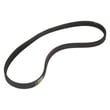
Capacity affects load size, cycle performance, and out-of-balance risk. Overloading a high-efficiency washer often leads to poor cleaning, longer cycle times, and more strain on drive components like the washer drive belt WPW10006384 and Whirlpool washer drive pulley W10721967.
Last updated: February 2026