Owner’s manual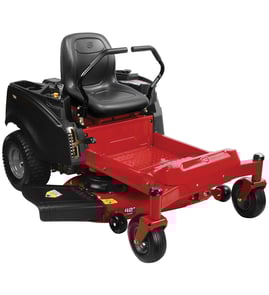



What are the benefits of a rear engine mower?
A rear-engine riding mower like the Craftsman 247204120 puts the engine behind you, which improves forward visibility and keeps the front end compact for trimming around landscaping. It is also typically simpler to maintain than many larger tractors, while still giving you seated comfort for medium-size lawns.
Key benefits you will notice
- Better sightline to the cutting path and obstacles (trees, beds, edging)
- Tighter turning and easier maneuvering in smaller yards
- More stable feel on flat ground because weight is carried over the drive wheels
- Easier deck access for basic cleaning and blade checks on many rear-engine designs
- Generally lower overall size for storage in a standard shed or garage
How rear-engine compares to other mower types
| Mower type | Best for | Main advantage | Main tradeoff |
|---|---|---|---|
| Rear-engine riding mower | Small to medium lawns | Maneuverability and visibility | Not ideal for steep slopes or very rough ground |
| Lawn tractor (front-engine) | Medium to large lawns | More attachments and heavier-duty options | Larger turning radius |
| Zero-turn mower | Larger open areas with obstacles | Fast trimming and tight turns | More maintenance points and higher cost |
Why it matters
Rear-engine mowers are popular when you want the comfort of a rider but still need to weave around obstacles and store the machine easily. For safe operation details (especially slope limits, starting interlocks, and mowing patterns), follow the guidance in the 247204120 owner's manual.
Tips to get the most out of a rear-engine mower
- Mow when grass is dry to reduce clumping and improve cut quality
- Keep the deck clean to maintain airflow and discharge performance
- Check belt condition if you notice slipping or uneven cutting
- Verify tire pressure regularly; it affects cut height and tracking
- Use sharp blades; dull blades tear grass and can make the mower feel underpowered
Last updated: February 2026
What is the best engine for a riding mower?
For a riding mower, the “best” engine is the one that matches your yard size and workload: a proven V-twin with strong parts support for weekly mowing, or a commercial-grade engine if you mow for hours at a time. For Craftsman model 247204120, use the engine specifications and maintenance schedule in the 247204120 owner's manual to choose the right replacement or tune-up approach.
How we pick the best engine for your use
- Yard size and terrain: hills and thick grass need more torque and cooling capacity.
- Hours per week: occasional mowing favors value; frequent mowing favors durability.
- Serviceability: easy oil changes, accessible air filter, and common wear parts.
- Fuel system type: carbureted engines are common; fuel-injected engines handle storage and temperature swings better.
- Parts availability: filters, plugs, starter components, and belts should be easy to source.
Quick comparison: what “best” means in practice
| Your situation | Engine traits that perform best | What to prioritize |
|---|---|---|
| Typical residential mowing | Reliable single or V-twin, good cooling | Maintenance schedule, parts support |
| Heavy grass, hills, towing | Higher torque V-twin, robust charging system | Cooling, torque, air filtration |
| Long run times (near-commercial) | Commercial-grade build, heavy-duty internals | Longevity, service intervals |
What to check before you decide
Use your mower’s exact engine model and spec numbers (often on the engine label) and confirm these items in the 247204120 owner's manual:
- Crankshaft size and length (must match your pulley/clutch setup)
- Mounting pattern (bolt spacing and base style)
- Charging output (for headlights, PTO clutch, and battery charging)
- Throttle/choke linkage compatibility
- Exhaust routing and heat shielding
Why it matters
An engine that is “best” on paper can still be a poor fit if the crankshaft, charging system, or controls do not match your Craftsman 247204120. Matching the specs prevents belt misalignment, starting issues, and premature wear on drivetrain and deck components.
Last updated: February 2026
What year is a Craftsman 247204120 riding mower?
The Craftsman model 247204120 identifies a specific rear-engine riding mower configuration, but the model number alone does not map to one single “year”. We use the mower’s product ID label information (and sometimes the engine model/type/code) to pinpoint the exact production date; the best reference for label locations and identification is the owner's manual.
How to find the build date on a Craftsman 247204120
Check these common spots for the product ID label (often called a model/serial tag):
- Under the seat pan or on the seat support
- On the rear frame near the hitch plate
- Along the left or right side of the frame rail
- Near the footrest or floorboard area
- Under the hood area (if equipped)
Once you find it, record:
- Serial number (most helpful)
- Any date code printed on the label
- The engine model/type/code (often on the engine shroud)
What information actually determines the “year”
For riding mowers, the “year” is typically tied to the serial number range or a date code, not the marketing name.
| What you have | What it tells us | How useful it is |
|---|---|---|
| Model number (247204120) | Family/configuration | Medium |
| Serial number | Production run and date range | High |
| Engine model/type/code | Engine build date reference | Medium |
| Parts diagram match | Confirms correct version for parts | High |
Why it matters
Getting the correct year or production range helps you match the right belts, hardware, and drivetrain parts for your exact build. For example, this model’s parts list includes wear items like the lawn tractor ground drive belt 954-04317A and the lawn tractor blade drive belt 954-04033A, which can vary by production run.
Quick tips before ordering parts
- Match parts by model plus serial whenever possible
- Compare belt width and length to your old belt before installing
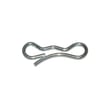
- Replace missing fasteners with the correct size (for example, a cotter pin 714-04040)
- Use the diagrams to confirm pulley routing and shield placement
Last updated: February 2026
What riding mower has the least problems?
If you want the fewest problems over time, we recommend focusing less on brand hype and more on proven design and maintenance. For a rear-engine rider like Craftsman model 247204120, the most reliable choice is the mower that matches your yard size, uses a simple drive system, and is maintained on schedule using the specs in the 247204120 owner's manual.
What “least problems” usually means (and what to shop for)
Reliability comes from fewer failure points, good cooling, and correct belt and deck setup. When comparing riding mowers, prioritize:
- Hydrostatic drive (smooth, fewer shifting issues than manual transaxles)
- V-twin engine (typically smoother and less vibration than many single-cylinder designs)
- Easy belt access and correct belt routing (prevents premature belt wear)
- Greaseable deck spindles/mandrels (when equipped)
- Strong dealer and parts support (so routine wear parts are easy to get)
Practical reliability checklist for a mower like 247204120
Even a solid mower becomes “problem-prone” when belts slip, pulleys seize, or safety switches get bypassed. These are the most common reliability drivers we see:
- Keep the deck clean under the housing to prevent corrosion and belt heat
- Replace worn belts before they start slipping or glazing
- Fix vibration early (often a spindle/mandrel or blade issue)
- Keep battery terminals tight and clean; weak voltage causes hard-start complaints
- Use fresh fuel and a clean fuel system to avoid no-start and surging
Parts that commonly affect “problem rate”
On Craftsman 247204120, recurring issues often trace back to normal wear items. If symptoms match, these parts are common fixes:
- Slipping or no movement: lawn tractor ground drive belt 954-04317A
- Blades not engaging or poor cut: mtd lawn tractor blade drive belt 954-04033A
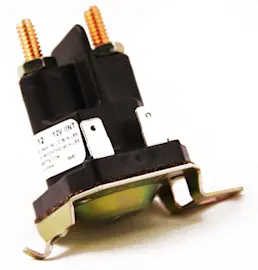
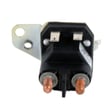
- Clicking or no crank: lawn tractor starter solenoid 725-06153
- Uneven cut or deck noise: lawn tractor mandrel assembly 918-04822A
Quick comparison: what tends to break less
| Feature | Tends to have fewer problems | Tends to have more problems |
|---|---|---|
| Drive type | Hydrostatic | Worn manual linkages, misadjusted belts |
| Deck condition | Clean, level, sharp blades | Packed grass, bent components |
| Electrical | Clean connections, good battery | Corroded terminals, weak battery |
| Maintenance | On-schedule oil and belt checks | Deferred service until failure |
Why it matters
Most “unreliable mower” complaints are really maintenance and wear problems that show up as belt slip, hard starting, poor cut quality, and vibration. Choosing a mower with a simpler layout and then maintaining it to spec delivers the fewest headaches.
Last updated: February 2026
What are common problems with Craftsman riding mowers?
Common problems we see on Craftsman riding mowers like model 247204120 include no-start or intermittent starting, loss of drive, blades that will not engage, uneven cutting, and excessive vibration. These issues usually trace back to normal wear items (belts, pulleys, electrical connections) and basic maintenance (battery, fuel, deck cleaning). See the 247204120 owner's manual for model-specific checks and adjustments.
Most common symptoms and likely causes
- Engine will not crank: weak battery, loose/corroded cables, failed starter solenoid
- Engine cranks but will not start: stale fuel, clogged fuel path, safety switch not made
- Mower will not move or slips: worn or stretched ground drive belt, idler/pulley issues
- Blades will not engage: worn blade drive belt, clutch or interlock problem
- Poor cut quality: deck buildup, bent blade, worn mandrel bearings, deck out of level
- Vibration or noise: damaged blade, loose hardware, failing mandrel assembly
Quick checks we recommend first (fast, high-impact)
- Confirm the PTO/blade switch is off, brake is set, and you are seated (safety interlocks).
- Inspect both belts for glazing, cracking, or slack.
- Check battery terminals for tightness and corrosion; verify the ground connection is clean.
- Look under the deck for packed grass and debris; clean and recheck cut quality.
- Spin each blade by hand (engine off, key removed) to feel for rough bearings or wobble.
Parts that commonly fix these problems on 247204120
If symptoms point to a worn part, these are frequent replacements for this model:
| Symptom | Common fix | Example part on this model |
|---|---|---|
| No crank or click | Starter solenoid | Lawn tractor starter solenoid 725-06153 |
| Slipping or no drive | Ground drive belt | Lawn tractor ground drive belt 954-04317A |
| Blades will not stay engaged | Blade drive belt | Mtd lawn tractor blade drive belt 954-04033A |
| Deck noise, rough cut | Mandrel/bearing wear | Lawn tractor mandrel assembly 918-04822A |
Why it matters
Catching belt wear, loose fasteners, and deck bearing problems early prevents bigger failures like damaged pulleys, overheated clutches, and deck housing wear. It also improves traction, cut quality, and safety.
Last updated: February 2026