Owner’s manual
 View engine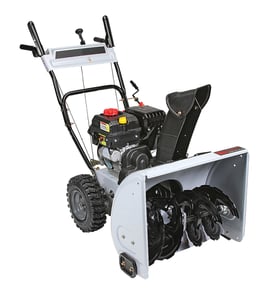




How to get rid of old gas in snowblower?
To get rid of old gas in your Craftsman snow thrower model 247882550, drain the fuel tank and carburetor, then run the engine until it stops from lack of fuel. This prevents gum deposits that cause hard starting and poor performance (especially after storage).
- Work outdoors, away from flames, sparks, and smoking materials.
- Let the engine cool completely before draining fuel.
- Drain fuel into an approved gasoline container.
- Empty the fuel tank if you will not use the snowblower for 30 days or longer.
- Drain the carburetor using the bowl drain (the manual describes a bowl drain located below the carburetor cover).
- After draining, run the engine until the tank is empty and the engine stops.
| Item | What to do | Why |
|---|---|---|
| Fuel valve (if equipped) | Turn OFF before draining | Helps control fuel flow |
| Throttle | Move to STOP to shut down | Prevents accidental start |
| Container | Use an approved gas can | Safer handling and storage |
| Storage location | Never store indoors with fuel | Reduces fire risk |
Old fuel breaks down and can leave varnish-like deposits in the carburetor and fuel system. For seasonal storage, we follow the storage steps in the owner's manual and focus on keeping the fuel system clean.
If you are also dealing with starting issues after old gas, these guides help:
Old gasoline can cause serious starting problems and can damage fuel-system components during storage. Draining the tank and carburetor keeps your Craftsman 247882550 ready for the next storm.
Last updated: January 2026
Is it cheaper to repair or replace a snowblower?
For a Craftsman snow thrower like model 247882550, it’s usually cheaper to repair when the problem is a normal wear item (belt, spark plug, skid shoes, shave plate, or a sheared auger pin). Replacement makes more sense when repair costs approach about half the price of a comparable new snowblower, or when major drivetrain damage is involved. See the 247882550 owner's manual for maintenance and troubleshooting guidance.
- Repair when the issue is maintenance-related (tune-up, lubrication, adjustments).
- Repair when the machine is otherwise solid (no major rust-through, no repeated failures).
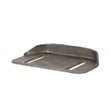
- Repair when the fix is a known wear item like the shave plate 790-00120.
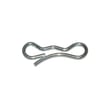
- Repair when the augers stop turning due to a sheared pin (use the correct Craftsman snowblower shear pin 738-04124A).
- Replace when the transmission or major drive components are failing repeatedly.
- Replace when the frame or auger housing is badly damaged or the unit is unsafe to operate.
| Scenario | What we usually recommend | Why |
|---|---|---|
| Wear items only (skid shoes, shave plate, shear pins) | Repair | Low parts cost, restores performance quickly |
| Drive issues caused by belt/cable adjustment | Repair | Common fix; often no major parts needed |
| Major drivetrain issue (for example, transmission failure) | Compare repair vs. replace | High parts and labor can add up fast |
| Frequent breakdowns season after season | Replace | Reliability and downtime become the bigger cost |
Snowblowers are designed with sacrificial wear parts to protect expensive components. For example, the manual explains that auger shear pins can break if you hit a foreign object, and using the proper shear pin helps prevent damage to the auger gearbox and related parts.
- Review the troubleshooting steps in the 247882550 owner's manual.
- List symptoms (no self-propel, won’t discharge snow, loss of power) and match them to likely causes.
- Price out the likely parts (wear items first) and estimate labor time.
- If the unit fails to discharge snow, check for a clogged chute and inspect shear pins before assuming a major failure.
Last updated: January 2026
What is the most common problem with snow blowers?
The most common problem we see on the Craftsman snow thrower model 247882550 is a no-start or poor-running engine caused by fuel issues (stale gas, moisture-contaminated fuel, or carburetor gumming during storage). The next most common is snow not discharging due to a clogged chute or a sheared auger shear pin.
- Use fresh, clean gasoline; old fuel and alcohol-blended fuel can cause storage-related fuel system problems.
- If the engine starts but loses power, firmly reconnect the spark plug wire and check that the gas cap vent is clear.
- If it runs but will not throw snow, stop the engine and clear the chute using the clean-out tool procedure in the 247882550 owner's manual.
- If the auger will not turn or stops under load, inspect and replace a broken shear pin.
- Confirm the auger fully stops when you release the auger control; the cable should have very little slack but should not be tight.
| Symptom | Most likely cause | What to do first |
|---|---|---|
| Won’t start after storage | Stale fuel, fuel line restriction, water/dirt in fuel | Drain old fuel safely, refill with fresh gas, follow storage guidance in the manual |
| Starts then loses power | Spark plug wire loose, gas cap vent plugged | Reconnect wire, clear vent |
| Won’t discharge snow | Chute clogged, shear pin sheared, foreign object in auger | Stop engine, disconnect spark plug wire, clear chute, replace shear pin |
| Auger keeps moving after release | Auger control cable too tight | Adjust cable so auger disengages fully |
If the chute is clear but the auger is not driving, these model-matched parts are common fixes:
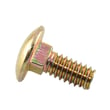
- Craftsman snowblower shear pin 738-04124A (auger protection pin designed to break if the auger jams)
- Clean-out tool 731-2643 (safer way to clear packed snow and ice from the chute)
- Shave plate 790-00120 and skid shoe 784-5580 (wear items that affect scraping and intake height)
Fuel and chute issues are the top causes because they are directly tied to storage and operating conditions. Fresh fuel and correct shutdown and clearing steps prevent hard starts, protect the auger drive, and reduce the chance of damage from jams.
Last updated: January 2026
How to tell if a snowblower auger belt is bad?
On Craftsman snow thrower model 247882550, a bad (or slipping) auger belt shows up as an auger that hesitates, turns slowly, or stops under load while the engine stays at full speed; it can also keep turning after you release the auger control. Use the 247882550 owner's manual for the auger control test and cable adjustment procedure.
- Auger does not turn, turns slowly, or stalls in heavy snow
- Burning rubber smell or rubber dust near the belt cover
- Visible cracks, fraying, glazing (shiny spots), or missing chunks
- Belt slip after an ice jam or foreign object stops the auger
- Delayed engagement when you squeeze the auger control
The 247882550 troubleshooting steps point to several issues that mimic a bad belt:
- Chute or auger housing clogged; clear with the clean-out tool, never your hands
- Shear pins sheared; replace with the correct shear pins (not standard bolts)
- Foreign object lodged in the auger; stop engine and remove the obstruction
- Auger control cable out of adjustment; adjust if the auger hesitates or will not fully stop
| Symptom | More likely cause | First check |
|---|---|---|
| Engine runs strong but auger hesitates | Cable out of adjustment or belt stretched | Cable slack and engagement feel |
| Auger will not turn at all | Shear pins sheared or jam | Shear pins and auger obstruction |
| Auger keeps turning after release | Cable too tight | Auger control test and cable tension |
A slipping auger belt reduces throwing distance and can overheat. Just as important, incorrect auger control adjustment can prevent the auger from disengaging, which is a safety risk.
Last updated: January 2026