Owner’s manual
 Error Codes
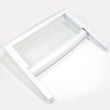

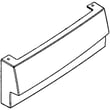
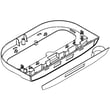
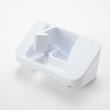
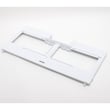
How to remove bottom grille on GE refrigerator?
On the GE PFCS1NFZCSS bottom-mount refrigerator, we remove the bottom (base) grille by taking out the two Phillips-head screws (one on each side) and then pulling the grille straight out. Reinstall by positioning the grille and reinstalling the screws. See the owner's manual.
Steps to remove the base grille
- Unplug the refrigerator or switch off power at the breaker (recommended for safety).
- Locate the base grille at the bottom front of the refrigerator.
- Remove the 2 Phillips-head screws, one on each side of the grille.
- Pull the grille straight out to release it.
- Set the grille aside on a non-scratching surface.
Reinstalling the grille
- Line up the grille with the opening at the bottom front.
- Push it straight in until it sits flush.
- Reinstall the 2 Phillips-head screws and tighten snugly (do not overtighten).
What you might be doing this for (common reasons)
Removing the base grille is often the first step when you need to:
- Adjust the leveling legs to stop wobbling
- Pull the refrigerator out for cleaning behind it
- Access the lower area for inspection after a cooling or noise issue
- Prepare for moving the unit through a tight doorway
Quick reference
| Task | What to do | Tool |
|---|---|---|
| Remove base grille | Remove 2 side screws, pull grille straight out | Phillips screwdriver |
| Reinstall base grille | Position grille, reinstall 2 screws | Phillips screwdriver |
Why it matters
Pulling the grille straight out (instead of twisting or prying) helps prevent broken tabs and keeps the grille fitting tightly, which protects the lower components and keeps airflow where it belongs.
Last updated: February 2026
Is GE PFCS1NFZCSS considered high end?
GE PFCS1NFZCSS is typically considered an upper-midrange GE refrigerator rather than true luxury. It is positioned above many basic GE models, but “high end” usually refers to premium lines with more built-in customization, materials, and price tier.
How we define “high end” for refrigerators
High-end refrigerators usually stand out in a few consistent ways:
- Premium fit and finish (heavier door feel, upgraded interior trim, quieter operation)
- More advanced temperature management (multiple sensors, tighter control, dual evaporators on some designs)
- Higher-end ice and water features (faster production, better filtration, more dispenser options)
- More serviceable premium components (inverter-driven systems, higher-end control boards)
- Higher overall price tier and feature density
For model-specific features and options, we use the owner's manual as the best reference.
Where PFCS1NFZCSS generally fits in the GE lineup
This model is a GE bottom-mount refrigerator (often sold in the GE Profile family). In practical terms, many owners view it as “high end” compared to entry-level top-freezer models, but not in the same category as true luxury refrigeration.
Quick positioning guide
| Tier (common shopper language) | What it usually means | Where PFCS1NFZCSS fits |
|---|---|---|
| Entry-level | Basic cooling, minimal features | Above this |
| Midrange | More features, better storage, common upgrades | Often overlaps |
| Upper-midrange / premium | Better controls, nicer finish, more features | Most common fit |
| Luxury | Built-in columns, pro-style options, highest price tier | Typically not |
Why it matters
If you are deciding whether to repair or upgrade, “upper-midrange” models like PFCS1NFZCSS are often worth repairing when the issue is a common wear part (lighting, filtration, sensors, fans) instead of a sealed-system failure.
Parts that commonly support a cost-effective repair
- Temperature sensor WR55X10025 for temperature sensing issues
- Refrigerator evaporator fan motor WR60X10277 for weak or uneven cooling
- Refrigerator defrost bi-metal thermostat WR50X10069 for frost buildup symptoms
- Refrigerator lamp 40A15 for interior light problems
- GE refrigerator water filter MWFP for taste, odor, or flow concerns
Last updated: February 2026
What is the most common problem with GE PFCS1NFZCSS refrigerators?
Ice maker performance and temperature complaints are the most common issues we see with the GE PFCS1NFZCSS bottom-mount refrigerator. The usual pattern is slow or no ice, small or hollow cubes, or a warm fresh-food section caused by door/airflow problems, control settings, or a failed cooling component; use the owner's manual troubleshooting charts to narrow it down fast.
Most common symptoms and likely causes
- No ice or slow ice: freezer too warm, water supply issue, or clogged filter
- Small or hollow cubes: restricted water flow (often the filter)
- Fresh-food section too warm: door left open, controls set too warm, or poor airflow
- Food freezing in the refrigerator: items blocking the rear air vent or controls set too cold
- Frequent buzzing near ice maker: ice maker on with water not connected (turn it off)
Quick checks we recommend first
- Allow 24 hours after plugging in or changing settings for temps to stabilize
- Make sure packages are not holding doors open; confirm a good seal
- Keep food away from the air vent at the back of the refrigerator section
- Verify the ice maker is ON only when the water line is connected and turned on
- Replace the water filter if flow is weak or cubes are hollow
Parts that commonly relate to these symptoms
| Symptom | Part to check | What it affects |
|---|---|---|
| Hollow cubes, slow water | GE refrigerator water filter MWFP | Water flow to dispenser and ice maker |
| Temps swing, warm sections | Temperature sensor WR55X10025 | Temperature feedback to controls |
| Poor airflow, warm fridge | Refrigerator evaporator fan motor WR60X10277 | Circulates cold air |
Why it matters
Most “common problems” start as simple airflow, door, or water-supply issues. Doing the quick checks first prevents unnecessary part replacement and helps you pinpoint whether the fix is maintenance (filter) or a component (sensor or fan).
Last updated: February 2026