Owner’s manual
 Error Codes


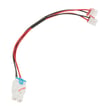
How to remove bottom grille on GE refrigerator?
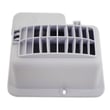
On the GE DFSS9VKBASS bottom-mount refrigerator, the bottom grille (base grille) typically comes off by removing any retaining screws (if present) and then pulling the grille straight out to release the clips. Reinstall by aligning it and sliding it back into place.
Steps to remove the bottom grille
- Unplug the refrigerator or switch off power at the breaker (safer when working near wiring and fans).
- Look along the top edge of the grille for screws; remove them with a Phillips screwdriver if your grille uses screws.
- Grasp the grille near both ends and pull straight outward; use steady pressure to release the retaining clips.
- If it feels stuck, check both corners for hidden fasteners or tabs before pulling harder.
- Set the grille aside on a towel to avoid scratching the finish.
Reinstall tips (so it seats correctly)
- Line up the grille with the lower front opening.
- Slide or press the grille in until the clips snap into place.
- Reinstall any screws you removed and snug them (do not overtighten).
What you might be accessing behind the grille
| What you see | Why it matters | What to do |
|---|---|---|
| Dust on condenser area | Poor airflow can reduce cooling efficiency | Vacuum and brush gently |
| Water line connection | Leaks can cause puddles | Inspect fittings for drips |
| Wiring or fan area | Moving parts and electrical risk | Keep hands clear; restore power after reassembly |
Why it matters
We remove the bottom grille to clean airflow areas, check for water leaks, or access service components. Keeping this area clean helps the refrigerator run more efficiently and can reduce temperature swings.
For model-specific illustrations and fastener locations, use the DFSS9VKBASS owner’s manual.
Last updated: January 2026
What is the advantage of a bottom mount fridge?
A bottom-mount refrigerator like the GE DFSS9VKBASS keeps the fresh-food section at eye and waist level, so you reach everyday items with less bending. The freezer stays below, which is convenient if you use frozen foods less often.
Key advantages of bottom-mount design
- Easier access to fresh foods (produce, dairy, leftovers) because they sit higher.
- Less bending and squatting compared to top-freezer designs.
- Better organization for fresh food; shelves and drawers are more visible.
- Freezer storage is still roomy, typically using pull-out drawers or baskets.
- Often helps reduce door-open time for the fridge section because items are easier to find.
Trade-offs to consider
Bottom-mount fridges are a great fit for many kitchens, but a few practical downsides can matter.
- You bend more to access frozen foods in the lower drawer.
- Freezer drawers can feel heavier when fully loaded.
- If the freezer door is left ajar, you may not notice as quickly depending on layout.
Quick comparison
| Feature | Bottom-mount refrigerator | Top-freezer refrigerator |
|---|---|---|
| Fresh-food access | Higher, easier reach | Lower, more bending |
| Freezer access | Lower drawer, more bending | Higher, easier reach |
| Best for | Fresh-food focused households | Frozen-food focused households |
Why it matters
Most households open the refrigerator section far more than the freezer. With a bottom-mount layout, the foods you grab every day are positioned where you naturally look and reach, which can make meal prep faster and more comfortable.
For model-specific features and storage details, check the DFSS9VKBASS owner’s manual.
Last updated: January 2026
What is the most common problem with GE refrigerators ice maker?
On the GE DFSS9VKBASS bottom-mount refrigerator, the most common ice maker issue is restricted water flow, usually caused by a clogged water filter or a supply problem. Replacing the filter and confirming steady water pressure typically restores normal ice production.
Quick checks we recommend first
- Make sure the freezer is cold enough for ice production (most units need about 0°F to cycle reliably).
- Confirm the ice maker is turned on and the bin is seated correctly.
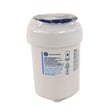
- Replace the water filter if it is older than 6 months.
- Dispense water at the door (if equipped) to confirm water flow is strong and steady.
- Check the shutoff arm or sensor area for ice jams.
Parts that commonly fix “no ice” symptoms
If your DFSS9VKBASS has slow water flow or hollow/small cubes, these parts are common solutions:
- Refrigerator water filter MWFP (replace on schedule to prevent flow restriction)
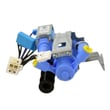
- Refrigerator water inlet valve WR57X10091 (if the valve is weak, noisy, or not opening fully)
- Refrigerator ice maker WR30X10131 (if the module will not cycle even with good water supply)
Symptom-to-cause guide
| Symptom | Most likely cause | What to do |
|---|---|---|
| No ice at all | Filter clogged, valve not filling, ice maker off | Replace filter; verify fill; confirm ice maker is on |
| Small or hollow cubes | Low water flow | Replace filter; check supply line for kinks |
| Ice maker cycles but no water enters | Inlet valve issue | Test/replace inlet valve |
| Ice clumps or jams | Temperature swings, bin issues | Break up clumps; confirm freezer temp and bin fit |
Why it matters
An ice maker depends on consistent water flow and correct freezer temperature. When flow drops (often from an overdue filter), the ice maker can underfill, stop producing, or make poor-quality cubes.
Model-specific reference
For the exact ice maker on/off method, filter location, and any DFSS9VKBASS-SPECIFIC steps, follow the DFSS9VKBASS owner’s manual.
Last updated: January 2026
How to remove the bottom drawer of a GE refrigerator?
To remove the bottom freezer drawer on your GE DFSS9VKBASS bottom-mount refrigerator, we typically pull the drawer fully open, lift the front slightly to release it from the rail stops, then remove the drawer bin and any fasteners holding the drawer front to the slide rails. For model-specific details, use the DFSS9VKBASS owner's manual.
Quick steps (most GE bottom-mount freezers)
- Unplug the refrigerator or switch off power at the breaker (recommended when hands are near wiring or the ice maker).
- Pull the bottom drawer all the way open and remove food and the ice bin (if installed).
- Lift the drawer bin straight up and out (many bins sit in side notches).
- Look for screws (often 2 per side) securing the drawer front to the slide rails; remove them if present.
- Lift the drawer front up and off the rail brackets, then set it aside.
- Press the rail release tabs or lift past the rail stops (varies by rail style) and slide the drawer assembly out.
What to check before you start
| What you see | What it usually means | What to do |
|---|---|---|
| Drawer won’t lift at the front | Rail stop is engaged | Pull fully open, then lift higher while wiggling side-to-side |
| Drawer front feels “stuck” | Screws still installed | Check both sides for fasteners at the rail brackets |
| Drawer drags or binds | Ice buildup or misaligned rails | Defrost ice, then re-seat the drawer on both rails evenly |
Reinstall tips (so it closes and seals)
- Make sure both slide rails are fully extended and level before setting the drawer back on.
- Reinstall any screws evenly on both sides so the drawer front sits square.
- Confirm the drawer closes flush; a poor seal can cause frost and temperature swings.
- If the freezer door gasket is torn or not sealing, replace it with the correct part for this model (for example, refrigerator freezer door gasket (white) WR24X36265 if it matches your door color and configuration).
Why it matters
Removing the bottom drawer correctly prevents bent slide rails, cracked drawer fronts, and air leaks that lead to frost, warm freezer temps, and longer compressor run times.
Last updated: January 2026