
What is the life expectancy of a gas leaf blower?
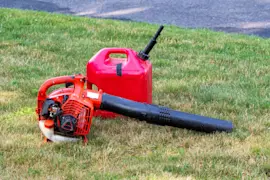
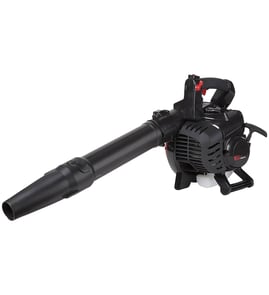
A gas leaf blower like the Craftsman 360796790 typically lasts about 10 years with normal homeowner use and consistent maintenance. Heavy commercial use, stale fuel, and dirty air filtration shorten life; clean fuel and routine tune-ups extend it.
Typical lifespan ranges
- Homeowner/seasonal use: about 8 to 12 years
- Frequent/heavy use: about 5 to 8 years
- Well-maintained, light use: 10+ years
| Usage pattern | What wears fastest | What helps most |
|---|---|---|
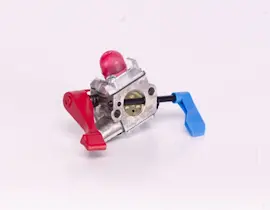
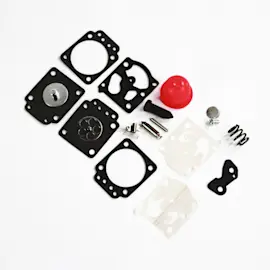
| Occasional yard cleanup | Fuel system (carburetor), primer bulb | Fresh fuel, drain for storage |
| Weekly use in season | Air filter, spark plug | Regular filter cleaning, annual plug check |
| Dusty conditions | Cylinder/piston wear from dirt ingestion | Tight air filter maintenance |
Maintenance that most increases service life
- Use fresh, properly mixed fuel (if 2-cycle) and avoid storing fuel in the tank long-term.
- Clean or replace the air filter on schedule; a clogged filter makes the engine run rich and lose power.
- Inspect and replace the spark plug when starting becomes harder or misfiring shows up.
- Keep the cooling fins and air passages clear so the engine does not overheat.
- Check fuel lines for cracking and keep the fuel filter clean to prevent lean running.
Signs your blower is nearing end-of-life
- Hard starting even after basic tune-up steps
- Surging at idle or dying when you throttle up
- Noticeable power loss under load
- Excessive vibration, rattling, or persistent overheating
Why it matters
Most “worn out” gas blowers fail early from fuel and air issues, not from the engine itself. Preventing varnish in the carburetor and keeping dirt out of the intake are the two biggest factors in getting a full 10-year lifespan.
For general DIY safety and planning before any repair, use our guide: are diy appliance repairs safe.
Last updated: February 2026
What company makes Craftsman leaf blowers?
Craftsman is a brand owned by Stanley Black & Decker; Craftsman leaf blowers (including model 360796790) are typically manufactured for the brand by established outdoor power equipment makers under contract, with production varying by model and year.
Who actually builds a Craftsman blower?
Craftsman is the brand name on the product, but the factory that builds a specific blower can differ across models. For a backpack air blower like 360796790, the most reliable way to confirm the maker for your exact unit is to match the model number and any ID information on the product label when ordering parts.
Common ways the “maker” is identified:
- The model number (for this page: 360796790)
- A product label that may list a manufacturing company or location
- The engine family and carburetor/ignition style used on that model
- The parts breakdown tied to the model number
Why it matters for parts and repairs
Two Craftsman blowers can look similar but use different carburetors, fuel lines, ignition modules, or recoil starters. Using the exact model number helps ensure the right fit and avoids repeat repairs.
| What you’re trying to do | What to use | Result |
|---|---|---|
| Identify the correct replacement parts | Exact model number 360796790 | Correct diagrams and part matches |
| Confirm compatibility between similar units | Product label details + model number | Avoids wrong carburetor/ignition parts |
| Shop more efficiently | Model number search | Faster part identification |
Quick tips before you order parts
- Confirm the model number is 360796790 (not a similar Craftsman number).
- Check for extra identifiers on the label (serial, type, or code).
- Compare your blower’s fuel system layout (primer bulb, fuel line routing) to the diagram.
- If your blower has hard starting or poor power, inspect the air filter, spark plug, and fuel lines first.
Helpful reference
Use our guide on how to find your appliance model number (and what it means for parts) to locate and confirm the ID information you need for accurate parts matching.
Last updated: February 2026
Is a higher mph or CFM better for a leaf blower?
For the Craftsman 360796790 backpack air blower, higher CFM is usually better for moving a lot of dry leaves across a wide area, while higher MPH is better for breaking loose wet, stuck, or heavier debris in a tight spot. The best real-world performance comes from a balanced combination of both.
What MPH and CFM actually mean
- CFM (cubic feet per minute): how much air the blower moves (volume)
- MPH (miles per hour): how fast the air stream travels (velocity)
- High CFM helps you “push” piles and clear large sections faster
- High MPH helps you “blast” debris out of cracks, mulch beds, and damp areas
- Nozzle design and tube length also affect how strong the air feels at the ground
Which spec matters more for common yard jobs
| Job | Prioritize | Why |
|---|---|---|
| Clearing dry leaves from lawn/driveway | Higher CFM | Moves more material per pass |
| Wet leaves, matted grass clippings | Higher MPH (plus decent CFM) | Breaks debris loose first |
| Gravel edges, cracks, corners | Higher MPH | More focused “punch” |
| Large property cleanup | Higher CFM | Faster coverage and less time walking |
Quick buying and setup tips (what we see work best)
- For wide-area cleanup, choose the strongest CFM you can comfortably carry and control.
- For stubborn debris, look for strong MPH and a nozzle that concentrates airflow.
- If you do a mix of tasks, aim for a balanced blower rather than chasing only one number.
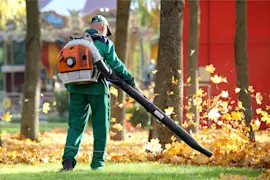
- Backpack blowers like the Craftsman 360796790 are typically chosen for longer run time and sustained airflow.
- Confirm you have the correct model number before ordering maintenance items; use how to find your appliance model number (and what it means for parts).
Why it matters
CFM determines how quickly you can move a pile across open ground; MPH determines whether you can dislodge debris in the first place. Matching the spec to your yard conditions saves time, reduces fatigue, and improves cleanup results.
Last updated: February 2026
Which brand of gas leaf blower is best?
For most homeowners, the “best” gas leaf blower brand is the one that matches your workload and comfort needs; for a Craftsman backpack air blower like model 360796790, we recommend comparing brands by real performance (CFM/MPH), weight, harness comfort, and serviceable engine parts, not just the name.
Quick brand guidance (what each is best at)
- Stihl: top-tier power options, especially in backpack blowers for heavy debris and large lots.
- Husqvarna: strong power-to-comfort balance; good anti-vibration and harness designs.
- Echo: excellent reliability and strong handheld performance for the size.
- Craftsman: solid value for typical residential cleanup; good choice when you want capability without premium pricing.
- Troy-Bilt: budget-friendly options that handle routine yard cleanup well.
How to choose the best gas blower for your yard
Focus on these specs and fit factors when comparing brands and models:
- Air volume (CFM): higher CFM moves more leaves at once.
- Air speed (MPH): higher MPH helps dislodge wet leaves and debris.
- Weight and balance: backpack units reduce arm fatigue but add overall load.
- Harness comfort: padded straps and good hip support matter on longer jobs.
- Noise and neighborhood use: check local rules and choose a quieter setup when needed.
- Maintenance access: easy air filter and spark plug access saves time.
Backpack vs handheld: which is “best” depends on the job
| If you mostly do this | Best style | Why |
|---|---|---|
| Large yard, long sessions, heavy leaf season | Backpack | Less arm fatigue; sustained output |
| Small yard, quick cleanups, tight spaces | Handheld | Lighter; easier to maneuver |
| Wet leaves, acorns, stubborn debris | Backpack (higher output) | More sustained force |
Why it matters
A “best brand” pick that is too heavy, uncomfortable, or underpowered leads to longer cleanup times, more fatigue, and more frequent maintenance. Matching CFM/MPH and ergonomics to your yard size is what delivers the best real-world results.
Helpful next step for parts and model matching
When you are comparing blowers or ordering maintenance items, confirm the exact model number on the unit so you get the right diagrams and compatible parts. Use our guide: how to find your appliance model number (and what it means for parts).
Last updated: February 2026
Are gas leaf blowers being phased out?
Yes. Gas leaf blowers are being phased out in some areas through local noise and air-quality rules, but the rules vary widely by city and county. Your Craftsman model 360796790 (a backpack air blower) can still be maintained and repaired; the key is matching your repair plans to local use restrictions.
What “phased out” usually means
Most phase-outs happen through one or more of these rule types:
- Limits on hours of operation (time-of-day or day-of-week)
- Noise limits (decibel caps) that restrict louder equipment
- Restrictions that start with commercial landscaping, then expand to homeowners
- Sales restrictions on new gas-powered outdoor equipment
- Full use bans after a transition period
How this affects a Craftsman 360796790 backpack air blower
A phase-out does not automatically make your blower unusable everywhere. It typically changes:
- Where you can use it (certain municipalities or neighborhoods)
- When you can use it (quiet hours, seasonal limits)
- Whether a major repair makes sense (based on your local timeline)
Quick decision guide
| Your situation | Best next step |
|---|---|
| Occasional home use | Maintain it; confirm local rules before investing in big repairs |
| Weekly heavy debris | Keep it running, but plan a backup option if restrictions tighten |
| Needs major engine work | Compare repair cost vs. expected remaining legal use time in your area |
| Ordering maintenance items | Confirm the exact model number first to avoid mismatched parts |
Why it matters
Most restrictions target two things: noise and exhaust emissions. Knowing your local rules helps you decide whether to do routine maintenance (fuel system, ignition, air flow) or hold off on expensive repairs.
Helpful tip for identifying the right model
Model-number lookalikes are common on outdoor power equipment, and small differences can change the carburetor, fuel lines, or muffler setup. Use how to find your appliance model number (and what it means for parts) to confirm you are matching parts to model 360796790.
Last updated: February 2026