Installation guide
 Owner’s manual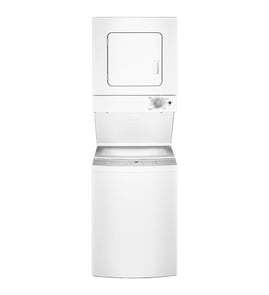


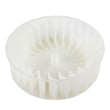
How to clean a Frigidaire laundry center?
For your Frigidaire GLGT1142CS1 stacked laundry center, we recommend wiping the washer tub and cabinet with a damp cloth and mild liquid household cleanser, then removing any cleaner residue before the next load. For the exterior, use mild soap and water and avoid harsh, gritty cleaners; follow the owner's manual for routine care details.
Routine cleaning checklist (washer and dryer)
- Wipe the washer tub and door area with a damp cloth and mild liquid household cleanser.
- Run a rinse and spin cycle after wiping if you want to flush away any remaining residue.
- Clean the cabinet with mild soap and water; never use harsh, gritty, or abrasive cleaners.
- If the cabinet is stained, use a diluted chlorine bleach solution (1/2 cup in 1 quart of water), then rinse several times with clear water.
- Remove tape or label glue with warm water and mild detergent.
- Keep the area around the dryer exhaust opening free of lint, dust, and dirt.
Dryer lint and airflow: what to do every load
A blocked lint screen or restricted airflow can cause overheating and poor drying. Use this quick routine:
- Clean the lint screen before or after each load (and reinstall it if you used a drying rack).
- Do not operate the dryer with the lint screen blocked, damaged, or missing.
- Do not stack laundry or rugs against the front or back of the laundry center.
- Keep the exhaust area clear so ventilating air can flow.
Quick reference table
| Area | What to use | How often |
|---|---|---|
| Washer tub and openings | Damp cloth + mild liquid cleanser | As needed (monthly is typical) |
| Cabinet/exterior | Mild soap and water | Weekly or as needed |
| Dryer lint screen | Brush or rinse and dry fully | Every load |
| Exhaust opening area | Vacuum/wipe lint and dust | Monthly |
Why it matters
Regular cleaning helps prevent residue transfer to clothes, reduces odors, and keeps dryer airflow open for safer, more efficient drying. The manual also recommends periodic internal dryer cabinet and exhaust duct cleaning by a qualified servicer to reduce lint buildup.
Last updated: February 2026
How to take off the front panel of a Frigidaire washer?
On the Frigidaire GLGT1142CS1 stacked laundry center, the washer front panel typically comes off by removing the top mounting screws, then lifting the panel up and away from the cabinet to release the retaining tabs.
Before you start (safety and prep)
- Unplug the laundry center from the wall outlet.
- Turn off both water supply faucets.
- If you need more room, pull the unit forward carefully (protect the floor).
- Keep a small container for screws so nothing gets lost.
- Use gloves; sheet-metal edges can be sharp.
Steps to remove the washer front panel
- Access the top edge of the washer front panel. On many Frigidaire laundry centers, the screws that hold the front panel are along the top lip of the panel.
- Remove the top screws. Support the panel with one hand as you remove the last screw.
- Lift the panel slightly, then pull it forward. This motion releases the panel from lower retaining clips or tabs.
- Set the panel aside. Place it where it will not bend.
If your unit has a slightly different fastener layout, use the exploded-view guidance and panel removal notes in the owner's manual.
What you may need (tools and typical fasteners)
| Item | Typical use | Notes |
|---|---|---|
| 1/4-in nut driver or Phillips screwdriver | Remove panel screws | Screw head style varies |
| Putty knife (optional) | Release clips | Use gentle pressure |
| Work light | See top lip and clips | Helps avoid stripping screws |
Why it matters
Removing the front panel is a common first step for diagnosing leaks, drain problems, belt issues, and access to internal components. For example, if you are troubleshooting a no-drain condition, the washer drain system may involve the washer drain pump 137221600.
Last updated: February 2026
Can I look up Frigidaire parts by model number?
Yes. We recommend looking up replacement parts for your Frigidaire stacked laundry center by entering the full model number GLGT1142CS1; this pulls up the correct parts list and diagrams so you can match the exact component before you order.
How to find the model number on this laundry center
For GLGT1142CS1, the model and serial information is typically found on the serial plate located inside the dryer door. Confirming the full model number helps avoid ordering a similar-looking part that will not fit.
- Open the dryer door and look along the door opening area
- Write down the full model number and serial number
- Match every character (letters and numbers) exactly
- Use the model number to browse the parts breakdown for washer and dryer sections
What you can do once you have the model number
When you search by model number, you can quickly narrow down common repair parts for this laundry center, including belts, switches, and dryer drum support parts.
Here are examples of model-matched parts available for GLGT1142CS1:
| Symptom you are fixing | Common part to check | Example part on this model |
|---|---|---|
| Dryer will not tumble | Belt or idler | Dryer idler assembly 5304507499 |
| Dryer makes scraping or rumbling noise | Drum bearing or glide | Dryer drum bearing 131825900 |
| Washer will not drain | Drain pump or hose | Washer drain pump 137221600 |
Why it matters
Laundry centers share many similar components across model families. Using the exact GLGT1142CS1 model number ensures the part you choose matches the correct mounting points, wiring connectors, and belt routing for your specific Frigidaire unit.
Helpful references for this model
- Use the owner's manual to confirm where the model/serial plate is located and review basic operation and care.
Last updated: February 2026
What does section GLGT1142CS1 mean?
On a Frigidaire stacked laundry center, GLGT1142CS1 is the model number, not a “section.” We use it to match the correct parts list, wiring, and operating instructions for your exact unit so you get compatible replacement parts and repair information.
Where to find and confirm the model number
For model GLGT1142CS1, the model and serial tag is typically located inside the dryer door area on the laundry center.
- Open the dryer door and look along the door opening or inner frame
- Write down both the model number and serial number
- Keep the numbers for ordering parts and checking warranty paperwork
- Use the model number when looking up error codes and troubleshooting steps
Why the model number matters for parts and repairs
Even small design changes can affect fit and function. Using GLGT1142CS1 helps us match the right belt, motor, timer, pump, and other components.
| What you’re doing | Why GLGT1142CS1 matters | Example part on this model page |
|---|---|---|
| Ordering a replacement part | Prevents wrong fit or wiring mismatch | Washer drain pump 137221600 |
| Fixing a dryer that will not tumble | Ensures correct drive and support parts | Dryer idler assembly 5304507499 |
| Following operating steps | Matches control layout and cycle behavior | Owner's manual |
Related terms customers confuse with “section”
Sometimes “section” gets used to mean one of these:
- Washer section vs dryer section of the laundry center
- A manual section (like safety, operation, or maintenance)
- An error code section for washer or dryer diagnostics
If you’re trying to decode a displayed error, use our model-matched guides: Frigidaire laundry center -washer error codes and Frigidaire laundry center -dryer error codes.
Why it matters
Using the correct model number is the fastest way to avoid ordering the wrong Frigidaire parts and to follow the right troubleshooting steps for your stacked laundry center.
Last updated: February 2026
Why is my Frigidaire dryer not drying clothes?
If your Frigidaire GLGT1142CS1 dryer runs but clothes stay damp, the most common causes are restricted airflow (lint screen or venting), overloading, or a heat-supply problem (gas valve not open on gas models, or a power issue on electric models). Start with airflow and loading checks first.
Quick checks that fix most “not drying” problems
- Clean the lint screen before every load; make sure it is seated correctly.
- Confirm the exhaust duct is clear and not crushed behind the unit.
- Use a proper 4-inch metal vent; keep bends to a minimum.
- Avoid overloading; loads should tumble freely (about 1/3 to 1/2 full).
- Remove items promptly at cycle end to prevent moisture from re-settling.
Airflow and venting requirements (what to look for)
Poor airflow is the top reason drying times get long. Typical venting issues include too many elbows, excessive duct length, or lint buildup in the duct or outside hood.
| Check | What “good” looks like | What causes slow drying |
|---|---|---|
| Lint screen | Clean, no waxy film | Lint buildup or softener residue |
| Exhaust duct | 4-inch metal, open path | Clogged, crushed, too long |
| Outside hood | Flapper opens freely | Blocked hood or stuck flap |
For model-specific venting setup and maintenance guidance, follow the GLGT1142CS1 owner’s manual.
If the dryer tumbles but does not heat
Use this path if airflow is good but there is little or no heat.
- Gas models: verify the gas supply valve is fully open; weak heat often points to failing valve coils such as the coil 5303931775.
- Electric models: a tripped breaker or a blown fuse on one leg can let the motor run while the heater stays off.
- Cycle and load factors: high humidity, incorrect cycle selection, and heavy fabrics can extend dry time.
Why it matters
Restricted airflow makes drying take much longer and can overheat the dryer. Fixing venting and lint-screen issues restores performance and reduces wear on moving parts.
Last updated: February 2026