Owner’s manual
 View engine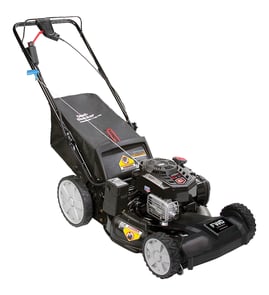



How do I get gas for my lawn mower?
For your Craftsman lawn mower model 917370810, use fresh, clean regular unleaded gasoline (minimum 87 octane) and fill the tank only to the bottom of the filler neck (do not overfill). Gasoline with up to 10% ethanol (E10) is acceptable; higher ethanol blends can cause problems.
What to buy (fuel and supplies)
- Fresh regular unleaded gasoline, 87 octane or higher
- A clean, approved gas can (kept only for fuel)
- A small funnel or spout to reduce spills
- Fuel stabilizer if fuel may sit 30 days or longer
- Shop towels for wiping up any drips
How to fuel the mower safely
- Shut the engine off and let it cool.
- Move the mower away from any ignition sources.
- Remove the gas cap and add fuel slowly.
- Stop at the bottom of the filler neck (leave room for expansion).
- Tighten the cap and wipe up any spilled fuel.
Fuel rules for this model (quick reference)
| Item | What to use | What to avoid |
|---|---|---|
| Octane | 87 minimum | Lower than 87 |
| Ethanol content | Up to E10 | More than E10 |
| Mixing oil in gas | No | Do not mix oil with gasoline |
| Fuel freshness | Use within ~30 days | Stale fuel stored for months |
Why it matters
Fresh fuel helps your 917370810 start easier and run smoother, and it reduces carburetor and fuel-system issues caused by moisture and fuel breakdown during storage.
Where to confirm the exact fueling steps
We list the fueling cautions, E10 guidance, and fill level for this mower in the owner's manual.
Last updated: February 2026
Is it cheaper to repair or replace a lawn mower?
For a Craftsman walk-behind mower like model 917370810, it’s cheaper to repair when the problem is routine maintenance or a small wear part (blade, cable, wheel). Replacement makes more sense when the engine or drive system needs major work and the repair total is about half the cost of a comparable new mower.
A practical repair vs. replace checklist
We use these quick checks to decide:
- Repair if the mower still starts reliably and needs a tune-up, cleaning, or a common wear part.
- Repair if the fix is a single, bolt-on part (wheel, control cable, blade).
- Replace if the engine has internal damage (low compression, heavy smoke, metal noise).
- Replace if the drive system needs multiple parts and the mower is already worn overall.
- Replace if the deck is cracked or severely rusted (structural issues keep coming back).
Typical costs and what they usually mean
Actual totals vary, but this framework keeps the decision simple.
| Issue type | Common examples on walk-behind mowers | Usual best choice |
|---|---|---|
| Maintenance / wear | Blade, wheels, cables, cleaning under deck | Repair |
| Drive problems | Belt off pulley, worn drive cable, loose drive control | Repair first |
| Major mechanical | Bent crankshaft, internal engine failure, repeated no-start after fuel/ignition checks | Replace |
Model-specific tips for 917370810
Your manual’s troubleshooting guidance points to several “repair-first” items such as uneven wheel height, grass buildup under the deck, worn or loose blade, belt wear, and drive cable issues. Use the owner's manual to match symptoms to the correction steps before you spend money.
If you’re dealing with common wear parts, these are examples that are often cost-effective to replace:
- Lawn mower 22-in deck 3-in-1 blade 532420463 if the blade is worn, bent, or won’t hold an edge
- Husqvarna lawn mower drive control cable 588479201 if self-propel is weak or inconsistent
- Lawn mower wheel and tire, 8 x 1.75-in 583719501 if a wheel is wobbling, cracked, or won’t track straight
Why it matters
A mower that’s only suffering from maintenance issues can cut poorly, bog down, or feel “hard to push”, but it’s still a good candidate for repair. Major engine or drivetrain failures can turn into stacked costs (parts plus labor), which is when replacement becomes the better value.
Last updated: February 2026
What are the common problems with Craftsman lawn mowers?
Common problems on the Craftsman 917370810 gas walk-behind mower include hard starting, loss of power, uneven cutting, excessive vibration, and self-propel drive issues. We fix most of these by checking fuel and ignition basics first, then correcting cutting height, cleaning the deck, and inspecting the blade and drive system using the steps in the owner's manual.
Most common symptoms and what usually causes them
- Won’t start or runs rough: stale fuel, dirty air filter, fouled spark plug, or a carburetor fuel issue
- Loss of power: cutting too low, heavy grass load, grass buildup under the deck, too much oil, or a clogged air filter
- Poor or uneven cut: worn or bent blade, wheels set at different heights, or deck packed with clippings
- Excessive vibration: loose blade bolt, damaged blade, broken blade adapter, or bent crankshaft
- Hard to push: grass too tall, cutting height too low, bag overfilled, or handle height not comfortable
- Loss of drive or slow drive: belt wear, belt off pulley, worn/broken drive cable, or a loose drive control system
Quick checks we recommend first (10 minutes)
- Set all wheels to the same cutting height and raise the height for tall or thick grass
- Tip the mower safely and clean packed grass from under the deck (let the engine cool first)
- Inspect the blade for bends, cracks, or heavy wear; replace if damaged
- Confirm the control bar is fully held to the handle before pulling the starter rope
- Check oil level; overfilling can cause running problems
Parts that commonly solve the problem
If you find a worn cutting blade or drive components, these model-matched parts are common fixes:
| Problem you see | Part to inspect/replace | Example part for this model |
|---|---|---|
| Ragged cut, vibration, poor mulching | Blade | Lawn mower 22-in deck 3-in-1 blade 532420463 |
| Mower won’t move or slips in self-propel | Drive cable | Lawn mower drive control cable 588479201 |
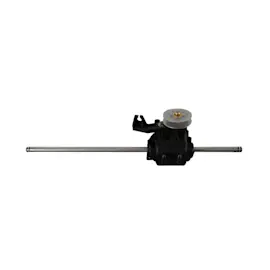
| Drive feels weak or inconsistent | Transmission | Lawn mower transmission assembly 589600601 |
Why it matters
Most “big” mower problems start as simple airflow, fuel, or cutting-load issues. Keeping engine speed at the factory setting, mowing slower in heavy grass, and keeping the deck clean prevents overheating, stalling, and premature wear.
Helpful DIY guides
- How to sharpen a lawn mower blade
- Lawn mower wont start troubleshooting video fuel ignition and compression
- Lawn mower wont move troubleshooting video motion drive failure
Last updated: February 2026
What is the max 10 ethanol for a lawn mower?
For Craftsman model 917370810, the maximum ethanol blend we recommend is E10, which means gasoline containing up to 10% ethanol. Using fuel with more than 10% ethanol (such as E15 or E85) can cause poor performance and it voids the product warranty; see the owner's manual.
What “E10” means (and what to avoid)
Ethanol blends are labeled by the percent of ethanol in the gasoline.
- E0: ethanol-free gasoline
- E10: up to 10% ethanol (acceptable for this mower)
- E15: 15% ethanol (do not use)
- E85: 51% to 83% ethanol (do not use)
Quick fuel compatibility table
| Fuel label | Ethanol content | Use in Craftsman 917370810? |
|---|---|---|
| E0 | 0% | Yes |
| E10 | Up to 10% | Yes (max allowed) |
| E15 | 15% | No |
| E85 | 51% to 83% | No |
Why it matters
Higher-ethanol fuel can attract moisture and can run leaner than the engine is tuned for. That combination commonly leads to hard starting, rough running, and fuel-system issues, especially after storage.
Tips to prevent fuel problems (especially between mowings)
- Buy only enough gas to use within about 30 days.
- Keep the gas can clean and replace it if it starts to rust.
- If the mower will sit for a while, run the engine periodically or follow the storage steps in the manual.
- If you suspect stale fuel, drain the tank and refill with fresh gasoline.
- Store the mower only after the engine cools down.
Last updated: February 2026