





Is a 16 or 18 inch chainsaw better?
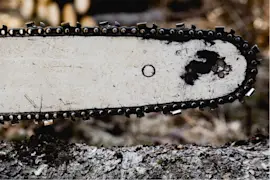
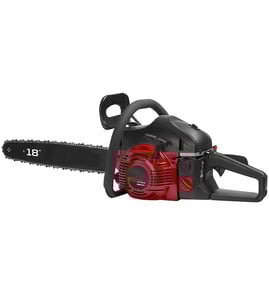
For most homeowners, a 16-inch bar is the better all-around choice because it’s lighter, easier to control, and less tiring for limbing and storm cleanup. An 18-inch bar is better when you regularly cut thicker wood and want more reach, but it adds weight and needs more engine power to cut well.
Quick comparison: 16-inch vs 18-inch
| Bar length | Best for | Tradeoffs |
|---|---|---|
| 16-inch | Limbing, pruning, small trees, general yard work | Less reach in larger diameter wood |
| 18-inch | More frequent firewood cutting, small-to-medium tree felling, thicker logs | Heavier; more kickback potential; needs a stronger saw to avoid bogging |
How to choose for your Craftsman 358351181
We recommend matching bar length to what you cut most often and what your saw can comfortably pull.
- Choose 16-inch if you want easier handling, especially for overhead limbing and longer sessions.
- Choose 18-inch if you often cut larger rounds and want fewer repositioning cuts.
- If your saw struggles to maintain chain speed, a shorter bar typically cuts faster and smoother.
- A longer bar increases the chance of contacting the tip; that raises kickback risk, so technique matters.
- If you upgrade bar length, confirm the chain pitch, gauge, and drive link count match the bar.
If you’re shopping for replacement cutting components, we carry bar options such as bar 160SDEA041 and bar 180SDEA041, plus a matching chain option like chain 91PX062G for compatible setups.
Why it matters
The “better” bar length is the one that keeps chain speed up while staying comfortable and controlled. A bar that’s too long for the saw’s power makes cutting slower, increases wear, and can make the saw feel harder to manage.
Helpful next steps
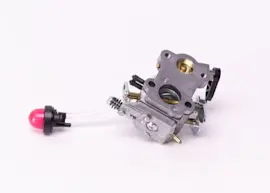
- If your saw is hard to start or lacks power, address tune-up items first (fuel system, air filter, carburetor).
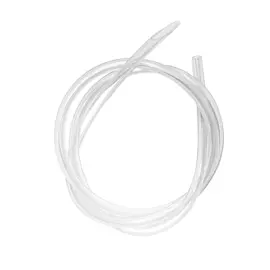
- For fuel delivery issues, see how to replace chainsaw fuel lines.
- For starting and running tips, use tips for a hard to start chainsaw.
Last updated: February 2026
Where is the model number on my Craftsman chainsaw?
On a Craftsman gas chainsaw like model 358351181, the model number is printed on a small ID label or tag attached to the saw body. It’s most often on the starter housing, the engine/motor casing, or near the rear handle; write down every digit exactly as shown.
Common places to check
Look for a sticker, foil label, or stamped tag in these spots:
- Side of the engine/motor housing (near the muffler or cylinder area)
- Recoil starter cover (starter housing)
- Rear handle area (near the throttle trigger)
- Bottom of the saw body (underside of the chassis)
- Near the bar mount studs or clutch cover area
Tips for finding it fast
If the label is dirty or oil-stained, these steps usually help:
- Wipe the area with a rag and a small amount of degreaser
- Use a flashlight at a low angle to make faint printing easier to see
- Check both sides of the saw and the underside
- Take a photo and zoom in to confirm each character
- Record the full model number and keep it with your chain and bar specs
Why it matters
The model number is how we match the correct Craftsman 358351181 parts, diagrams, and repair steps. It prevents ordering the wrong fuel line, air filter, carburetor gasket, or ignition part.
Quick examples of model-matched parts
| What you’re fixing | Example part that may apply | What it affects |
|---|---|---|
| Hard starting or fuel leaks | Poulan lawn & garden equipment fuel line, small 530069247 | Fuel delivery to the carburetor |
| Runs rough or lacks power | Craftsman lawn & garden equipment engine air filter 530037793 | Airflow and fuel mixture |
| Won’t shut off | Lawn & garden equipment kill switch 530069572 | Ignition stop circuit |
Related DIY help
If you’re tracking down the model number because the saw is acting up, we use these guides a lot:
Last updated: February 2026
How many horsepower is a 42cc chainsaw?
A 42cc gas chainsaw is typically about 2.0 to 2.5 horsepower. For your Craftsman 358351181, the exact HP depends on the specific engine design and tuning, but most 42cc 2-cycle homeowner saws fall in that range.
Typical 42cc horsepower range (what to expect)
Most 42cc 2-cycle chainsaws are built for limbing, storm cleanup, and cutting firewood; they usually land in a narrow power band.
- Common range: 2.0 to 2.5 HP
- Why it varies: porting, carburetor calibration, muffler design, and RPM rating
- What matters more than HP: chain speed under load and proper bar/chain match
- Real-world power drops fast if the air filter is restricted or fuel delivery is weak
Quick reference table
| Engine size | Typical horsepower | Typical use |
|---|---|---|
| 35cc to 40cc | 1.8 to 2.2 HP | light cutting, small limbs |
| 42cc | 2.0 to 2.5 HP | firewood, medium limbs |
| 50cc to 60cc | 3.0 to 4.0 HP | heavier cutting, larger wood |
If your 42cc saw feels underpowered
On the Craftsman 358351181, “low power” is usually maintenance-related. Check these items first:
- Clean or replace the engine air filter 530037793
- Inspect fuel lines for cracks, soft spots, or leaks (common on older saws)
- Replace deteriorated lines with the correct sizes: poulan lawn & garden equipment fuel line, small 530069247 and ayp lawn & garden equipment fuel line, large 530069216
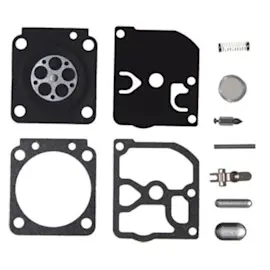
- If it runs lean, surges, or won’t accelerate, the carburetor may need service (a rebuild kit is often the fix)
- Confirm the chain is sharp and properly tensioned; a dull chain makes any saw feel weak
Why it matters
Horsepower is a rough comparison tool, but cutting performance depends heavily on airflow, fuel delivery, and chain condition. Keeping the fuel system tight and the intake clean helps your 42cc Craftsman deliver its normal power.
Last updated: February 2026
Is 40 1 or 50 1 better for chainsaws?
For the Craftsman 358351181 gas chainsaw, the better mix is the ratio specified for your engine; in general, 50:1 is the standard for many modern 2-cycle saws with quality 2-cycle oil, while 40:1 adds more oil for extra lubrication but can increase smoke and carbon buildup.
Quick comparison: 40:1 vs 50:1
| Mix ratio | Oil per 1 gallon gas | What you’ll notice | Best use case |
|---|---|---|---|
| 50:1 | 2.6 oz | Cleaner running, less smoke | Normal cutting with modern 2-cycle oil |
| 40:1 | 3.2 oz | More smoke, more deposits possible | Hot weather, heavy cutting, older/worn engines |
What we recommend for this Craftsman chainsaw
- Use fresh, ethanol-free fuel when possible and a high-quality 2-cycle oil.
- If you are unsure what the saw was tuned for, start with 50:1 and confirm it runs cleanly (good throttle response, no bogging, plug not wet-fouling).
- If the saw is worked hard and you want a little more lubrication, 40:1 is acceptable as long as the saw still runs crisply and does not load up with smoke.
- If the saw runs rough, smokes heavily, or fouls plugs after switching ratios, go back to the cleaner mix and address maintenance items.
Problems that look like “wrong mix” (and the parts that fix them)
A fuel ratio change often exposes an existing fuel or air issue. These are the most common culprits:
- Cracked or soft fuel lines causing air leaks: poulan lawn & garden equipment fuel line, small 530069247 and ayp lawn & garden equipment fuel line, large 530069216
- Restricted airflow from a dirty filter: Craftsman lawn & garden equipment engine air filter 530037793
- Carburetor metering issues (hard start, surging, dying at idle): ayp lawn & garden equipment engine carburetor rebuild kit 530069826
Why it matters
Your 2-cycle mix ratio directly affects lubrication, combustion temperature, and carbon deposits. Too little oil risks accelerated wear; too much oil can cause plug fouling, muffler screen blockage, and sluggish performance.
For step-by-step fuel system help, we use the same process outlined in how to replace chainsaw fuel lines.
Last updated: February 2026