 Owner’s manual
 Error Codes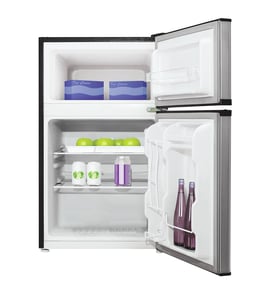

Does anyone make a 30 inch side by side refrigerator?
Yes. Several brands make 30-inch-wide side-by-side refrigerators, most commonly as built-in or undercounter models; they are less common than 33-inch and 36-inch sizes. For fit and clearance planning (especially ventilation space), use the guidance in your owner's manual.
What “30 inch side-by-side” usually means
A true 30-inch side-by-side is typically designed for tighter kitchens, apartments, or undercounter installations.
Common variations you will see:
- Built-in/undercounter side-by-side (most common at 30 inches)
- Counter-depth vs. standard-depth cabinet designs
- Reversible doors on some compact units (not all side-by-sides)
- Smaller capacity compared to 33-inch and 36-inch models
Sizing and clearance checklist (so it actually fits)
Even when the cabinet is “30 inches,” you still need room for airflow and door swing.
We recommend checking:
- Width at the widest point (handles can add width)
- Depth (especially if you want a flush look)
- Door swing clearance (walls, islands, and adjacent cabinets)
- Ventilation space: many compact refrigerators need breathing room
- Electrical requirements: a dedicated, grounded outlet is best practice
Typical clearance targets
| Area | Typical minimum clearance |
|---|---|
| Back of unit | ~4 inches |
| Above unit | ~1 inch |
| Sides | Varies by design (often 0 to 1 inch) |
Why it matters
A refrigerator that is too tight in the opening can run hotter, cool poorly, and cycle more often. Proper leveling and clearance also help the door gasket seal correctly, which protects food temperatures and reduces energy use.
Last updated: February 2026
How big is a 3.2 cu ft mini fridge?
A 3.2 cu. ft. mini fridge is typically about 17 to 20 inches wide, 18 to 21 inches deep, and 32 to 35 inches tall. Your Kenmore compact refrigerator model 56491245100 is a different size class (the manual shows a 2.4 cu. ft. unit), so use the 56491245100 owner's manual to confirm the exact cabinet dimensions and required clearances.
Typical 3.2 cu. ft. mini fridge size (general guidance)
Most 3.2 cu. ft. compact refrigerators land in these ranges:
- Width: 17 to 20 inches
- Depth: 18 to 21 inches (add space if the handle sticks out)
- Height: 32 to 35 inches
- Door swing: often needs extra side clearance beyond cabinet width
Placement clearances that matter
Even when the cabinet fits, ventilation space is required for steady cooling.
From the Kenmore compact refrigerator manual guidance:
- Keep the unit level using the adjustable leveling leg for a good door seal
- Provide at least 1 inch of space above the refrigerator
- Avoid direct sunlight, heat sources, and moisture
Quick fit check table
| What to measure | Measure this | Why it matters |
|---|---|---|
| Width | Cabinet plus door swing | Prevents the door from hitting walls/cabinets |
| Depth | Cabinet plus handle | Ensures it does not protrude too far |
| Height | Cabinet plus hinge area | Avoids binding under shelves/counters |
| Top clearance | Space above the unit | Helps heat escape for better cooling |
Why it matters
If a compact refrigerator is squeezed into a tight opening or sits unlevel, it can run longer, cool poorly, and develop door-seal gaps. Correct clearances and leveling protect temperature performance and energy use.
Last updated: February 2026
What is the most reliable mini fridge brand?
Kenmore compact refrigerators like model 56491245100 are built for steady everyday cooling when they’re installed level, given proper airflow, and run on the correct 120V grounded outlet. Across mini fridges overall, the most reliable “brand” is the one that matches your needs and is set up correctly; consistent temperature and fewer compressor run issues come from proper installation and care (not just the logo). See the owner's manual for the setup details that most directly impact reliability.
What to look for in a reliable mini fridge
- Stable temperatures: minimal swings after the door is opened.
- Good door seal: gasket contacts the cabinet all the way around.
- Correct clearances: airflow space behind and above the unit.
- Proper electrical supply: grounded 3-prong outlet; no extension cord.
- Level installation: helps the door seal and reduces warm spots.
Setup steps that improve reliability (and reduce service calls)
These are the biggest reliability drivers for compact refrigerators like the Kenmore 56491245100:
- Place it on a strong, level floor or counter.
- Keep the back at least 4 inches from the wall.
- Leave at least 1 inch above the top for ventilation.
- Avoid direct sunlight, heat sources, and moisture.
- After changing the temperature control, allow 24 hours to stabilize.
Quick comparison: “reliable brand” vs “reliable ownership”
| What you control | What it affects | Best practice |
|---|---|---|
| Leveling | Door seal, temperature stability | Adjust leveling leg until the door seals evenly |
| Airflow clearance | Compressor workload, cooling consistency | 4 in. back, 1 in. top clearance |
| Power connection | Nuisance trips, electrical safety | 3-prong grounded outlet; no extension cord |
| Temperature changes | Food safety, cycling | Wait 24 hours after adjustments |
Why it matters
Most mini-fridge “failures” customers notice (warm cabinet, heavy cycling, frost, odors) start with airflow restrictions, poor leveling, or frequent temperature changes. Getting those basics right makes a Kenmore compact refrigerator perform like a “reliable brand” day to day.
Last updated: February 2026





